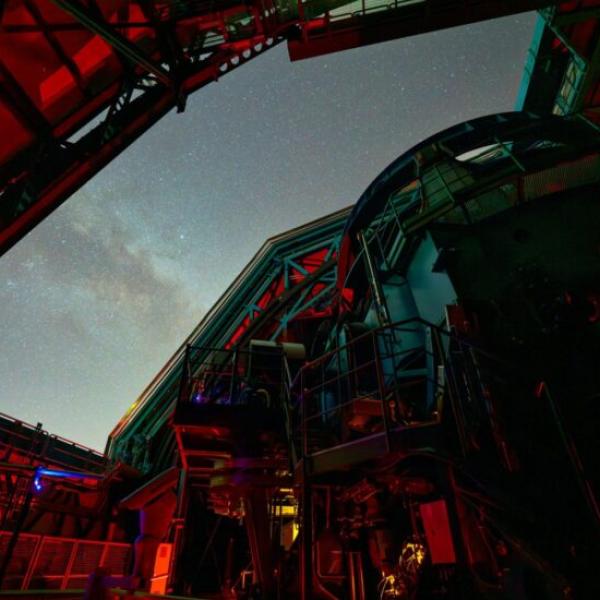
Discovering millions of galaxies and unraveling the mysteries of dark matter and dark energy is far out! Join us at the Dutch Goose for SLAC on Tap on August 22 at 5 pm, when SLAC engineer Hannah Pollek will talk...
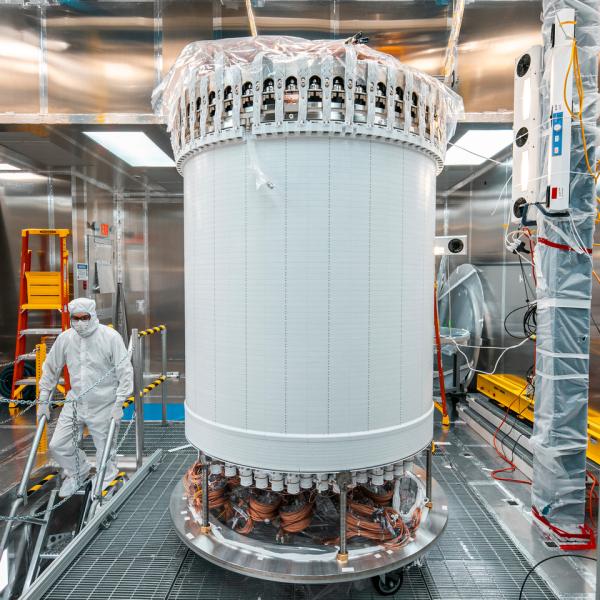
New results from the world’s most sensitive dark matter detector put the best-ever limits on particles called WIMPs, a leading candidate for what makes up our universe’s invisible mass.
Register to watch in person in the Kavli Auditorium, or watch the lecture live on our YouTube page. In particle physics, we search for new elementary particles that signal extensions of the fundamental interactions of nature. Experiments at the CERN...
In 1974, the independent discovery of the J/psi particle at SLAC and Brookhaven National Laboratory rocked the physics world, and entire textbooks had to be rewritten. Earlier this month, SLAC hosted a symposium to celebrate the milestone.