Quantum networking is the framework that uses the strange properties of quantum mechanics to transmit quantum information, encoded in qubits, from one quantum device to another.
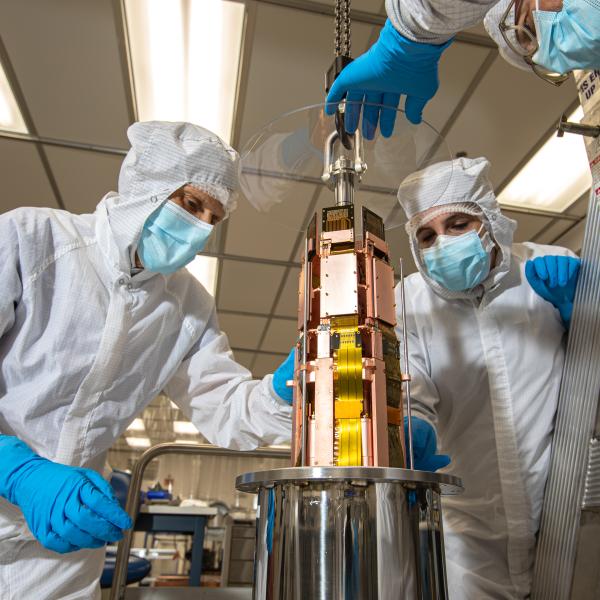
From left, SCU Physics Prof. Betty Young, Software Developer Concetta "Tina" Cartaro and Senior Staff Scientist Richard Partridge put the fourth, and final, SuperCDMS tower safely back into its storage container.
Stanford graduate student Ameya Kunder is examining a wafer containing prototype frequency-upconverting superconducting quantum devices, manufactured at SLAC’s superconducting device foundry, one of two foundries advancing quantum information science and technology as part of the Q-NEXT center.
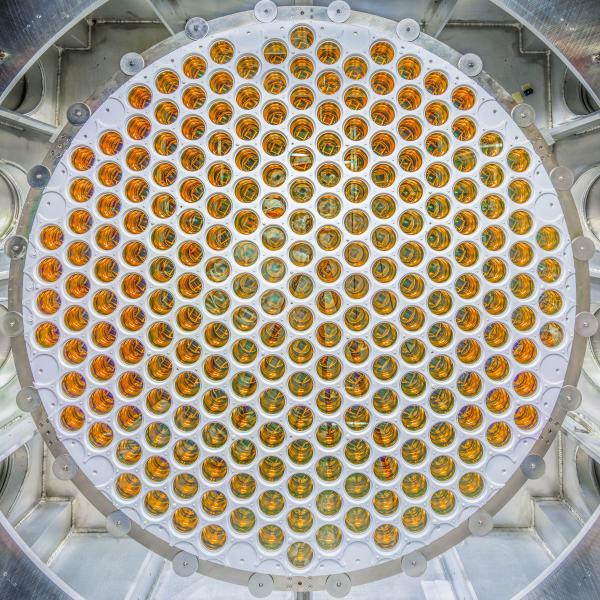
In the largest dataset ever collected by a dark matter detector, LUX-ZEPLIN's latest results provide the strongest constraints on low-mass WIMPs and detect boron-8 solar neutrinos.
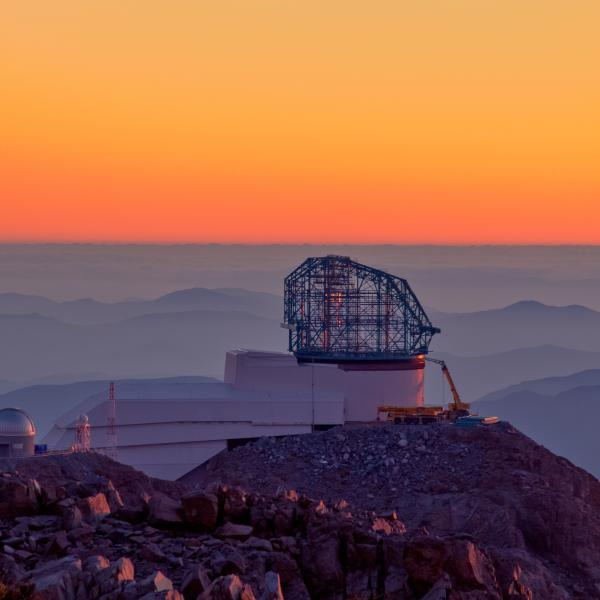
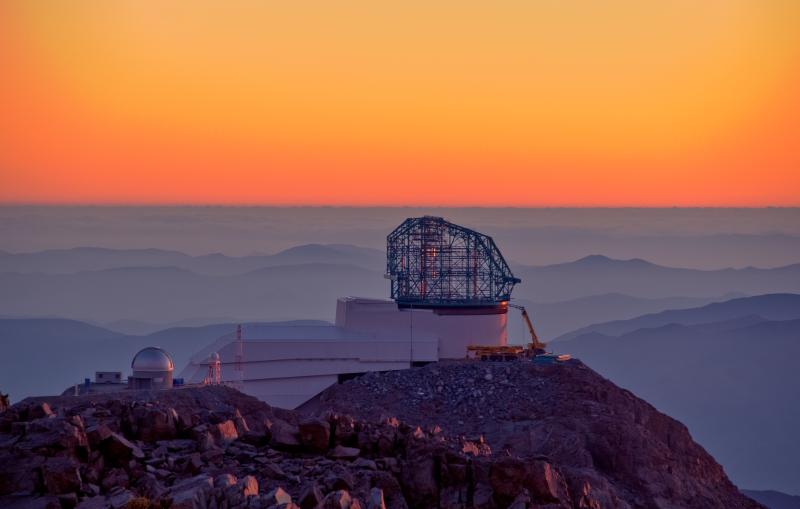
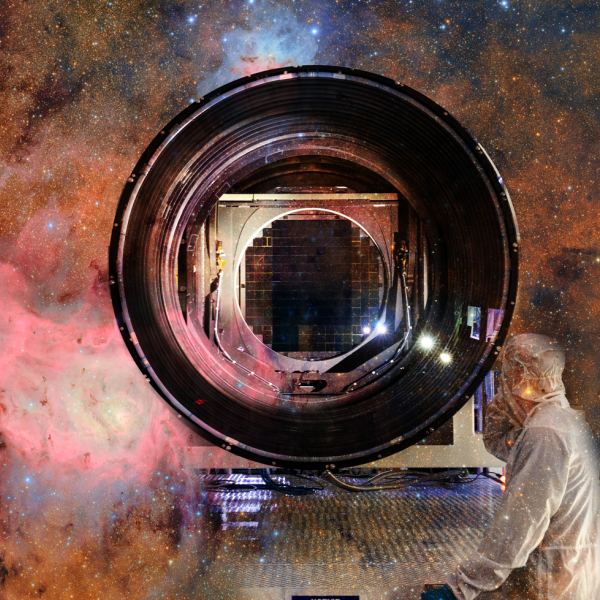
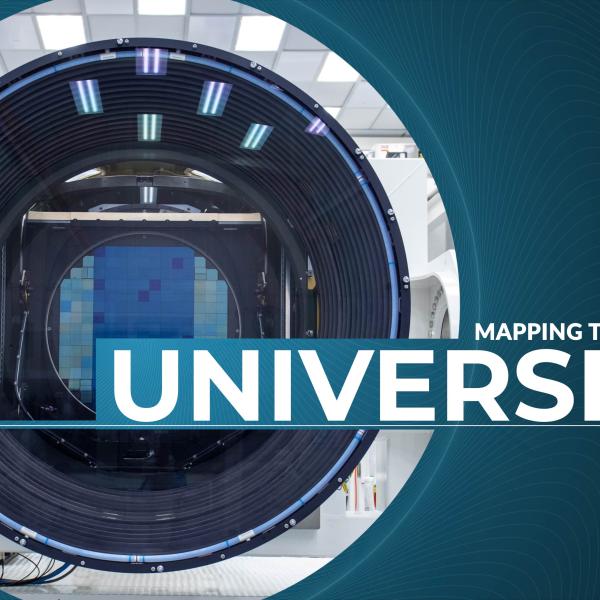
Vera C. Rubin Observatory will conduct the 10-year Legacy Survey of Space and Time (LSST), which will collect 60 petabytes of data to address some of the most pressing questions about the structure and evolution of the universe and the...
A downloadable PDF fact sheet about the NSF-DOE Vera C. Rubin Observatory and the SLAC-built LSST Camera that will be used for the 10-year Legacy Survey of Space and Time.