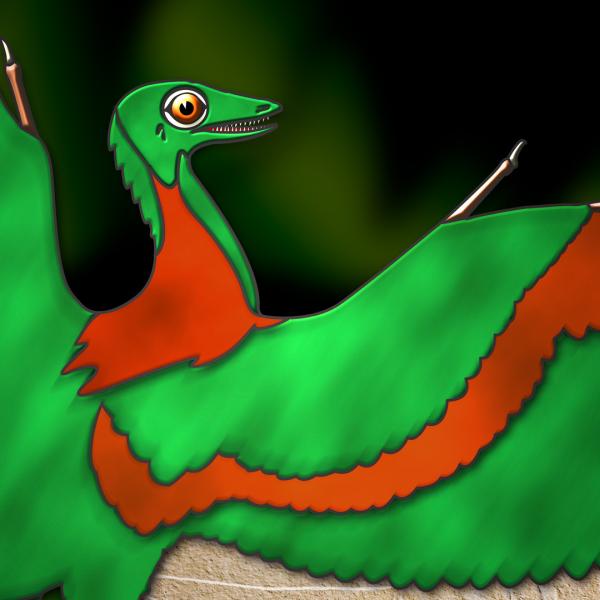
Some 150 million years ago, a strange creature died in a tropical lagoon that today is located in Bavaria, Germany. In 1861, a single feather of this creature was discovered. Not long afterward, a complete fossil was found with the...
The Mary Rose, built in 1511, was the flagship of King Henry VIII. She sank in 1545 while en route to confront the French fleet in battle. The ship lay undersea for 440 years before being raised in 1985. The...
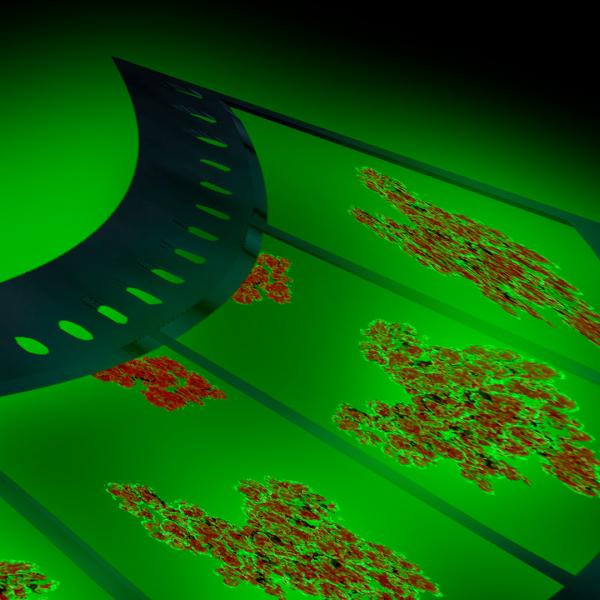
Presented by Kelly Gaffney. Movies have transformed our perception of the world. With slow motion photography, we can see a hummingbird flap its wings, and a bullet pierce an apple. The remarkably small and extremely fast molecular world that determines...
In experiments resembling an atomic-scale shooting gallery, researchers are pioneering a new method for chemical analysis by zapping the innermost electrons out of atoms with powerful X-ray laser pulses from SLAC’s Linac Coherent Light Source (LCLS).
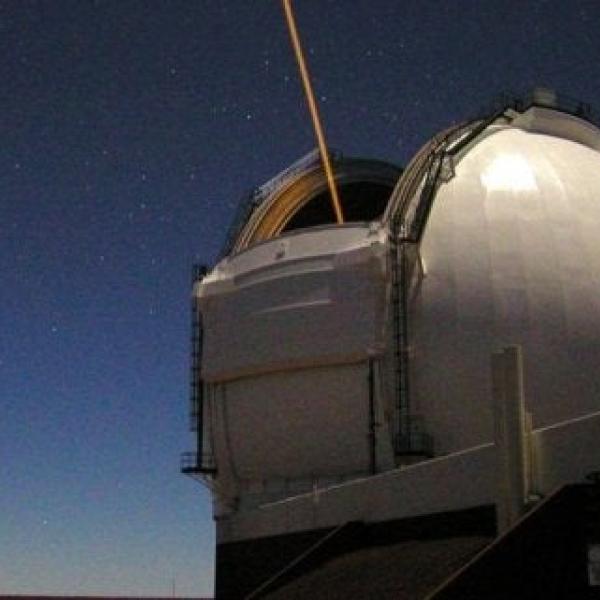
Technology that helps ground-based telescopes cut through the haze of Earth's atmosphere to get a clearer view of the heavens may also be used to collect better data at cutting-edge X-ray lasers like the Linac Coherent Light Source (LCLS) at...
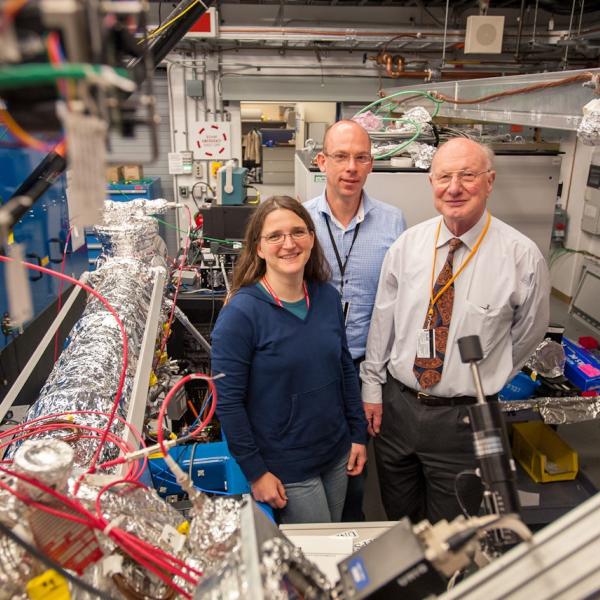
In a paper published Nov. 2 in Nature Communications, a team of researchers led by University of Maryland's Ichiro Takeuchi, in collaboration with Stanford Synchrotron Radiation Lightsource's Apurva Mehta, reported the discovery of large magnetostriction in an iron/cobalt alloy —...
While SLAC's Linac Coherent Light Source was designed to push the limits as a high-energy X-ray laser, users' requests have led staff at the facility to successfully step it back to a lower minimum energy for some experiments.
Archimedes (287-212 BC), who is famous for shouting 'Eureka' (I found it) is considered one of the most brilliant thinkers of all times. The 10th-century parchment document known as the “Archimedes Palimpsest” is the unique source for two of the...
Presented by Arianna Gleason. When and where life originated on Earth – and if, or where, life exists elsewhere in the cosmos – are some of the biggest scientific questions of our time.