This video explains how, in a previous paper, researchers were able to see two key steps in photosynthetic water splitting under conditions as it occurs in nature, a big step to decoding how the process works in detail.
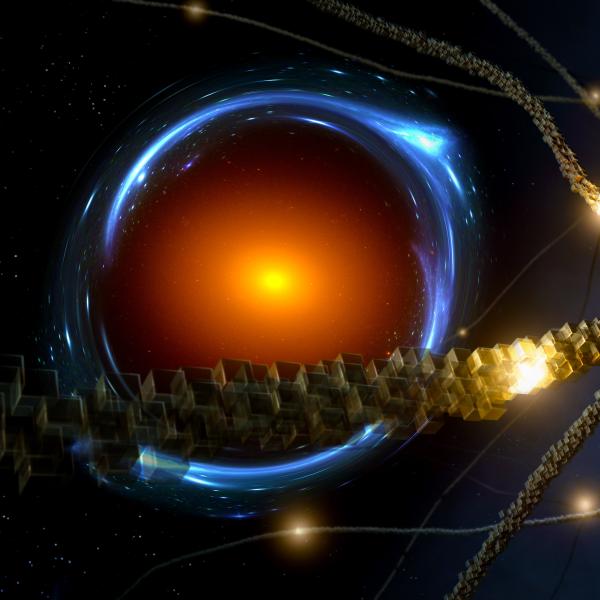
KIPAC scientists have for the first time used artificial neural networks to analyze complex distortions in spacetime, called gravitational lenses, demonstrating that the method is 10 million times faster than traditional analyses.
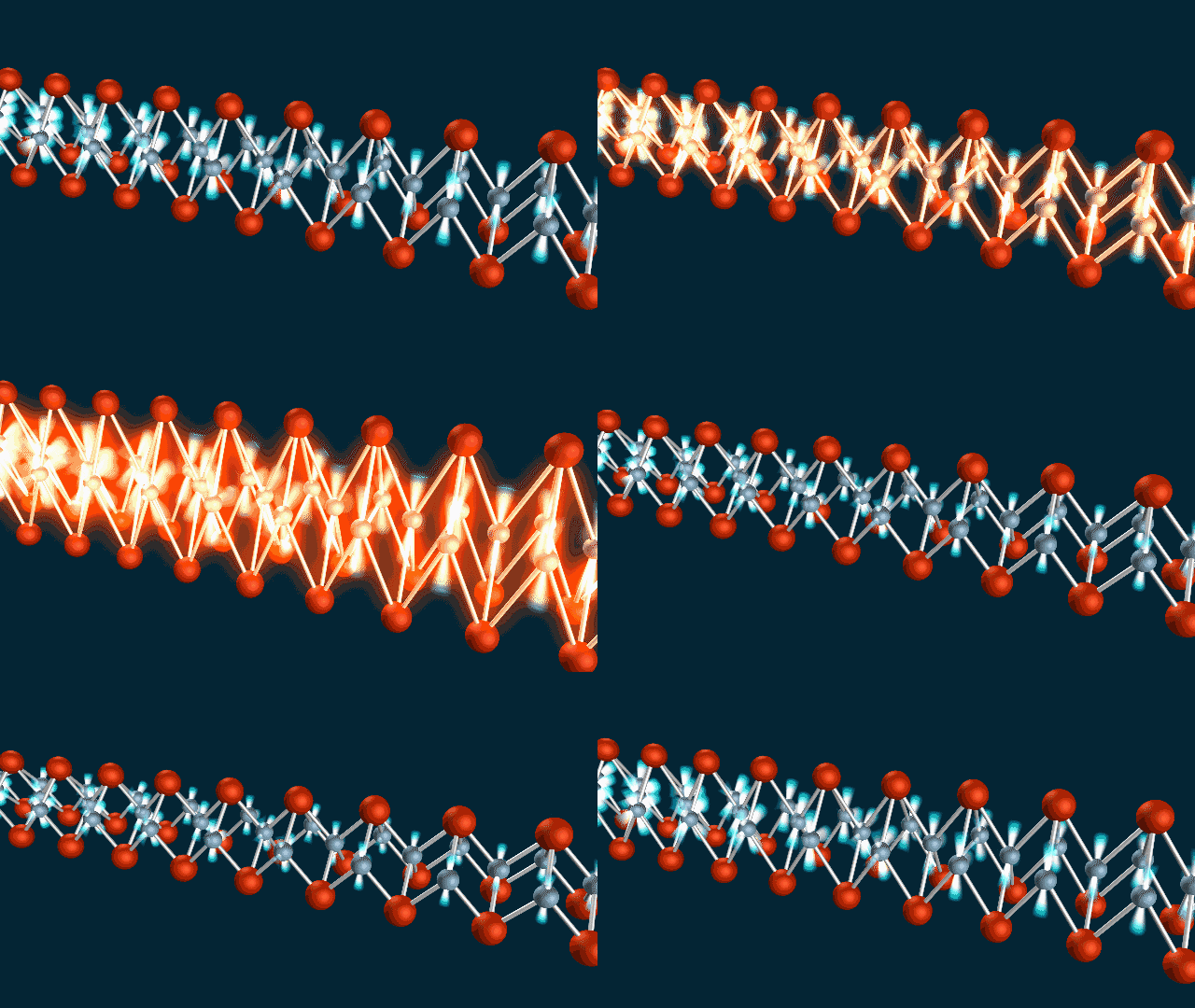
An animation shows how an infrared laser beam (orange) triggers atomic vibrations in a thin layer of iron selenide, which are then recorded by ultrafast X-ray laser pulses (white) to create an ultrafast movie.
Some 150 million years ago, a strange creature died in a tropical lagoon that today is located in Bavaria, Germany. In 1861, a single feather of this creature was discovered. Not long afterward, a complete fossil was found with the...