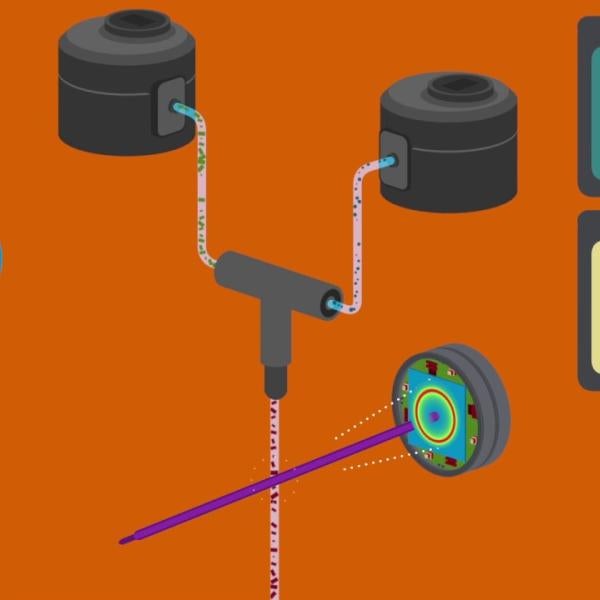
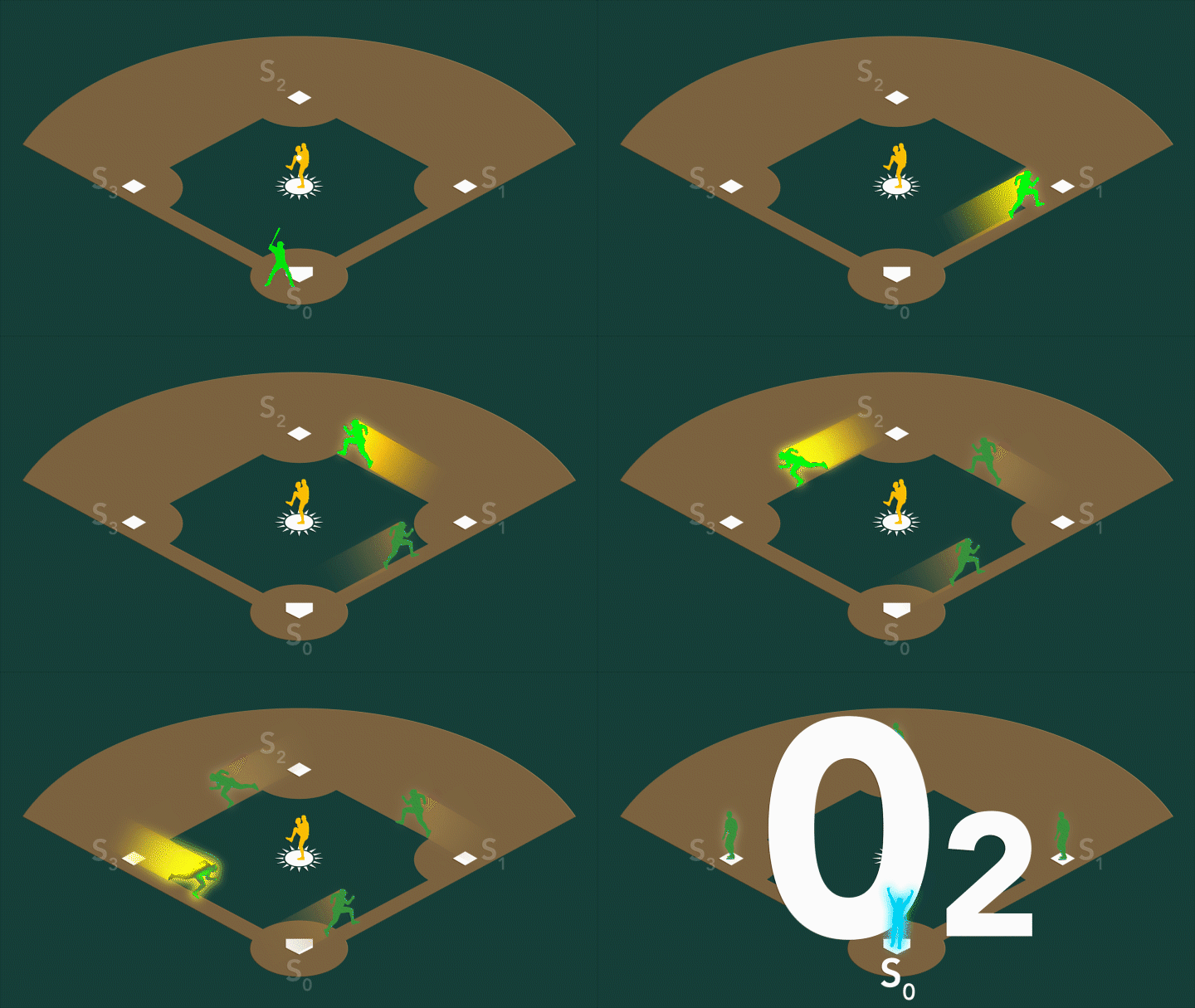
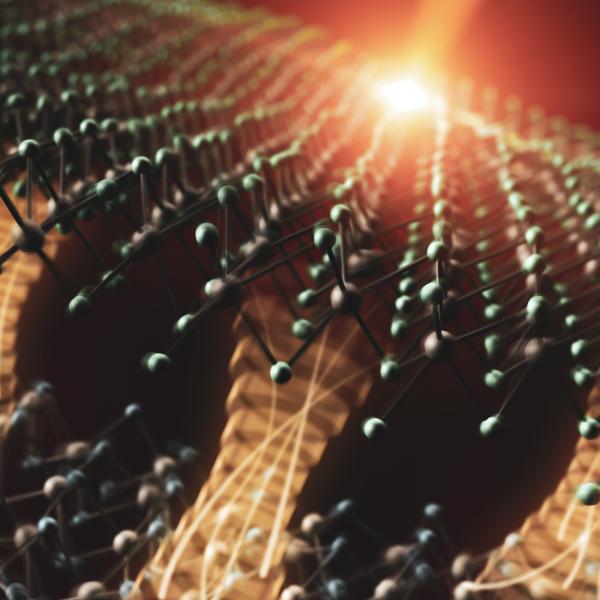
This animation explains how researchers use high-energy electrons at SLAC to study faster-than-ever motions of atoms and molecules relevant to important material properties and chemical processes.
This short conceptual animation depicts how scientists can now simultaneously capture fractal morphology (structure), chemical composition and nanoscale imagery of individual aerosol particles in flight. These particles, known as "PM2.5" because they are smaller than 2.5 microns in diameter, affect...
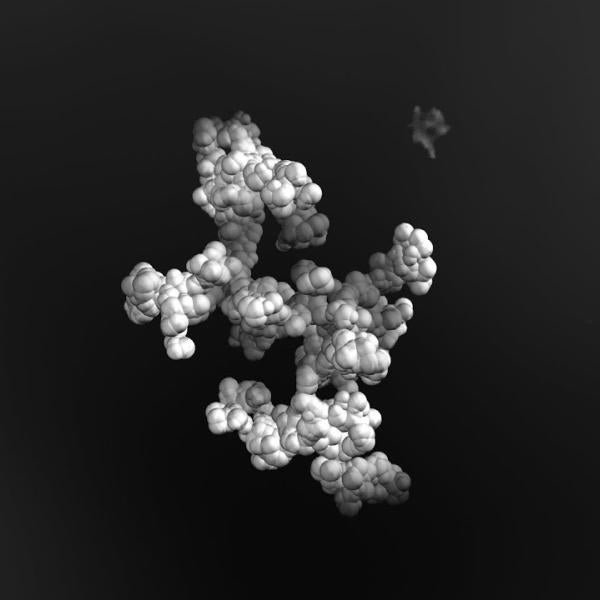
In a landmark experiment at SLAC National Accelerator Laboratory, scientists used an X-ray laser to capture the first snapshots of a chemical interaction between two biomolecules in real time and at an atomic level.
After more than a decade, LCLS was upgraded to generate even more powerful X-ray laser beams. With the LCLS-II upgrade, LCLS is around 10,000 times brighter and fires about 8,000 times faster. It generates up to one million pulses per...
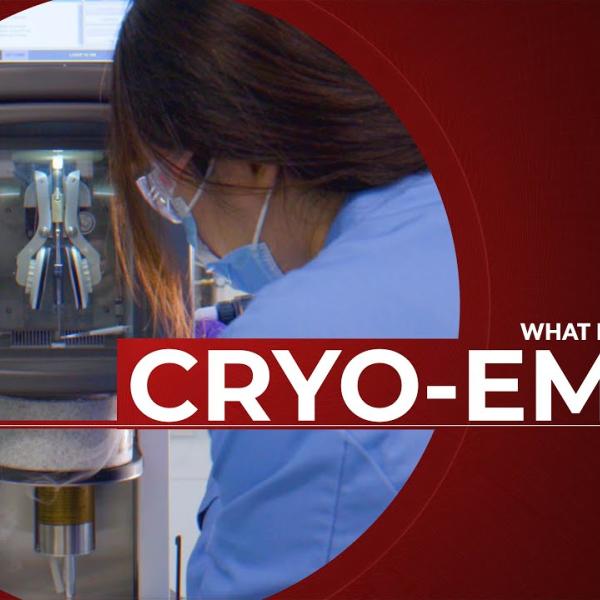
Cryogenic electron microscopy (cryo-EM) is a revolutionary tool for studying the molecular architecture of protein, viruses, cells and the specialized molecular machines within cells. This video explains how cryo-EM works, from preparing samples for study to capturing atomic imagery and...
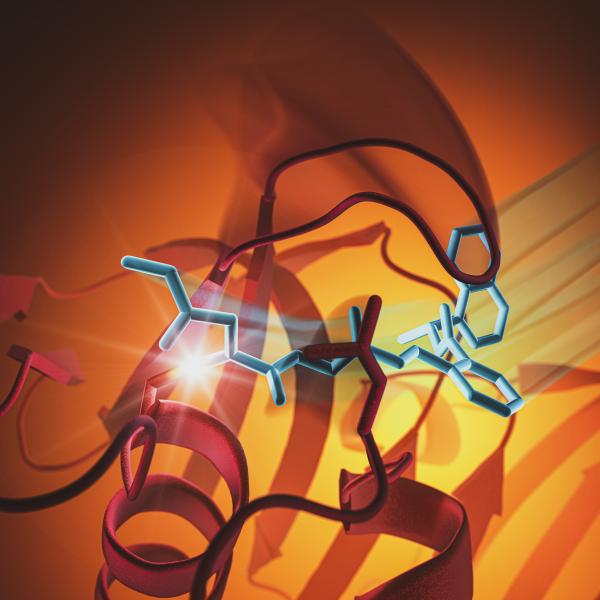
This graphic illustration shows how a SARS-CoV-2 protease attaches to a new molecule. The new molecule is meant to slow the virus inside an infected person.
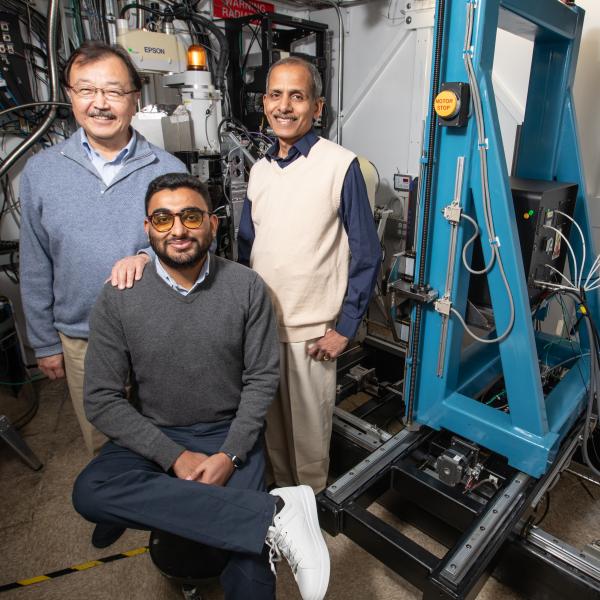
Researchers stand near SSRL's Beam Line 12-2. From left, Soichi Wakatsuki, co-senior author and professor at SLAC and Stanford; Suman Pokhrel, Stanford University graduate student in chemical and systems biology and one of the paper’s lead authors; and Irimpan Mathews...