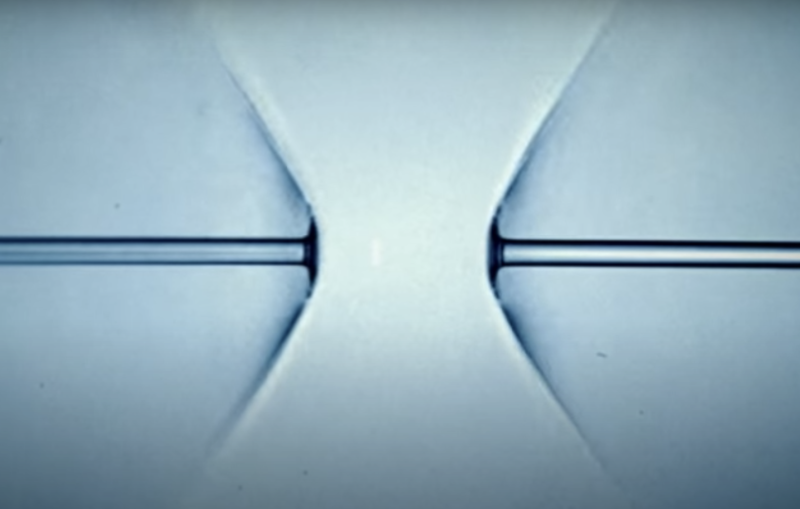
The Chemical Science Division's areas of research strength include ultrafast chemical science at the PULSE Institute, and chemical catalysis at the SUNCAT Center.
From studying chemical reactions that happen in the femtosecond timescale to advancing society’s energy technology, the Energy Sciences Directorate’s research addresses an enormous range of critical scientific challenges.
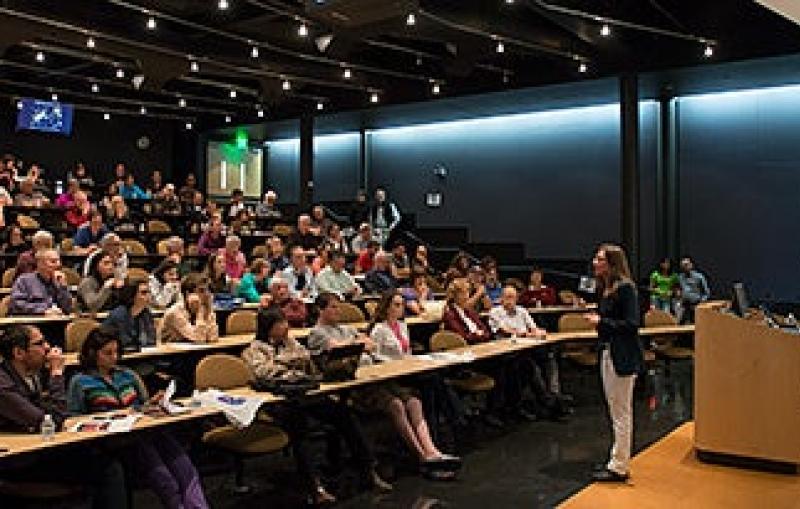
A venue for the SLAC community to hear about a wide range of scientific and science-related topics, presented by notable speakers from SLAC, Stanford, and institutions from around the country and the world.
The SLAC-Stanford Battery Center enables translational research in electrochemical science and technology bridging across fundamental science to deployment.
SLAC’s advanced facilities, expertise in energy science and technology, and strong partnerships are breaking new ground in securing abundant, reliable energy. Visit our energy research page to learn more.
A SLAC-Stanford team developed a new way to precisely measure just how much energy has dissipated into heat in an electrical system – and how to optimize it.
SLAC and Stanford scientists used ultrafast electrons and a laser to reveal an unexpectedly strong optical response to ionization, opening new possibilities for radiological imaging and sensing while shedding light on the fundamental behavior of materials.
Now, we’re turning up the energy. The high-energy upgrade to LCLS will extend its ultrafast megahertz capability into the “hard,” or high-energy, X-ray regime.
Register here to join us in-person, or watch online. Realizing usable electrical power from nuclear fusion has been a grand challenge for physicists and engineers for more than 70 years. Recently the National Ignition Facility (NIF) at Lawrence Livermore National...