SLAC topics

LUX-ZEPLIN (LZ) RSS feed

The LZ detector will use a giant tank of xenon and cutting edge detectors to search for a prominent dark matter candidate, weakly interacting massive particles.

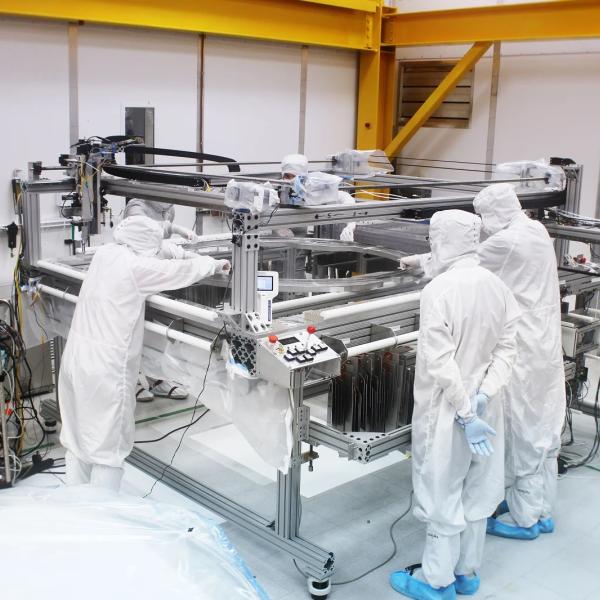
Members of SLAC’s LZ team with loom used to weave high-voltage grids.
Upcoming Event
Something is lurking in the dark. Dark matter makes up most of the matter in the universe, yet it continues to slip through our...

SLAC on Tap
Oct 28
news collection

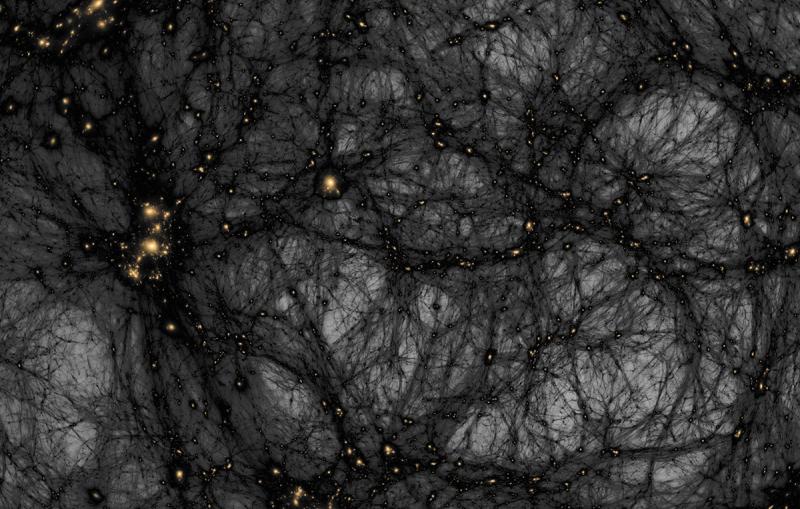
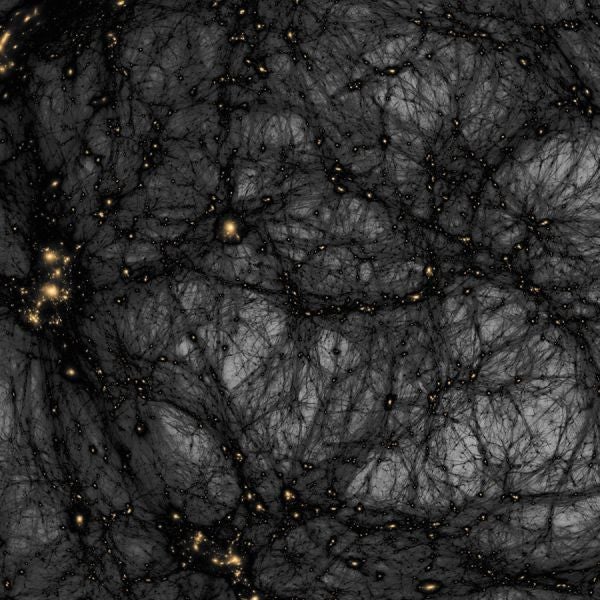
Dark matter makes up about 85% of all matter in the universe, yet its true identity remains one of the biggest cosmological mysteries. At SLAC, researchers are searching high and low to find answers.

Formation of dark matter structures.
News Release

The LUX-ZEPLIN experiment observed a particle interaction that could be interpreted as a signal from WIMPs, a dark matter candidate – but researchers will...

A researcher in protective gear works near a tall, cylindrical scientific instrument with visible wiring. The visible walls surrounding it are reflective Teflon.
News Release

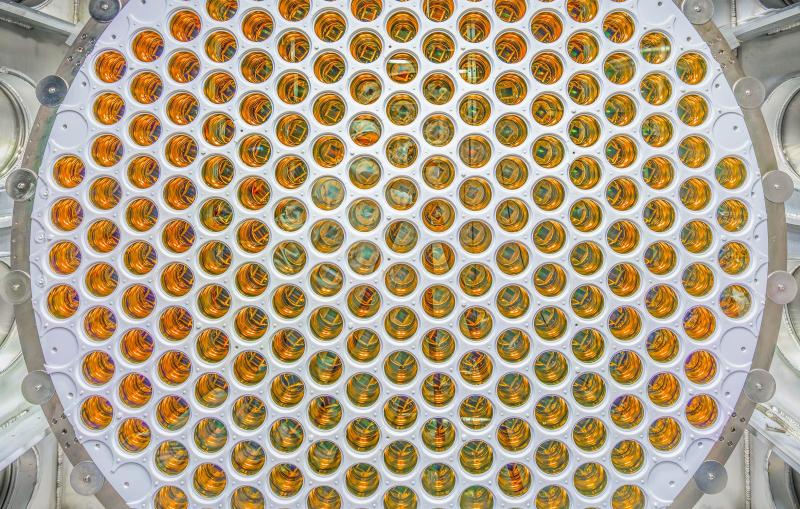
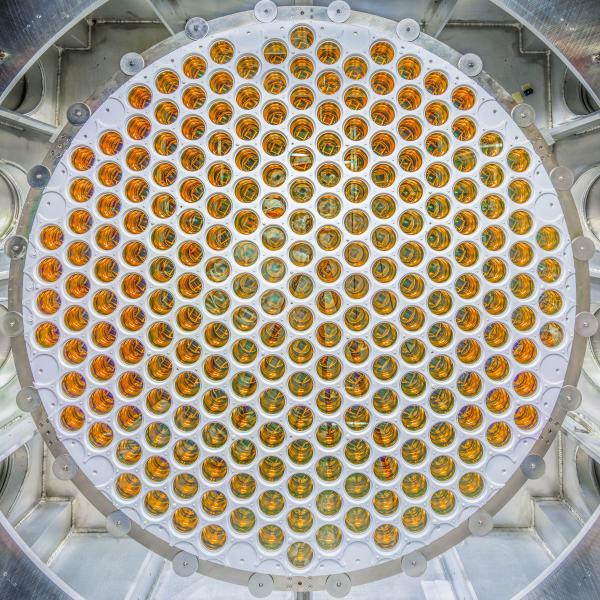
In the largest dataset ever collected by a dark matter detector, LUX-ZEPLIN's latest results provide the strongest constraints on low-mass WIMPs and detect boron-8...

Overhead view looking down into a white structure with dozens of orange circular components arranged radially.
Feature

Her work will advance a next-generation experiment in the hope of detecting this mysterious ingredient of the universe.

Portrait of Ann Wang
Feature

About 30 years ago an ‘ideas guy’ and a team builder joined forces to search for the invisible bulk of existence. In this Q&A...

Dark Matter
Feature

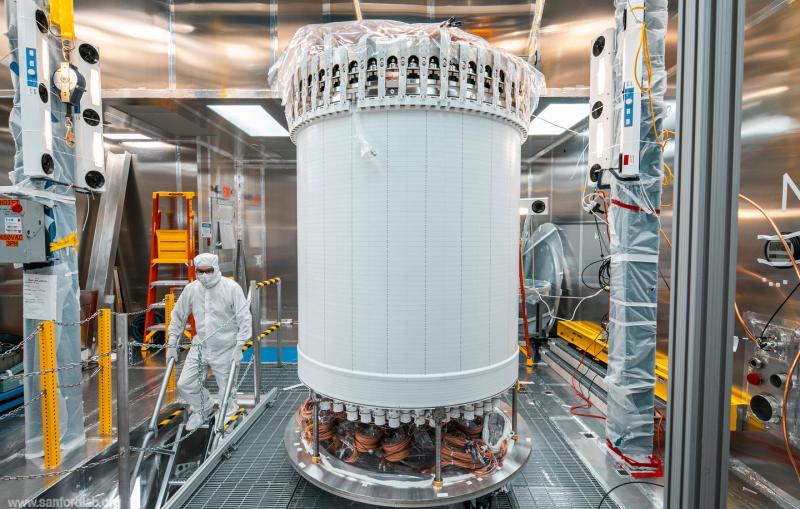
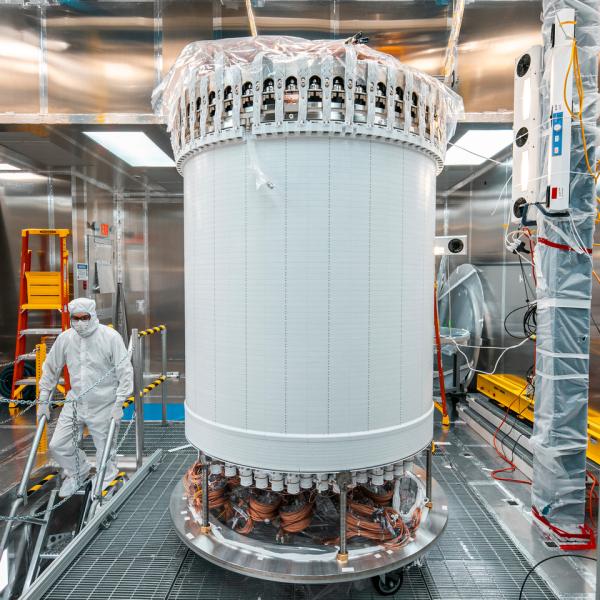
New results from the world’s most sensitive dark matter detector put the best-ever limits on particles called WIMPs, a leading candidate for what makes...

A tall white cylinder stands in a clean room space.
Feature

Two determined fellows share their thoughts on representation, mentorship and staying true to themselves in STEM.

Annette Mendoza and Damion Tingle
Feature

They’ll work on experiments searching for dark matter and physics beyond the Standard Model of particle physics to push our understanding of what makes...

Kelly Stifter and Julia Gonski.
Photograph
Members of SLAC’s LZ team with the loom they used to weave high-voltage grids for the next-gen dark matter experiment.
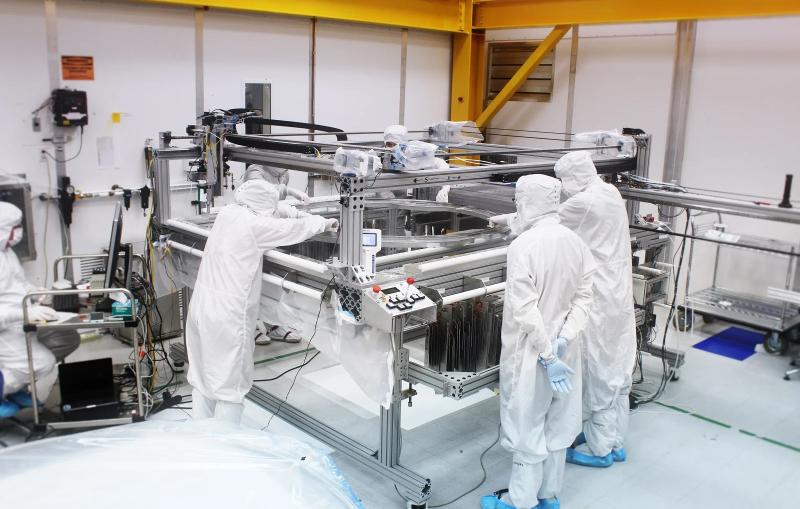
Members of SLAC’s LZ team with loom used to weave high-voltage grids.
Feature

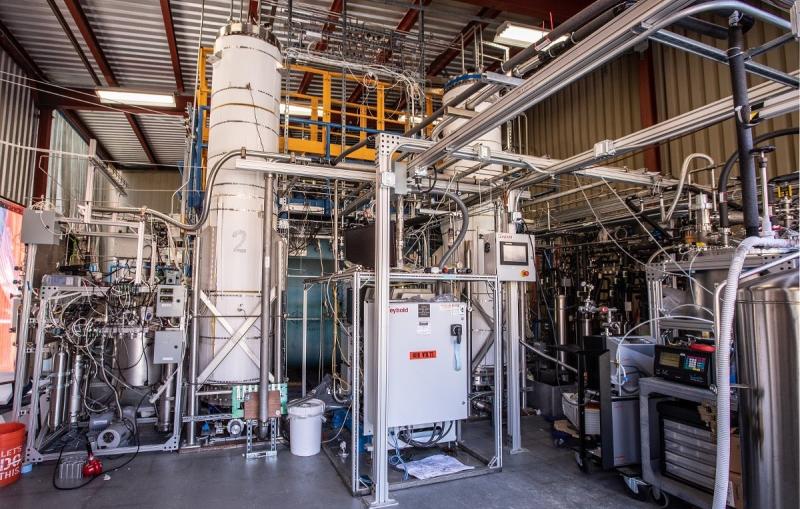
An enormous vat of pure liquid xenon will help scientists at SLAC and around the globe learn more about the universe.

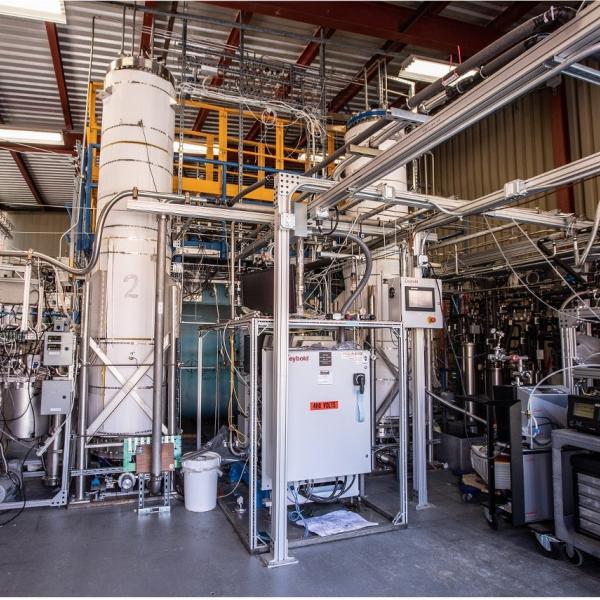
A collection of pipes, towers, and other equipment
Animation
This animation shows how krypton (red) is removed from xenon gas (blue) by flowing the combined gases through a column...
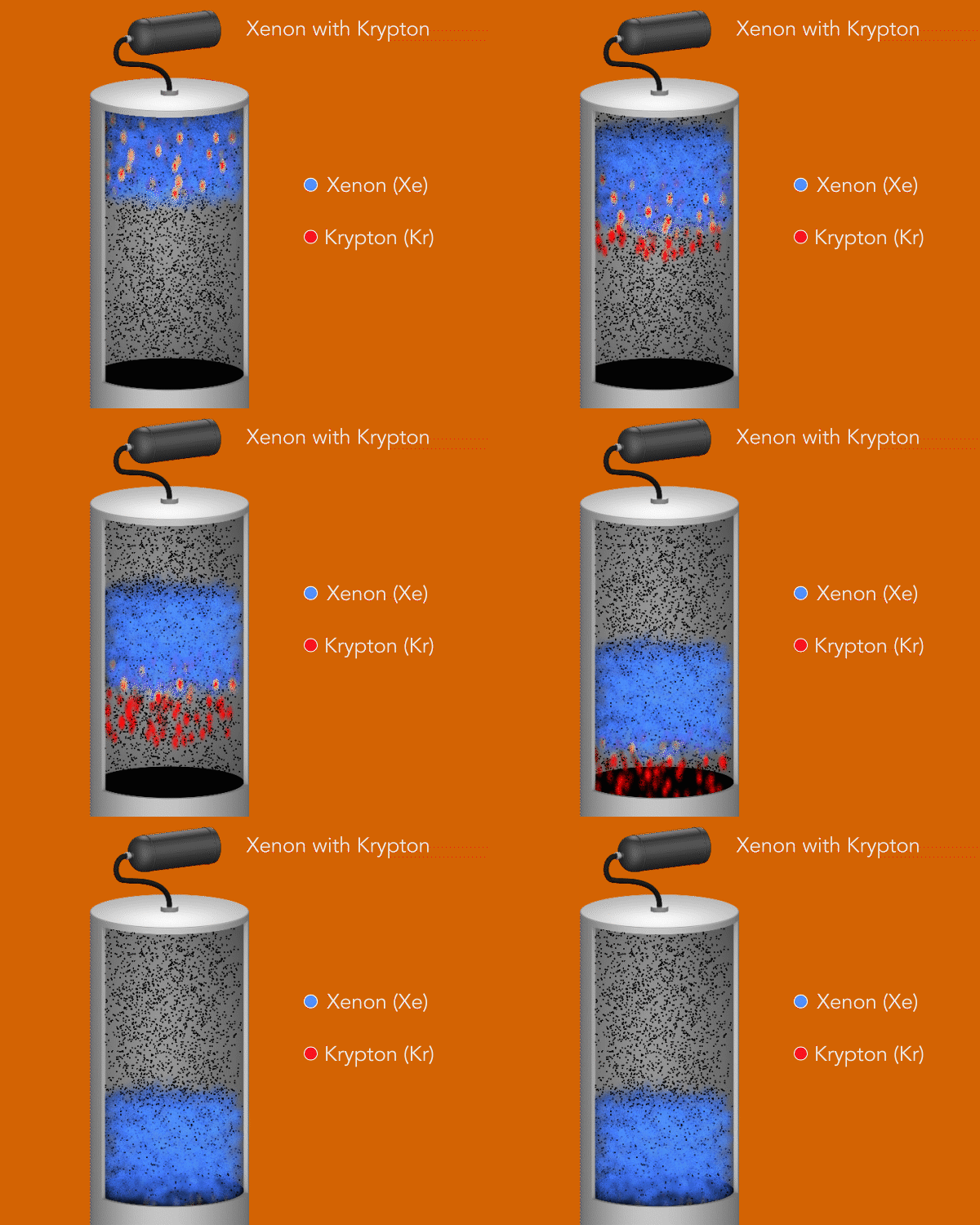
A blue cloud with red spots travels downward, passing gray spots. As it does, the red spots move downward faster.