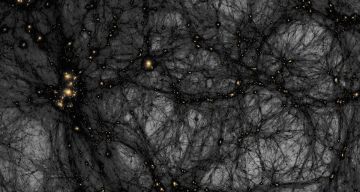
Formation of dark matter structures.
News collection

A hidden universe: The search for dark matter at SLAC

Dark matter makes up about 85% of all matter in the universe, yet its true identity remains one of the biggest cosmological mysteries. At SLAC, researchers are searching high and low – from sweeping surveys of the night sky to sensitive detectors deep underground – to find answers.


Latest dark matter news

September 1, 2026

The LUX-ZEPLIN experiment observed a particle interaction that could be interpreted as a signal from WIMPs, a dark matter candidate — but researchers will need more data to confirm. 

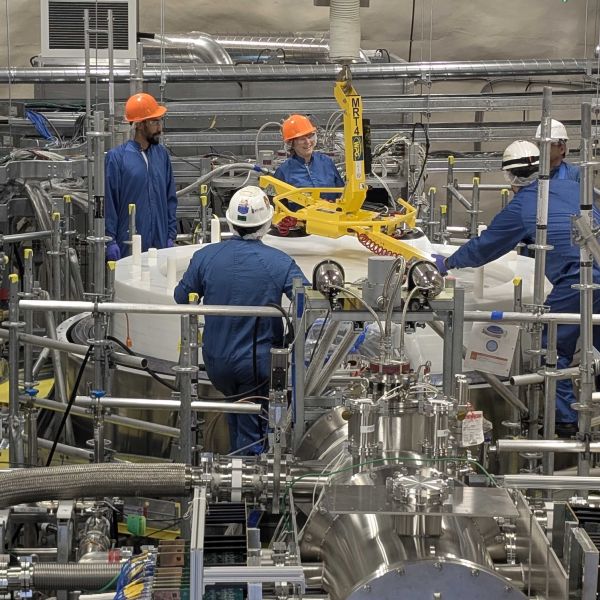
A researcher in protective gear works near a tall, cylindrical scientific instrument with visible wiring. The visible walls surrounding it are reflective Teflon.

The deep-underground experiment could produce early-scientific results in the search for one of nature’s most elusive substances even, before reaching optimal sensitivity when the full search begins next year.

SuperCDMS shield

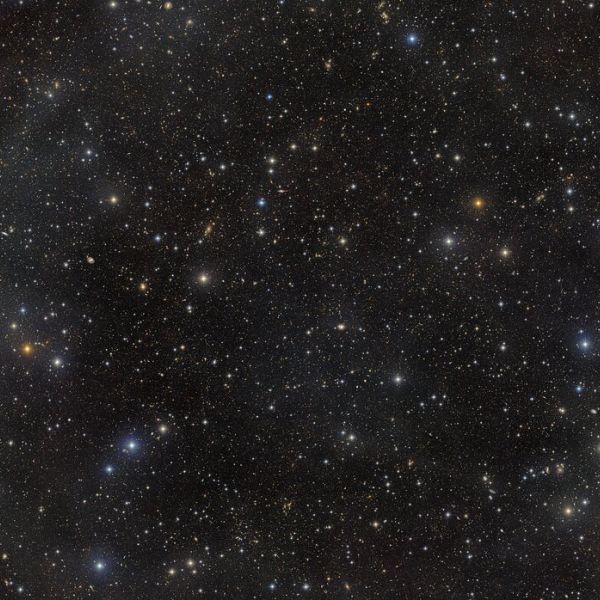
A new NSF–DOE Vera C. Rubin Observatory image featuring hundreds of thousands of distant galaxies in and around the COSMOS field marks the Observatory’s first LSST Camera image and catalog release for science.

Field of night sky with stars and galaxies

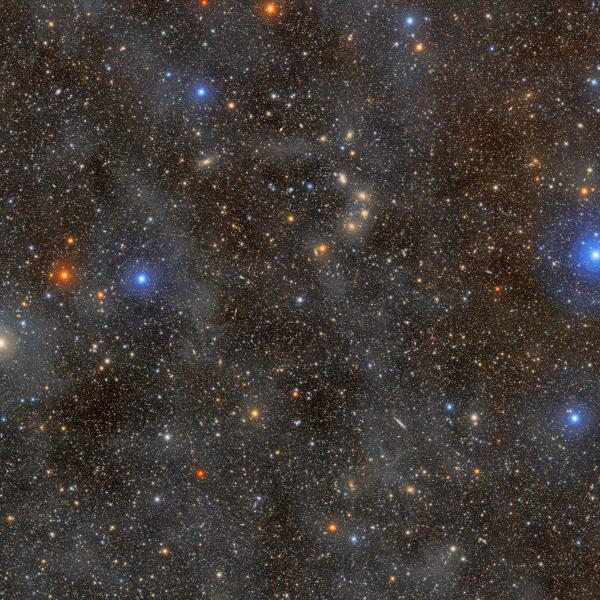
The 10-year Legacy Survey of Space and Time has officially started, marking the beginning of a new era in astronomy and astrophysics.

Ocean of Stars

As QuantISED enters its next phase in its effort to develop quantum technologies capable of exploring some of the universe’s biggest unanswered questions, scientists reflect on what the first round made possible and what comes next.

quantised

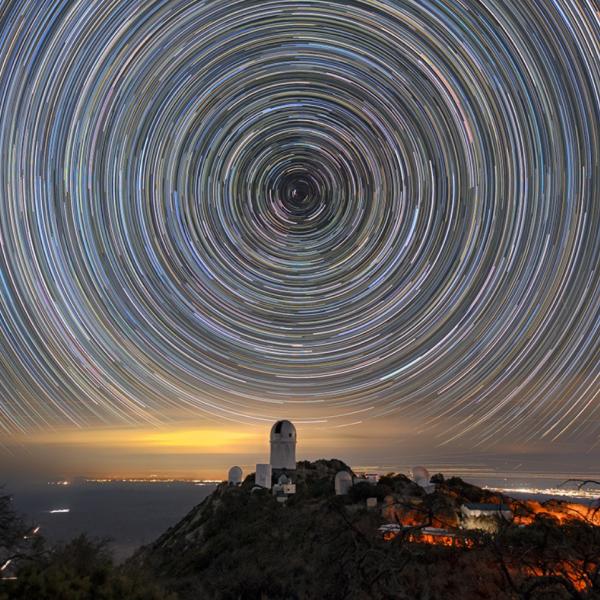
SLAC scientists played key roles in leadership, survey design, cosmological  applications, studies of dark matter and of links to the cosmic microwave background.

Star trails over the Mayall Telescope.

The deep-underground experiment could produce early-scientific results in the search for one of nature’s most elusive substances even, before reaching optimal sensitivity when the full search begins next year.

SuperCDMS shield

A new NSF–DOE Vera C. Rubin Observatory image featuring hundreds of thousands of distant galaxies in and around the COSMOS field marks the Observatory’s first LSST Camera image and catalog release for science.

Field of night sky with stars and galaxies

The 10-year Legacy Survey of Space and Time has officially started, marking the beginning of a new era in astronomy and astrophysics.

Ocean of Stars

As QuantISED enters its next phase in its effort to develop quantum technologies capable of exploring some of the universe’s biggest unanswered questions, scientists reflect on what the first round made possible and what comes next.

quantised

SLAC scientists played key roles in leadership, survey design, cosmological  applications, studies of dark matter and of links to the cosmic microwave background.

Star trails over the Mayall Telescope.

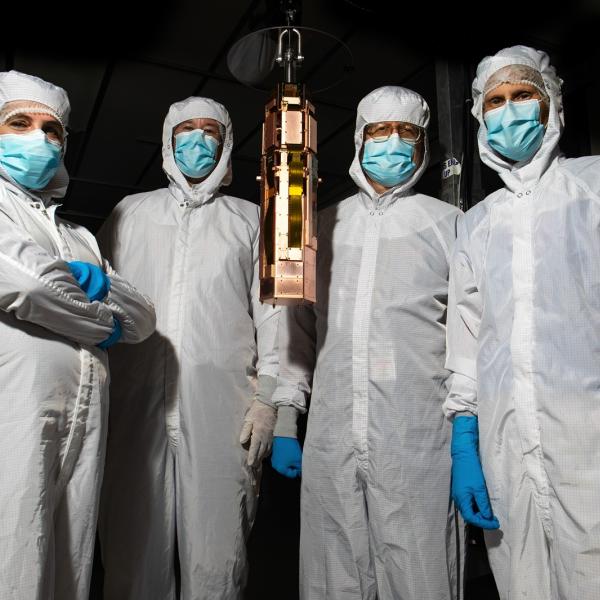
The experiment’s detectors have reached their operating temperature, almost a thousand times colder than outer space.

SuperCDMS team members posing with a detector tower.

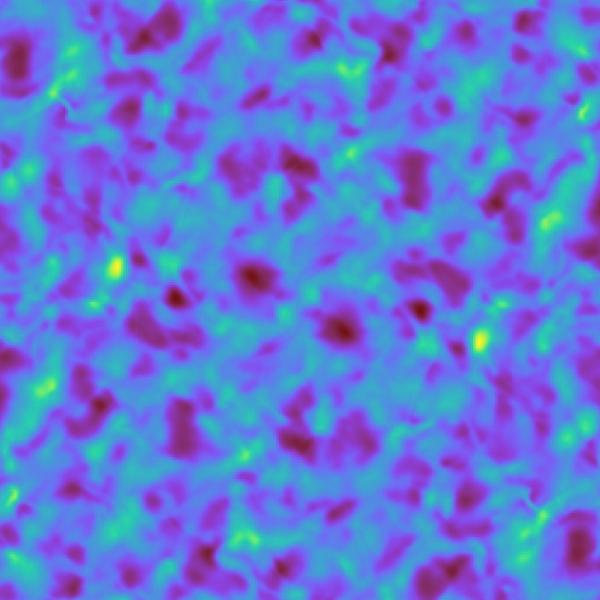
An international team of researchers simulated magnetic forces in the early universe and found they could bridge the gap between the observed and calculated rates of the universe’s expansion.

A simulation of the distribution of matter in the early universe

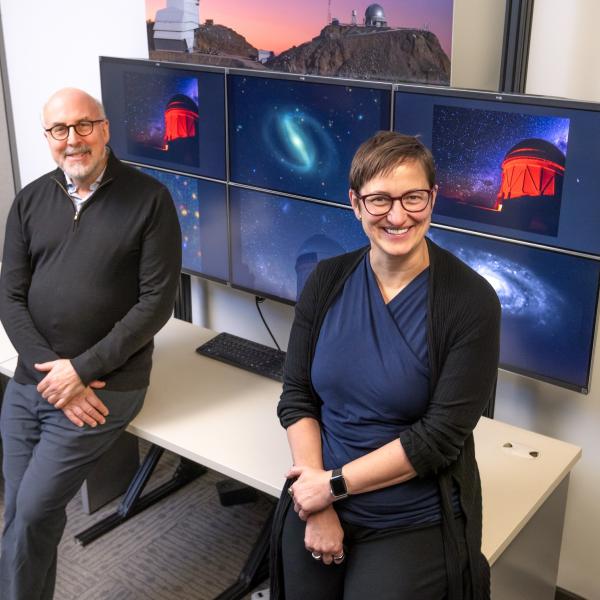
Cosmologists Josh Frieman and Risa Wechsler look back on the Dark Energy Survey, sharing how it’s paving the way for Rubin Observatory to dig deeper into some of the universe’s darkest mysteries.
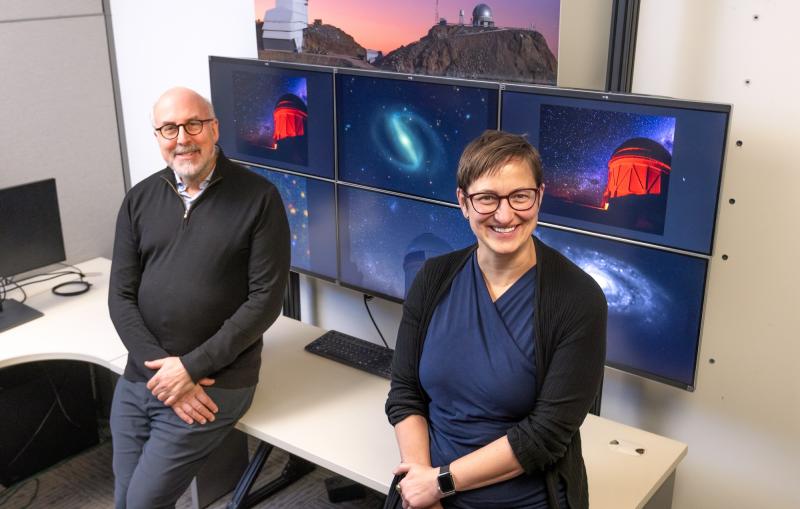
Josh Frieman and Risa Wechsler

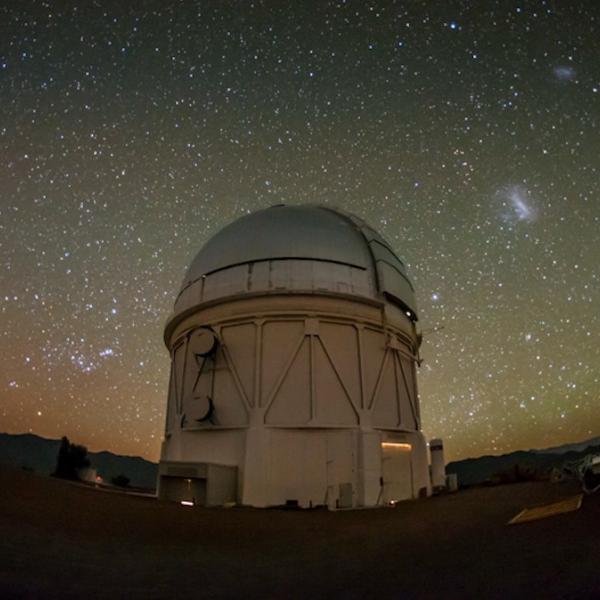
The latest results combined weak lensing and galaxy clustering and incorporated four dark energy probes from a single experiment for the first time.

Photo of the Cerro Tololo Inter-American Observatory (CTIO) in the Chilean Andes at night.

In the largest dataset ever collected by a dark matter detector, LUX-ZEPLIN's latest results provide the strongest constraints on low-mass WIMPs and detect boron-8 solar neutrinos.

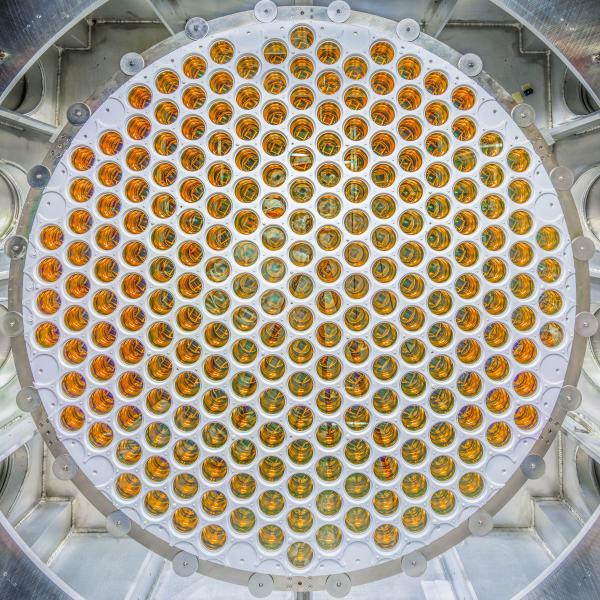
Overhead view looking down into a white structure with dozens of orange circular components arranged radially.
Behind the scenes

Social media highlights

The basics

Dark matter explained

What we can see accounts for only a fraction of the universe. Dark matter and dark energy, both invisible to us, make up about 95% of the cosmos. While dark energy is linked to the universe’s accelerating expansion, dark matter helps hold galaxies together and shape cosmic structure. Scientists search for dark matter directly with extremely sensitive detectors and indirectly through particle experiments and astronomical surveys that look for fingerprints it might leave behind.

Cosmologists Josh Frieman and Risa Wechsler look back on the Dark Energy Survey, sharing how it’s paving the way for Rubin Observatory to dig deeper into some of the universe’s darkest mysteries.

Josh Frieman and Risa Wechsler

About 30 years ago an ‘ideas guy’ and a team builder joined forces to search for the invisible bulk of existence. In this Q&A, SLAC’s Thomas Shutt and Daniel Akerib discuss the challenges of their field and how future generations of dark matter experiments will narrow down the chase.

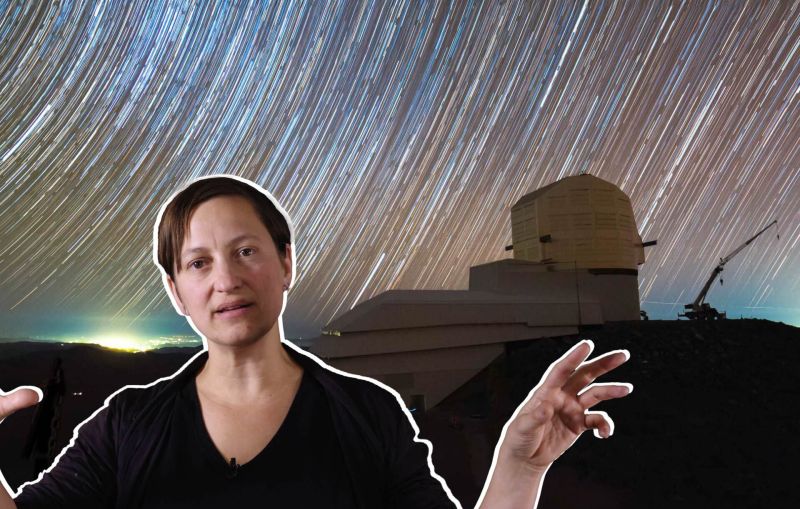
Dark Matter


For questions or comments, contact SLAC Strategic Communications & External Affairs at communications@slac.stanford.edu.


About SLAC

SLAC National Accelerator Laboratory explores how the universe works at the biggest, smallest and fastest scales and invents powerful tools used by researchers around the globe. As world leaders in ultrafast science and bold explorers of the physics of the universe, we forge new ground in understanding our origins and building a healthier and more sustainable future. Our discovery and innovation help develop new materials and chemical processes and open unprecedented views of the cosmos and life’s most delicate machinery. Building on more than 60 years of visionary research, we help shape the future by advancing areas such as quantum technology, scientific computing and the development of next-generation accelerators.

SLAC is operated by Stanford University for the U.S. Department of Energy’s Office of Science. The Office of Science is the single largest supporter of basic research in the physical sciences in the United States and is working to address some of the most pressing challenges of our time.