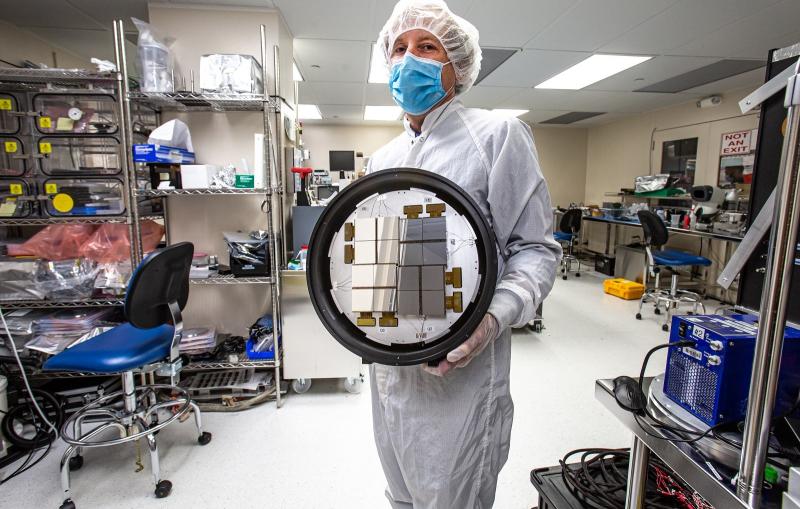
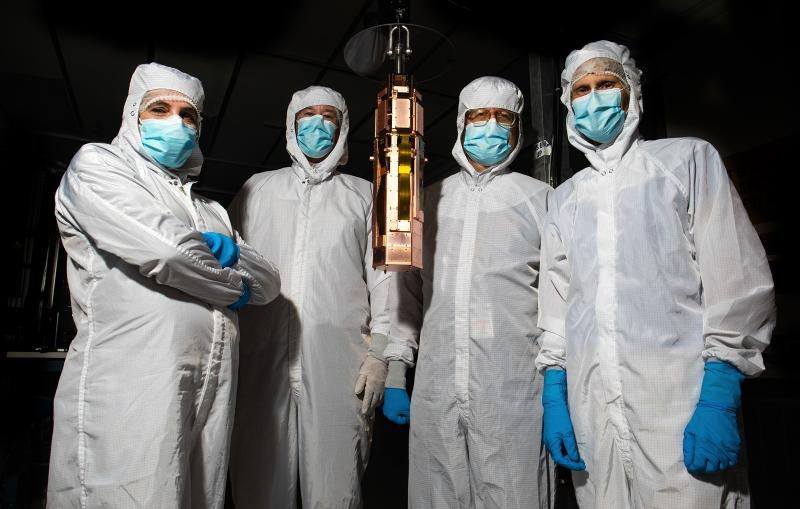
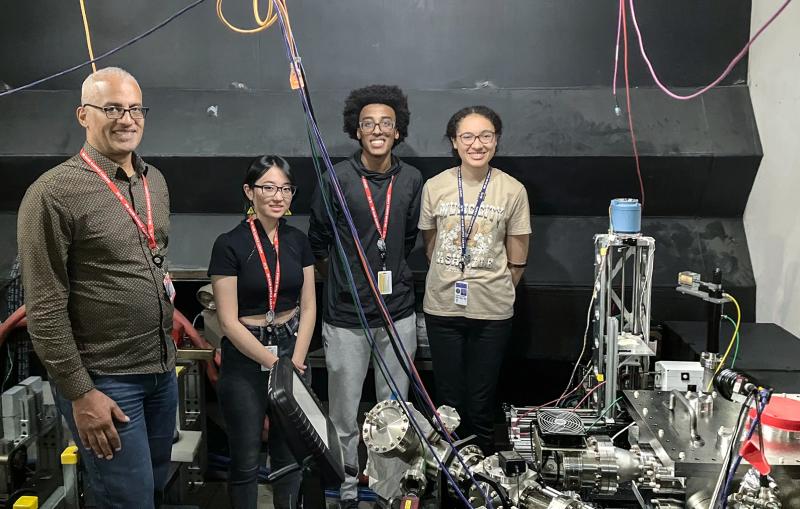
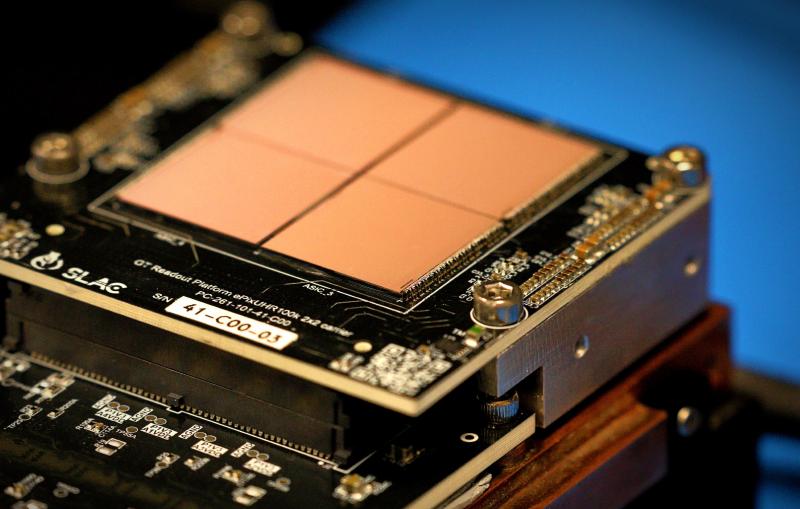
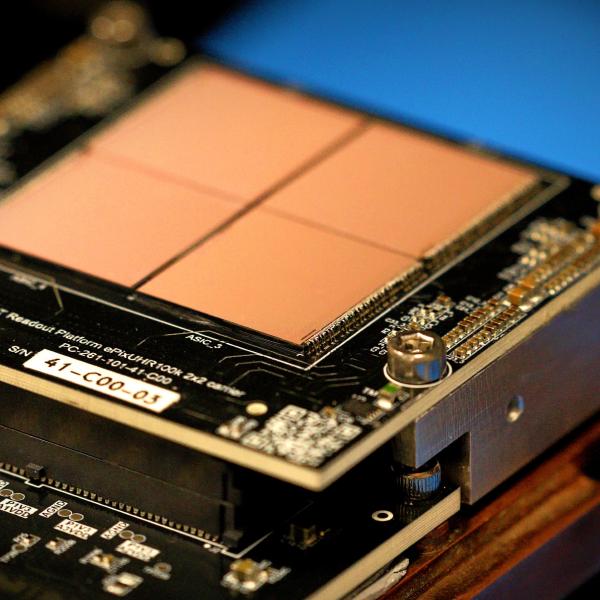
Detectors help enable science at many SLAC facilities and research programs, particularly in the fields of X-ray science, particle physics, and astrophysics.
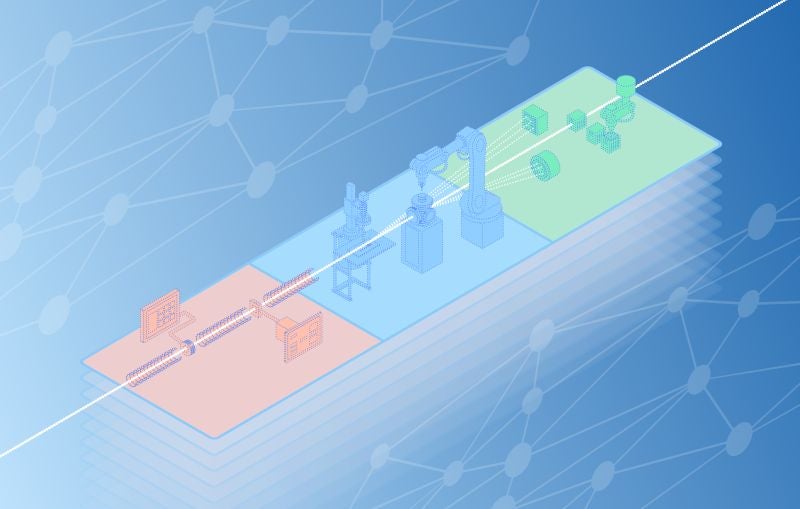
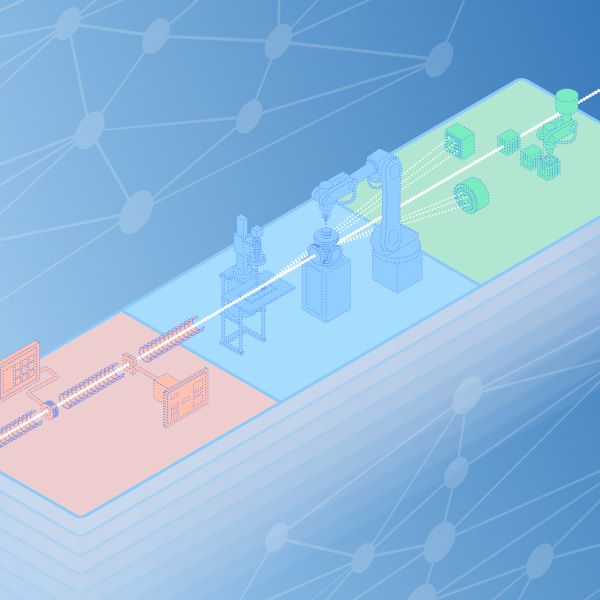
Tomorrow's innovations will come from autonomous labs that slash discovery time, and SLAC's facilities are taking the lead in a new collaboration with Stanford...
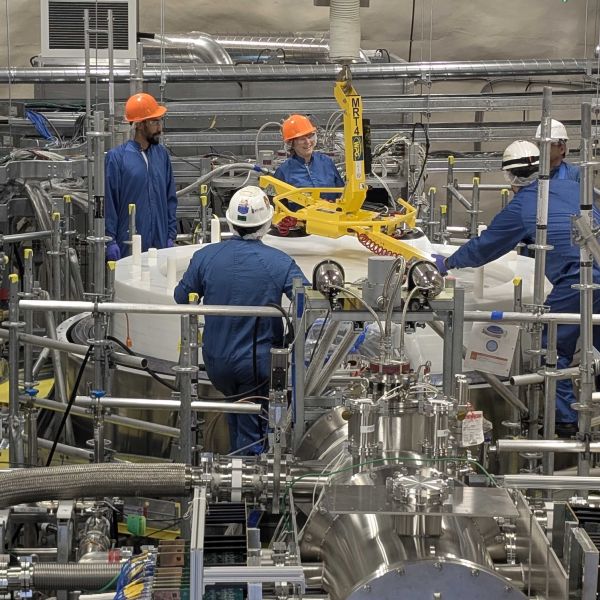
The LUX-ZEPLIN experiment observed a particle interaction that could be interpreted as a signal from WIMPs, a dark matter candidate – but researchers will...
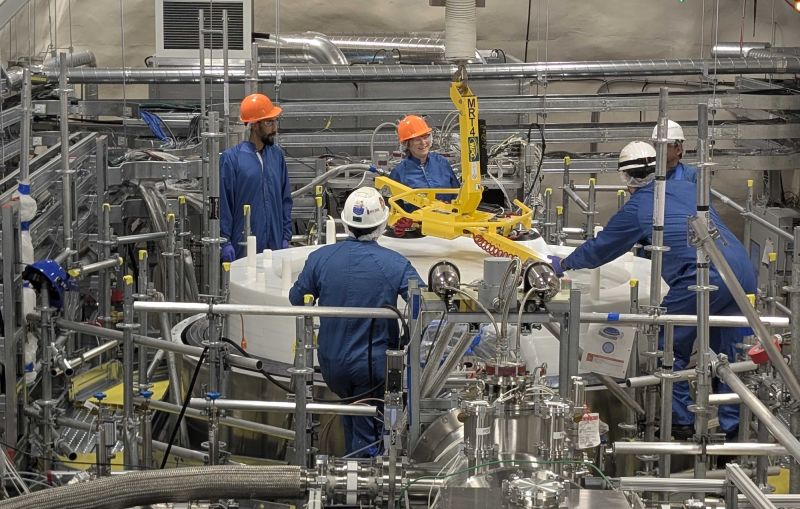
The deep-underground experiment could produce early-scientific results in the search for one of nature’s most elusive substances even, before reaching optimal sensitivity when the...
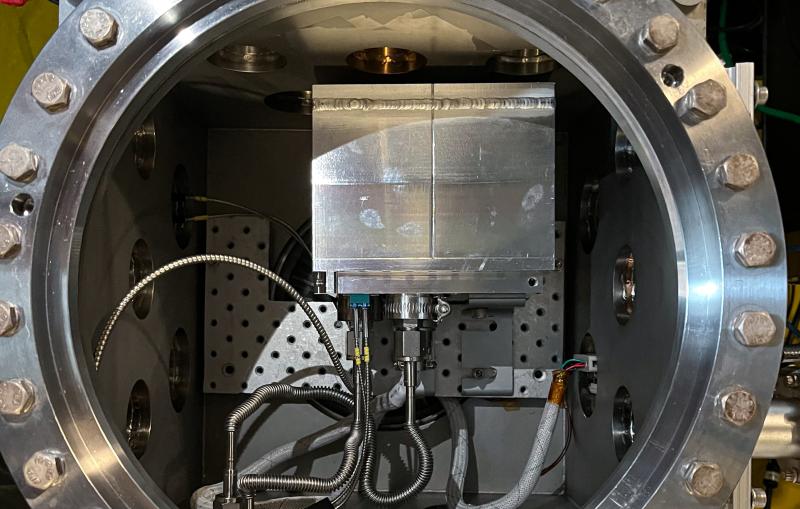
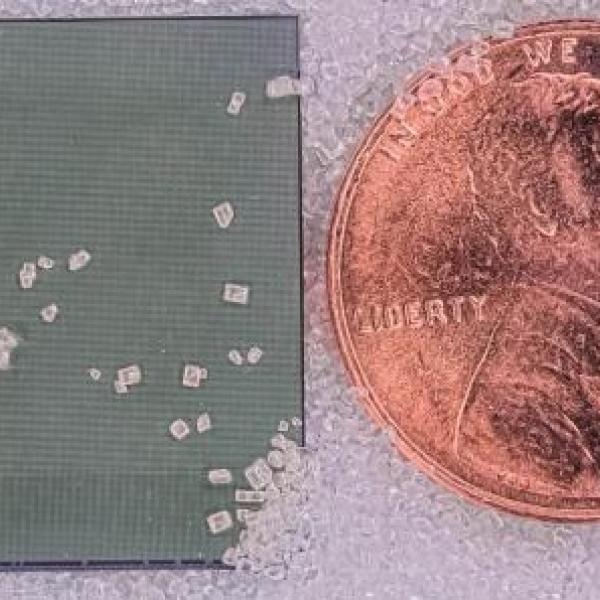
Researchers reengineered an ePix10k detector for use in ultrafast electron diffraction, empowering studies of chemical processes that were previously out of reach.
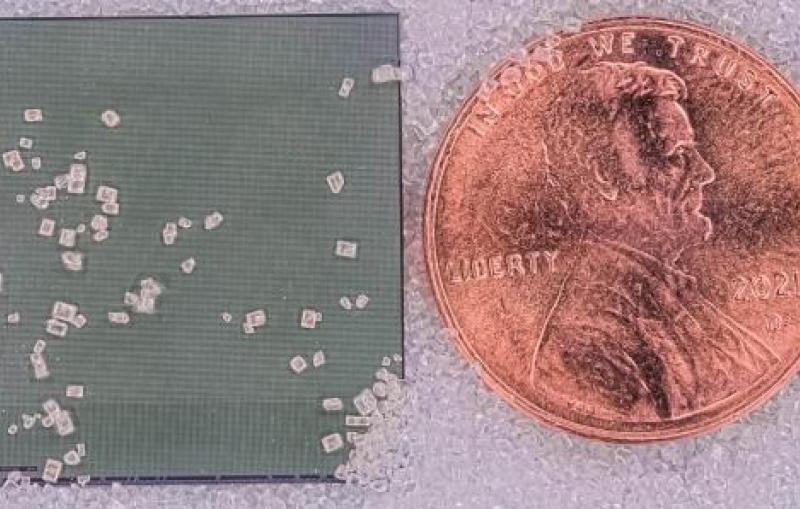
Argonne, SLAC researchers designed a chip that compresses and processes detector data instantly, letting scientists analyze results and steer experiments as they happen.
Tomorrow's innovations will come from autonomous labs that slash discovery time, and SLAC's facilities are taking the lead in a new collaboration with Stanford, other national labs, universities, and industry.
The LUX-ZEPLIN experiment observed a particle interaction that could be interpreted as a signal from WIMPs, a dark matter candidate – but researchers will need more data to confirm.
The deep-underground experiment could produce early-scientific results in the search for one of nature’s most elusive substances even, before reaching optimal sensitivity when the full search begins next year.
Researchers reengineered an ePix10k detector for use in ultrafast electron diffraction, empowering studies of chemical processes that were previously out of reach.
Argonne, SLAC researchers designed a chip that compresses and processes detector data instantly, letting scientists analyze results and steer experiments as they happen.
The microelectronics that power daily life and speed discoveries in science and technology are the focus of a bold new vision to make them more energy efficient and able to operate in extreme environments.
David Cesar, Julia Gonski and W.L. Kimmy Wu will each receive $2.75 million issued over five years for their research in X-ray and ultrafast science, new physics and primordial gravitational waves.