Past Event

How we built the world's largest digital camera

Presented by Travis Lange

The world’s biggest digital camera was built at SLAC, and shipped to the NSF-DOE Vera C. Rubin Observatory in northern Chile last year. This observatory has a goal no less ambitious than to map the entire the southern sky and all of the galaxies out to 10 billion light years from earth. 

At the center of the observatory is a digital camera the size of a small car, with a 5 1/2 foot entrance lens, 3.2 Giga-pixel resolution, and high precision built into each pixel to provide quality scientific data. This camera is a unique feat of engineering, designed and assembled at SLAC over the past 10 years. The huge data set from the camera will shed new light on cosmic phenomena, from the asteroids and minor planets in our solar system to the large-scale evolution of the universe. 

In this talk, I will describe the camera design and discuss some of the challenges that we met during its construction. I will conclude by showing early images of the sky that the camera and the observatory have recently made public.

About Travis Lange

Travis Lange is a Senior Mechanical Engineer at SLAC. A Minnesota native, Travis obtained degrees in physics and mechanical engineering from Gustavus Adolphus College and the University of Minnesota. While completing his engineering degree, he was the lead mechanical engineer and project manager for the University of Minnesota's solar vehicle project.

Prior to joining SLAC, Travis spent nearly 12 years at Lawrence Livermore Lab developing the world’s most energetic, short pulse laser for the National Ignition Facility.

Also during this time, he spent nearly 4 years as an active adventure guide, taking clients on week-long hiking, biking, and cultural trips around the world.

Travis joined the Rubin LSST Camera team in October 2014 as the lead mechanical engineer for the Camera Integration and Testing. In his current role, he leads the management and planning for the operation of the LSST Camera.

Past Event

How we built the world's largest digital camera

Presented by Travis Lange

Public Lectures
Stillframe public lecture presented by Travis Lange
Video
Date
Thursday, August 7, 2025
7:00–8:00 p.m. PDT
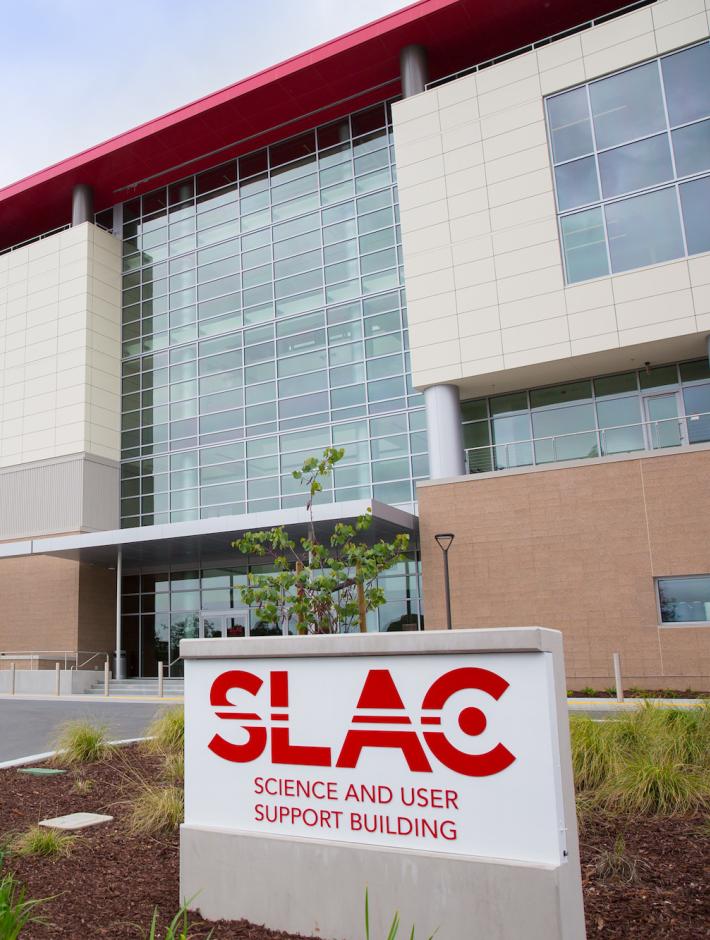
Science and User Support Building (SUSB)
Attending a public event

Coming to SLAC

Free admission 
Registration may be required.

Identification required 
Adults are required to bring a REAL ID to enter the SLAC campus.

Limited seating  
For events in the Kavli Auditorium, seating is limited. Please arrive early to join the event on time.

Free parking 
SLAC offers free parking in our visitor parking lot.

Bags 
In order for SLAC to provide a safe environment for the public and our employees, and expedite access to the event, no bags or backpacks larger than 12"x6"x12" will be allowed inside the venue. Exceptions to this policy will be made for all medically necessary items after proper inspection and for SLAC-badged staff.

Accessibility 
SLAC facilities meet American Disability Act requirements for accessibility. If you need assistance, please notify our security officers as you enter SLAC’s main gate, and they will direct you to a parking area and assist or escort you to the auditorium.     

Getting here 
SLAC is located at 2575 Sand Hill Road, Menlo Park, California, 94025. Please visit our Maps and directions page for driving directions. 

If you have specific questions or concerns about attending an event at SLAC, please contact us.

Site entry informationMaps & directions

Featured in

Related news

The state-of-the-art ‘big-data facility’ unveils its first images and video, bringing the night sky to life like never before.

This image combines 678 separate images taken by NSF–DOE Vera C. Rubin Observatory in just over seven hours of observing time. Combining many images in this way clearly reveals otherwise faint or invisible details, such as the clouds of gas and dust that comprise the Trifid nebula (top) and the Lagoon nebula, which are several thousand light-years away from Earth