
SLAC topics

Ultrafast science RSS feed

SLAC is the world’s leading center for developing “ultrafast” X-ray, laser and electron beams that allow us to see atoms and molecules moving in just millionths of a billionth of a second. We can even create stop-action movies of these tiny events.

Related Links:
DOE explains...Ultrafast science

Browse tagged content
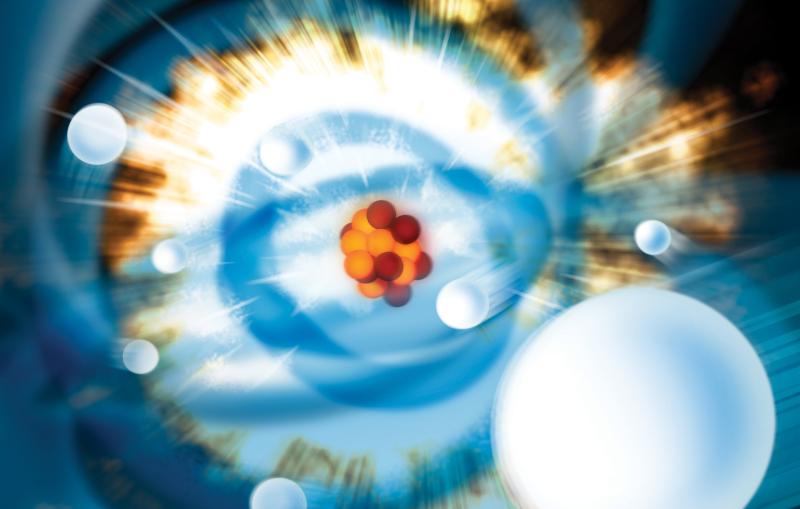
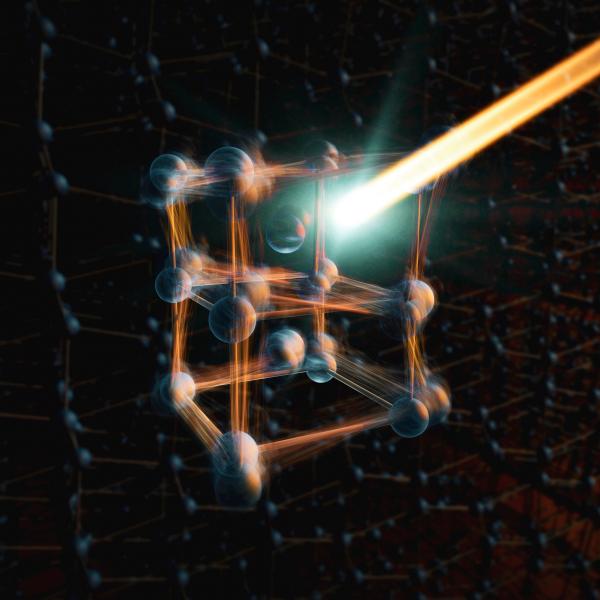
This illustration shows how the first experiment at SLAC's Linac Coherent Light Source X-ray laser stripped away electrons from neon atoms. (SLAC National Accelerator Laboratory)
Feature

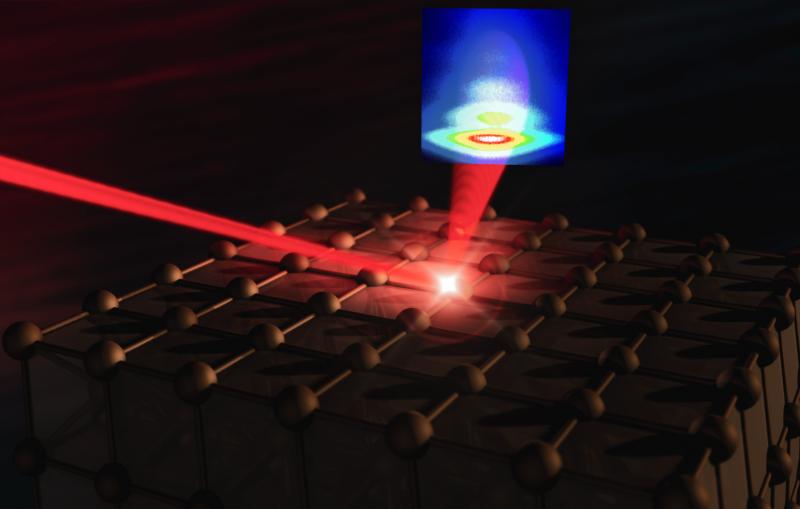
Using an X-ray laser, researchers watched atoms rotate on the surface of a material that was demagnetized in millionths of a billionth of a...

Iron sample blasted with laser pulses to demagnetize it, then X-rayed.
Feature

Ultrafast manipulation of material properties with light could stimulate the development of novel electronics, including quantum computers.

Topological Switch Lead Art
News Release

In a major step forward, SLAC’s X-ray laser captures all four stable states of the process that produces the oxygen we breathe, as well...

Atomic movie
Feature

Revealed for the first time by a new X-ray laser technique, their surprisingly unruly response has profound implications for designing and controlling materials.

Illustration of laser light setting off vibrations in material
Feature

The initiative will give scientists more access to powerful lasers at universities and labs.

MEC LaserNet
Feature

Switches like this one, discovered with SLAC’s ultrafast ‘electron camera’, could offer a new, simple path to storing data in next-generation devices.

Single Pulse Material Switch
Feature

In a first, researchers measure extremely small and fast changes that occur in plasma when it’s zapped with a laser. Their technique will have...

LCLS Plasma Expansion
Feature

The annual conference for scientists who conduct research at SLAC’s light sources engaged about 470 researchers in talks, workshops and discussions.

2018 Users Conference
Feature

The early-career award honors a promising leader in X-ray free-electron laser research.

SLAC's Tais Gorkhover
Feature

A team of electrical designers develops specialized microchips for a broad range of scientific applications, including X-ray science and particle physics.

This illustration shows the layout of an application-specific integrated circuit, or ASIC, at an imaginary art exhibition.
Feature

Tony Heinz and Z-X Shen will receive funding for research focused on catalysis and novel states of matter.

News Release

To break, or not to break: An unprecedented atomic movie captures the moment when molecules decide how to respond to light.

UED Bond Breaking