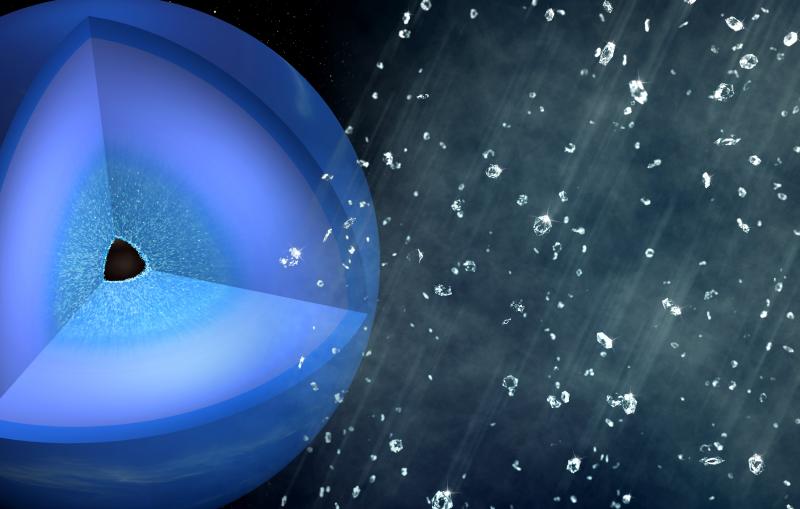
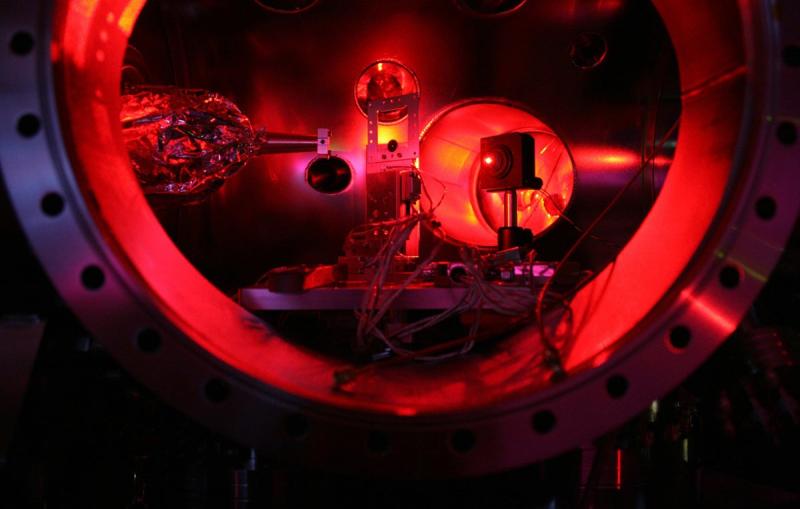
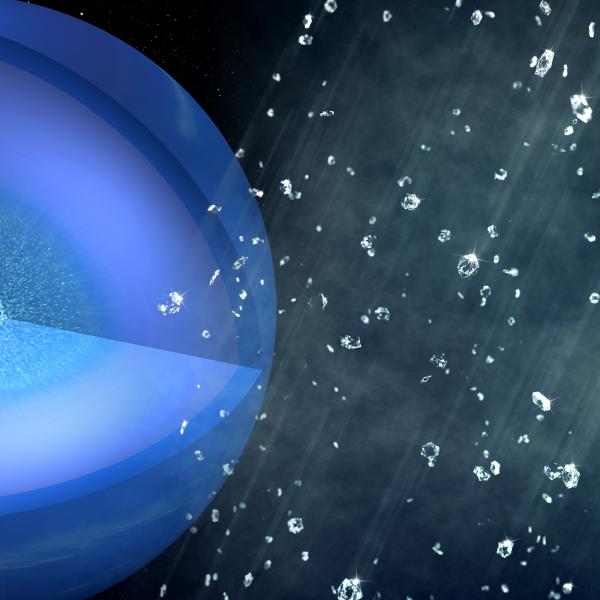
SLAC’s X-ray laser and Matter in Extreme Conditions instrument allow researchers to examine the exotic precipitation in real time as it materializes in the...
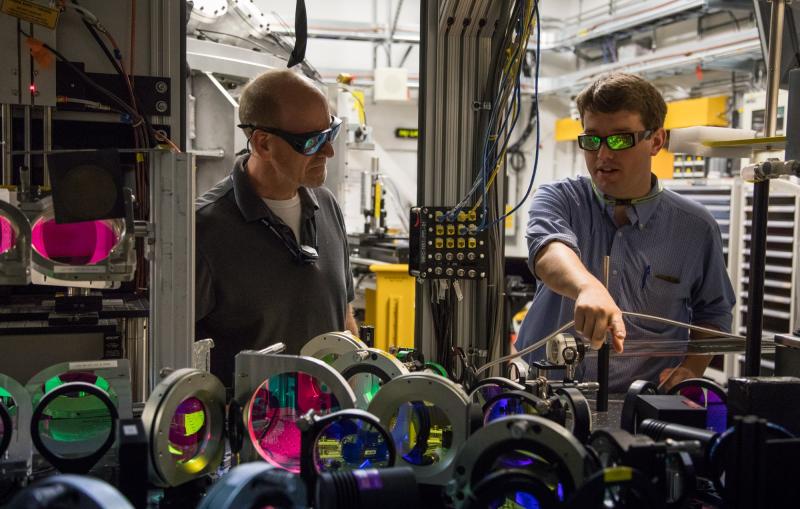
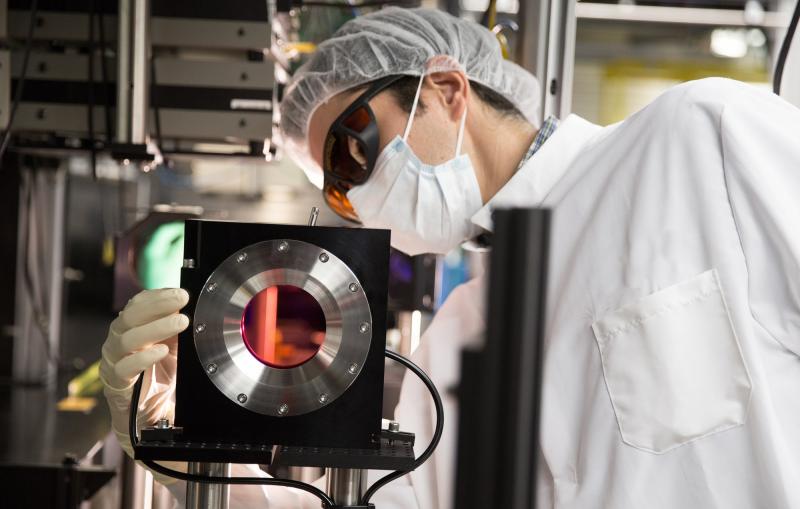
Tripling the energy and refining the shape of optical laser pulses at LCLS’s Matter in Extreme Conditions instrument allows researchers to recreate higher-pressure conditions...
Zeeshan Ahmed, Frederico Fiuza and Emilio Nanni will each receive about $2.5 million over five years to pursue cutting-edge research into cosmic inflation, plasma...
Computer simulations and lab experiments help researchers understand the violent universe and could potentially lead to new technologies that benefit humankind.
The 2010 experiment marked a significant step forward in understanding extreme states of matter at the hearts of stars, planets and nuclear fusion reactions.
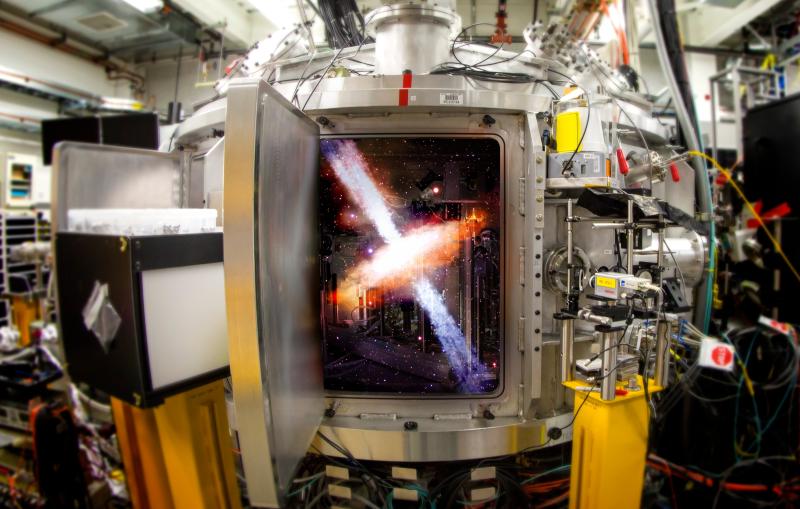
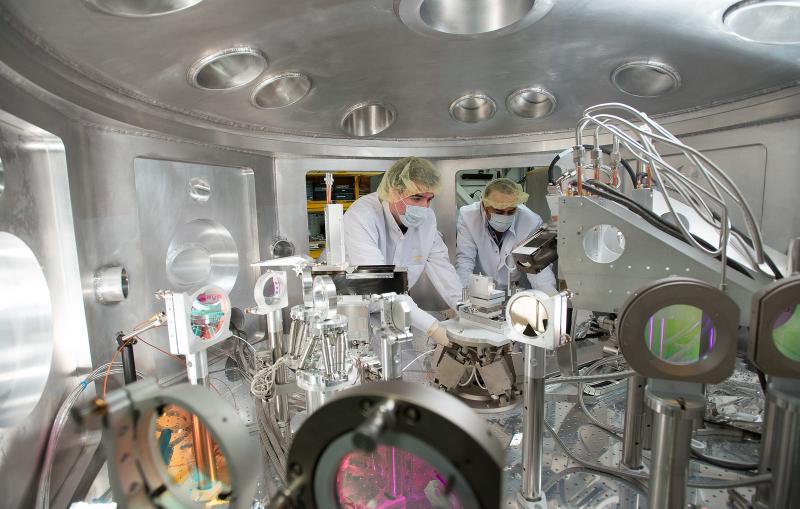
A 200-terawatt laser at SLAC will synchronize with X-ray laser pulses to precisely measure more extreme temperatures and pressures in exotic forms of matter.
Researchers have used an X-ray laser to record, in detail never possible before, the microscopic motion and effects of shock waves rippling across diamond.
SLAC’s X-ray laser and Matter in Extreme Conditions instrument allow researchers to examine the exotic precipitation in real time as it materializes in the laboratory.
Tripling the energy and refining the shape of optical laser pulses at LCLS’s Matter in Extreme Conditions instrument allows researchers to recreate higher-pressure conditions and explore unsolved questions relevant to fusion energy, plasma physics and materials science.
Zeeshan Ahmed, Frederico Fiuza and Emilio Nanni will each receive about $2.5 million over five years to pursue cutting-edge research into cosmic inflation, plasma acceleration and using terahertz waves to accelerate particles.
Computer simulations and lab experiments help researchers understand the violent universe and could potentially lead to new technologies that benefit humankind.
The 2010 experiment marked a significant step forward in understanding extreme states of matter at the hearts of stars, planets and nuclear fusion reactions.
A 200-terawatt laser at SLAC will synchronize with X-ray laser pulses to precisely measure more extreme temperatures and pressures in exotic forms of matter.
Researchers have used an X-ray laser to record, in detail never possible before, the microscopic motion and effects of shock waves rippling across diamond.
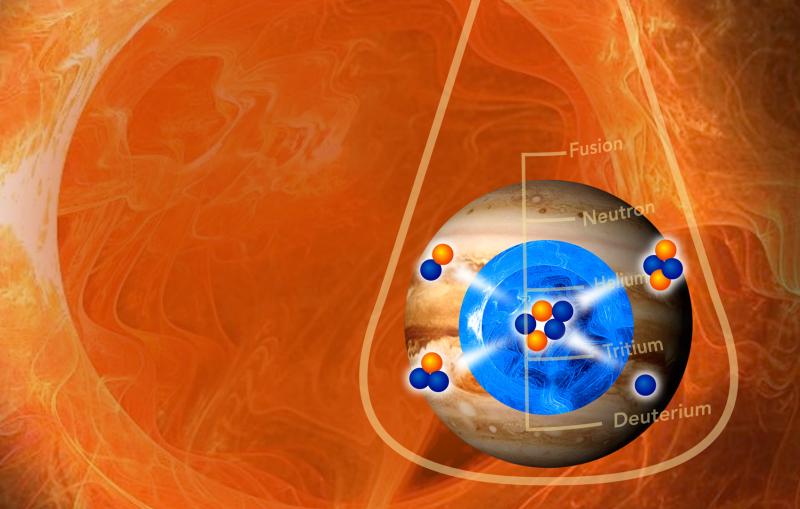
Presented by Siegfried Glenzer. Normally we think of hydrogen as a gas. But elsewhere in the universe, hydrogen under extreme pressure can exist in more exotic states. In the center of Jupiter, hydrogen becomes liquid or even solid. In the...