SLAC topics

Fundamental physics RSS feed

SLAC fundamental physics researchers study everything from elementary particles produced in accelerators to the large-scale structure of the universe. 

Browse tagged content

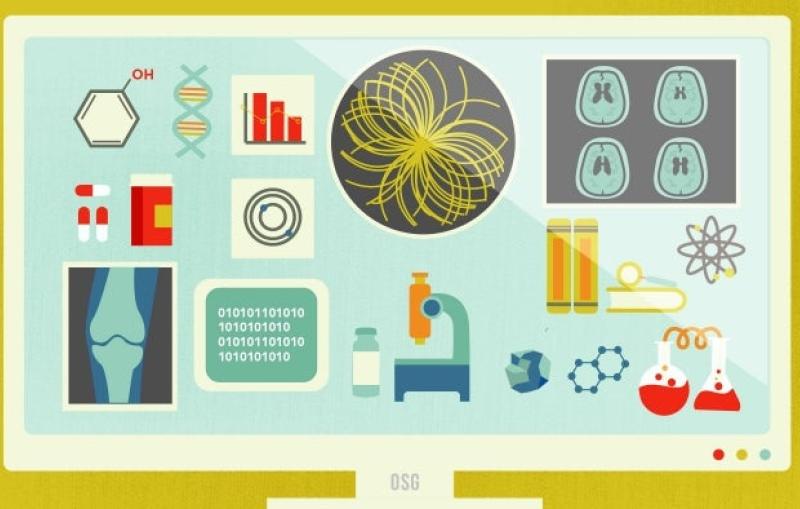
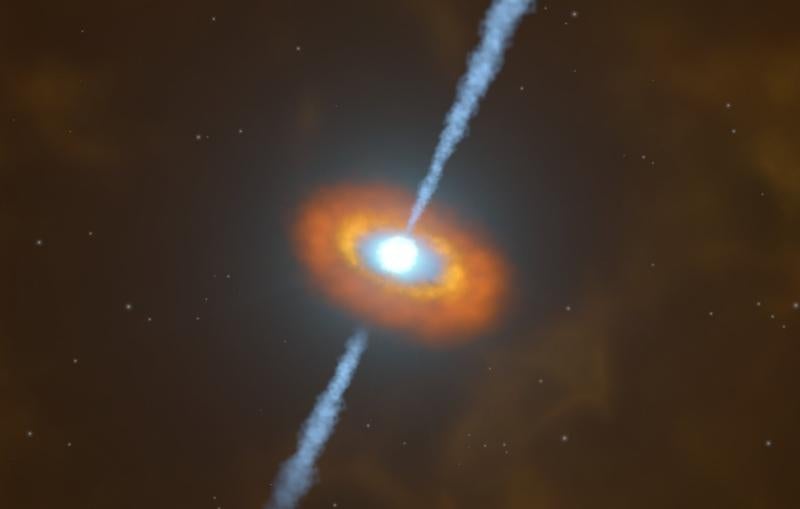
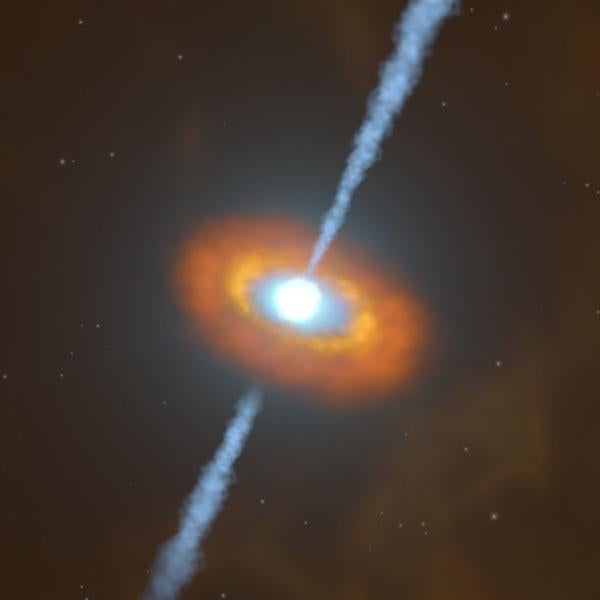
Fundamental physics concept illustration

Understanding the origins of our solar system, the future of our planet or humanity requires complex calculations run on high-power computers.

Photo - tom abel in srcc
Feature

The Particle Physics Project Prioritization Panel’s report, released today, recommends a strategic path forward for US particle physics.

Feature

The Particle Physics Project Prioritization Panel’s recommendations will set the course for the future of particle physics in the United States.

Snomass 2013 Opening
Feature

The Planck mission released a first glimpse of data that, later this year, will test BICEP2’s discovery of gravitational waves.

Feature

About 550 visitors from all over the Bay Area came to explore a wide range of the institute’s cosmic research topics.

Photo - 3-D movies at the 2014 KIPAC open house
Feature

In a few years, scientists will come out with a new map of a third of the sky, one that will go deeper and...

Feature

An engineer at SLAC laboratory constructed a full-scale model of the Large Synoptic Survey Telescope's cryostat in his spare time.

Feature

SLAC recently hosted a forward-looking group of theoretical and experimental particle physicists. Their purpose: Follow the science to determine what a post-LHC collider could...

Photo - Members of the Physics at 100 TeV workshop
Feature
VIA Symmetry Magazine

The 'Cosmos' connection

Science is no longer the wallflower who doesn’t get asked to the dance, writes physicist Glen Crawford in an essay about science outreach past...

Feature
VIA Symmetry Magazine

Research Abroad, CERN Style

Students from US universities work on LHC experiments through a new research abroad program.

Feature
VIA Symmetry Magazine

A ‘crack in the cosmic egg’

The recent BICEP2 discovery of evidence for cosmic inflation might point to new physics.

Feature

A new trigger system will expand what ATLAS scientists can look for during high-energy collisions at the Large Hadron Collider.