SLAC topics

Energy sciences RSS feed

One of the most urgent challenges of our time is discovering how to generate the energy and products we need sustainably, without compromising the well-being of future generations by depleting limited resources or accelerating climate change. SLAC pursues this goal on many levels.
Browse tagged content

Studies of atomic-level processes
Feature

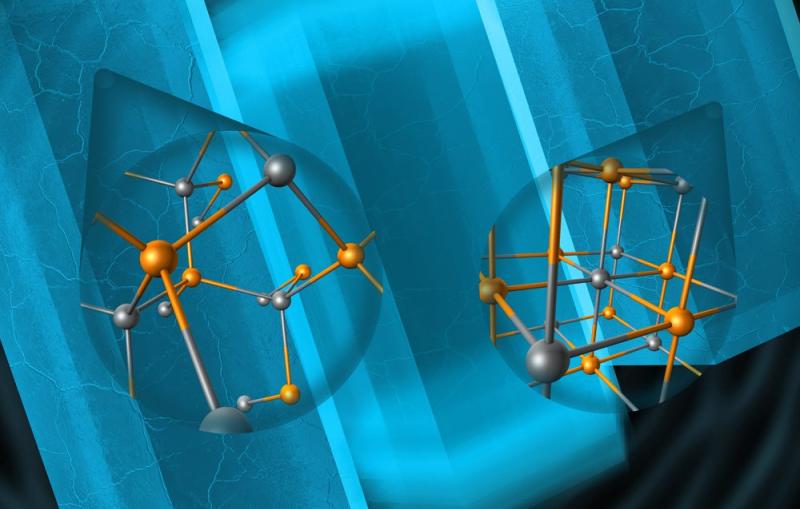
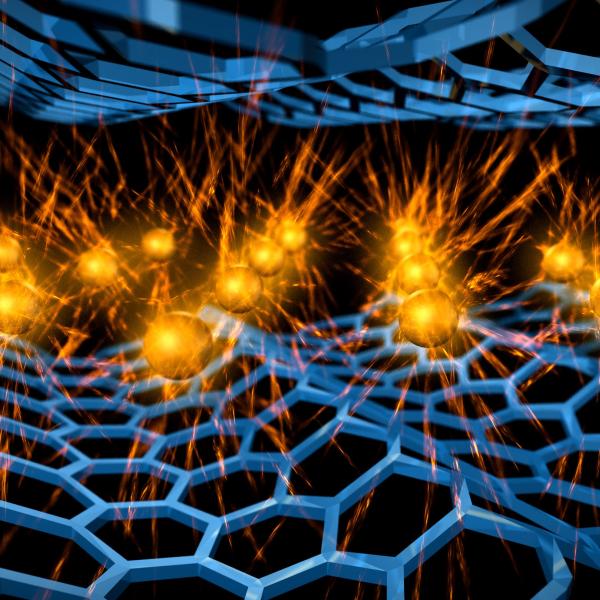
While this particular material is very unstable, the research shows it may be possible to find a material with the properties graphene has to...

photo of zhongkai liu
Feature

Teams from Stanford, SLAC and the University of Nebraska-Lincoln collaborate to make thin, transparent semiconductors that could become the foundation for cheap, high-performance displays.

See caption
News Release

A single layer of tin atoms could be the world’s first material to conduct electricity with 100 percent efficiency at the temperatures that computer...

Photo - tin can and piece of scrap tin sitting on a periodic table of elements with tin "Sn" highlighted
News Release

Researchers have made the first battery electrode that heals itself, opening a new and potentially commercially viable path for making the next generation of...

photo - research with self-healing polymer
Feature

Scientists working at SLAC, Stanford, Oxford, Berkeley Lab and in Tokyo have discovered a new type of quantum material whose lopsided behavior may lend...

Yulin Chen (Brad Plummer/SLAC)
Feature

Scientists at SLAC have found a new method to create coherent beams of twisted light – light that spirals around a central axis as...

Accelerator physicist Erik Hemsing next to the NLCTA,...
Feature

When it comes to improving the performance of lithium-ion batteries, no part should be overlooked – not even the glue that binds materials together...

Image -  A new binder material forms a fine-grained (top) lithium sulfide/carbon composite cathode, compared with the large clumps (bottom) that form when another common binder is used.
Feature

Last Saturday marked the 40th anniversary of an historic event: In 1973, a team of research pioneers extracted hard X-rays for the first time...

Photo - SSRP pilot project beamline inside SPEAR, 07/06/1973. (SLAC Archives)
News Release

The ultrafast, ultrabright X-ray pulses of the Linac Coherent Light Source (LCLS) have enabled unprecedented views of a catalyst in action, an important step...

Artist rendition: molecules react with the surface of a catalyst in real time
Feature

A material that could enable faster memory chips and more efficient batteries can switch between high and low ionic conductivity states much faster than...

Image - Artistic rendering of elements at atomic level.
Feature

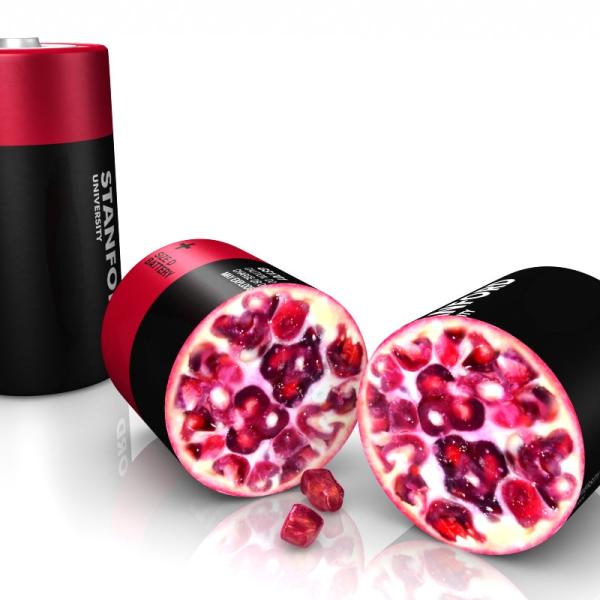
SLAC and Stanford scientists have set a world record for energy storage, using a clever “yolk-shell” design to store five times more energy in...

Image - Explanatory diagrams and magnified nanopartic...
Feature

A team led by SLAC and Stanford scientists has made an important discovery toward understanding how a large group of complex copper oxide materials...

Photo - Scientists standing with equipment at SLAC.