






SLAC topics

Dark matter RSS feed

One of modern science’s biggest mysteries is dark matter, an invisible form of matter that shapes galaxy rotation and bends rays of light. No one knows what dark matter is, but scientists are carrying out a number of experiments to learn more.

Related links:
Physics of the universe
Astrophysics and cosmology
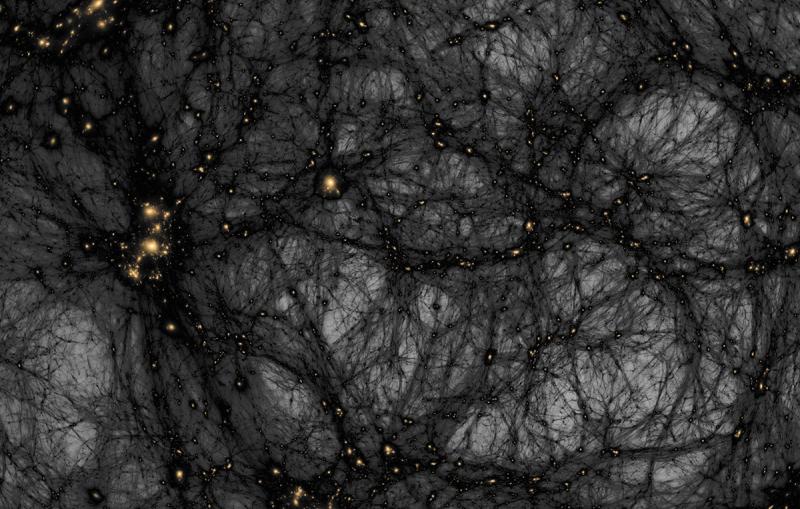
Formation of dark matter structures.
Feature

In its final run, the LUX experiment increased its sensitivity four-fold, but dark matter remains elusive.

Feature

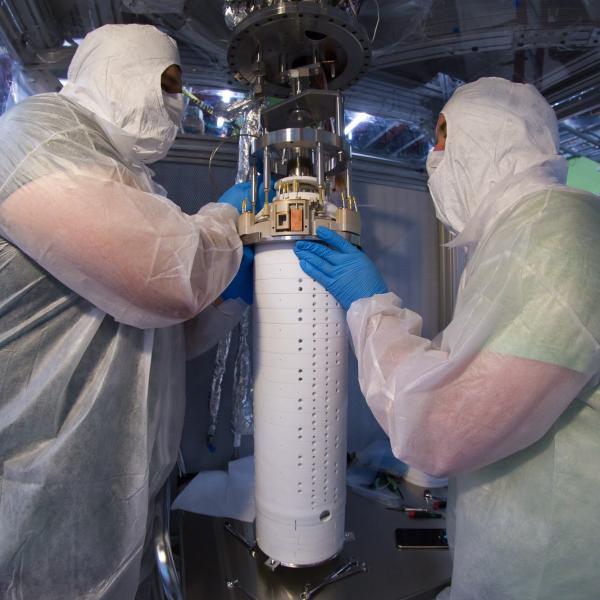
A small-scale version of the future detector allows researchers and engineers to test, develop and troubleshoot various aspects of its technology.

Feature
VIA Symmetry Magazine

1,000 Meters Below

Meet the world’s deepest underground physics facilities.

Feature

KIPAC researchers mourn the loss of the Hitomi spacecraft but are thrilled about the data it was still able to capture.

Feature

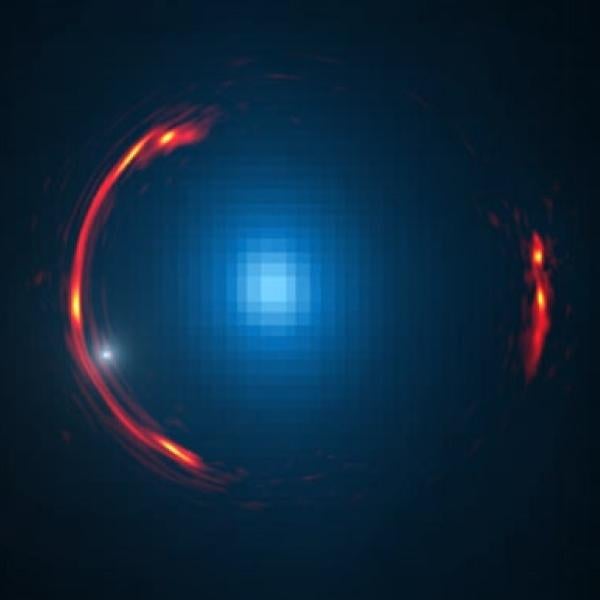
The discovery supports a powerful tool for discovering galaxies that are otherwise too distant to observe, and could lead to advances that improve our...

Feature
VIA Symmetry Magazine

The Milky Way’s Hot Spot

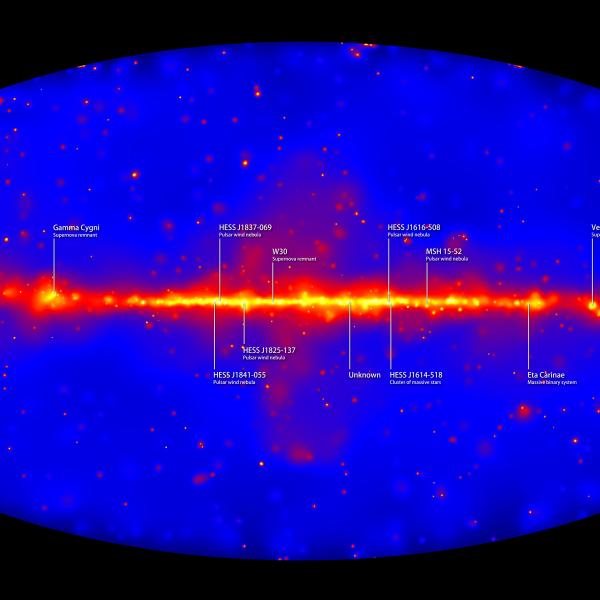
The center of our galaxy is a busy place. But it might be one of the best sites to hunt for dark matter.

Feature

It will provide new insights into the physics of black holes, the formation of chemical elements, stars and galaxies, and the evolution of the...

Feature

Dark matter hunters around the world pursue three approaches to look for fingerprints of ghostly WIMPs: on the Earth’s surface, underground and in space.

Researchers around the world pursue three approaches to look for fingerprints of dark matter's ghostly components.
Feature

Analyzing the motion of X-ray sources could help researchers identify dark matter signals.

Feature

Fermi scientist Matthew Wood discusses major improvements to the Fermi Large Area Telescope, including increasing its sensitivity to the equivalent of launching another LAT.

Feature

A recent uptick in the discovery of the smallest, oldest galaxies benefits studies of dark matter, galaxy formation and the evolution of the unive

Feature

Dark matter hunters of the LUX collaboration have ruled out a larger-than-ever range of properties that hypothetical dark matter particles might have had.