SLAC National Accelerator Laboratory
    • About

      Learn about our science, people, facilities and partners. Discover our history and vision for the future.

    • OUR STORY
      • Mission, vision, values
      • History
    • LAB OVERVIEW
      • SLAC at a glance
      • Lab organization
      • Our partnerships
    • OUR PEOPLE
      • Leadership
      • Meet our teams
      • Faculty
    • VISIT SLAC
      • Public tours
      • Contact us
    • Resources
      • Images, videos & more
      • Brochures & fact sheets
    • Connect With Us
      • Facebook
      • Flickr
      • Instagram
      • LinkedIn
      • Twitter
      • YouTube
    video

    Who we are

    We explore radically new ideas with an entrepreneurial mindset.

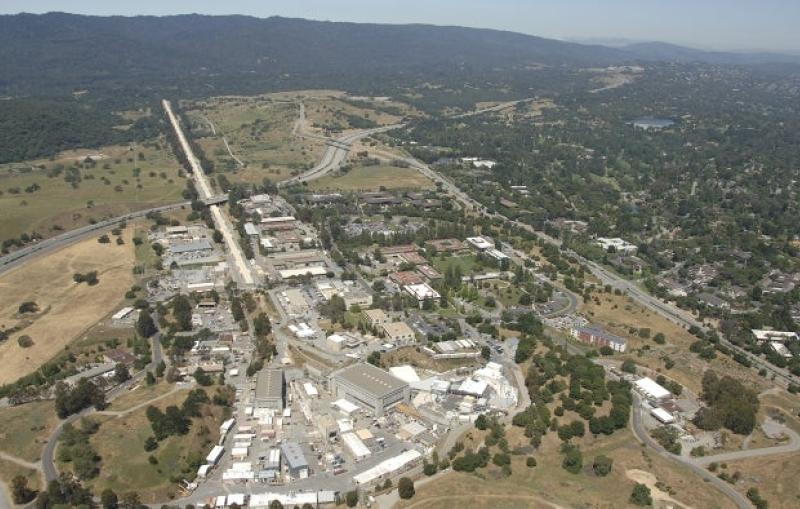
    Science and User Support Building to the left and Arrillaga Science Center building to the right from above the Main Quad at SLAC's campus.
    • Research

      Get an overview of research at SLAC: X-ray and ultrafast science, particle and astrophysics, cosmology, particle accelerators, biology, energy and technology.

    • X-ray and Ultrafast science icon X-ray & ultrafast science

      Revealing nature’s fastest processes with X-rays, lasers and electrons

    • Physics of the universe science icon Physics of the universe

      Studying the particles and forces that knit the cosmos together

    • Advanced Accelerators science icon Advanced accelerators

      Building smaller, faster, more powerful accelerators for all

    • Science of life science icon Science of life

      Understanding the machinery of life at its most basic level

    • New technologies science icon New technologies

      Inventing new tools for science and society

    • Energy sciences science icon Energy sciences

      Finding clean, sustainable solutions for the world’s energy challenges

    Spotlight

    SLAC science explained

    Cut through the jargon while exploring our research.

    SAGE campers have fun experimenting with a Van de Graff generator
    • Facilities & Centers

      Learn more about the places where science happens at SLAC: our major facilities, institutes and centers.

    • SCIENTIFIC FACILITIES
      • LCLS website

        Linac Coherent Light Source

      • SSRL website

        Stanford Synchrotron Radiation Lightsource

      • FACET-II website

        Facility for Advanced Accelerator Experimental Tests

      • CryoEM website

        Cryogenic Electron Microscopy

    • JOINT INSTITUTES & CENTERS
      • SIMES website

        Stanford Institute for Materials & Energy Science

      • KIPAC website

        Kavli Institute for Particle Astrophysics & Cosmology

      • PULSE website

        Stanford PULSE Institute

      • SUNCAT website

        Center for Interface Science & Catalysis

      • SLAC-Stanford Battery Center

    NSF-DOE Vera C. Rubin Observatory LSST

    SLAC & Stanford build the world’s largest digital camera for the Legacy Survey of Space and Time (LSST).

    A drone photo of Rubin Observatory while taking pictures during the First Look observing campaign
    • Work with Us

      Find a career, partner with us or apply to use our tools and facilities.

    • PARTNER WITH US
      • For industry partners
      • Research partnerships & tech transfer
      • Technology Innovation
    • CAREERS AT SLAC
      • Job openings
      • Internships
      • Life at SLAC
    • USE OUR FACILITIES

      Apply to become a user of our scientific research facilities and instruments.

    • COMING TO SLAC
    • BECOME A SUPPLIER

    Careers at SLAC

    Join our united workforce.

    SLAC staff in main quad
    • News & Events

      Get the latest news about the lab, our science and discoveries. Explore SLAC events and learn how to participate.

    • NEWS CENTER
      • News archive
      • Media resources
      • Images & videos
    • SLAC EVENTS
      • Public lectures
      • Scientific seminars
      • Community events
    • SYMMETRY MAGAZINE

      This joint publication of SLAC and Fermilab is your view into the world of particle physics.

    • EDUCATIONAL PROGRAMS
      • Educational tours
      • Resources for students & educators
    • Connect With Us
      • Facebook
      • Flickr
      • Instagram
      • LinkedIn
      • Twitter
      • YouTube
    Upcoming public lecture

    Reinventing the way we break down plastic waste

    Thursday, March 26, 2026
    7:00–8:00 p.m. PDT

    Public Lecture: Ozge Bozkurt
Filter search by
Staff portalStanford directoryComing to SLACResources for…
  1. Home
  2. …
Filter by research area
  • X-ray and ultrafast science (179)
  • Physics of the universe (127)
  • Energy sciences (43)
  • Science of life (28)
  • New technologies (22)
  • Advanced accelerators (10)
Filter by Type
  • (-) News (1774)
  • Image (387)
  • Video (227)
  • Event (157)
  • Page (67)
  • Person (66)
  • resource (64)
  • News Collection (4)
Sort by
1774 results
Display Grid Display List
Clear all
Feature

Scientists discover how high-energy electrons strengthen magnetic fields

The research could lead to a better understanding of extreme astrophysical environments and the development of compact high-energy radiation sources for science.

July 19, 2021  ·  3 min read
high-energy electrons strengthen magnetic fields
Feature

SLAC partners with national labs and scientific publishing organizations on transgender-inclusive name-change process for published papers

The process, which also facilitates name changes for religious, marital and other reasons, allows researchers of all genders to own their academic work by...

July 28, 2021  ·  2 min read
Name Change
Feature

AI learns physics to optimize particle accelerator performance

Teaching machine learning the basics of accelerator physics is particularly useful in situations where actual data don’t exist.

July 29, 2021  ·  3 min read
SSRL
Feature
VIA Stanford News

SLAC/Stanford astrophysicists report first detection of light from behind a black hole

Fulfilling a prediction of Einstein’s theory of General Relativity, researchers report the first-ever recordings of X-ray emissions from the far side of a black...

July 28, 2021
Black Hole
Feature

Ilya Belopolski wins 2021 Spicer Young Investigator Award for work on exotic quantum materials

Belopolski has made key discoveries about Weyl semimetals and topological magnets, systems in which quantum effects produce new emergent particles with exotic electronic and...

August 2, 2021  ·  4 min read
Portrait of Ilya Belopolski
Feature

Scientists show a single catalyst can perform the first step of turning CO2 into fuel in two very different ways

Their work aims to bridge two approaches to driving the reaction – one powered by heat, the other by electricity – with the goal...

August 4, 2021  ·  5 min read
A ball-and-stick illustration of a single nickel atom (green) bonded to nitrogen atoms (blue) on the surface of a carbon material. The arrangement allows the nickel atoms to catalyze two types of reactions involved in making fuel from CO2.
Feature

A fast, accurate system for quickly solving stubborn RNA structures from pond scum, the SARS-CoV-2 virus and more

SLAC and Stanford scientists used it to zoom in on an iconic RNA catalyst and a piece of viral RNA that’s a potential target...

August 11, 2021  ·  7 min read
A high-res 3D ribbon diagram showing the structure of part of an RNA molecule
Feature

Soap study shows the value of global connections during the pandemic

Researchers at the University of Leeds deepened their understanding of a synthetic detergent without ever setting foot in the lab where their experiments took...

September 7, 2021  ·  2 min read
An X-ray beam line guide points toward a gold-colored piece of laboratory equipment.
News Brief

How extreme cold can crack lithium-ion battery materials, degrading performance

Storing the rechargeable batteries at sub-freezing temperatures can crack the battery cathode and separate it from other parts of the battery, a new study...

August 26, 2021  ·  2 min read
A drone flying on Mars
News Release

In a first, scientists capture a ‘quantum tug’ between neighboring water molecules

The work sheds light on the web of hydrogen bonds that gives water its strange properties, which play a vital role in many chemical...

August 25, 2021  ·  4 min read
UED Water
Feature

Al Ashley Fellows give advice to future scientists

Three physicists talk about how they got started, their work at SLAC and what they would say to others considering a career in STEM.

September 1, 2021  ·  11 min read
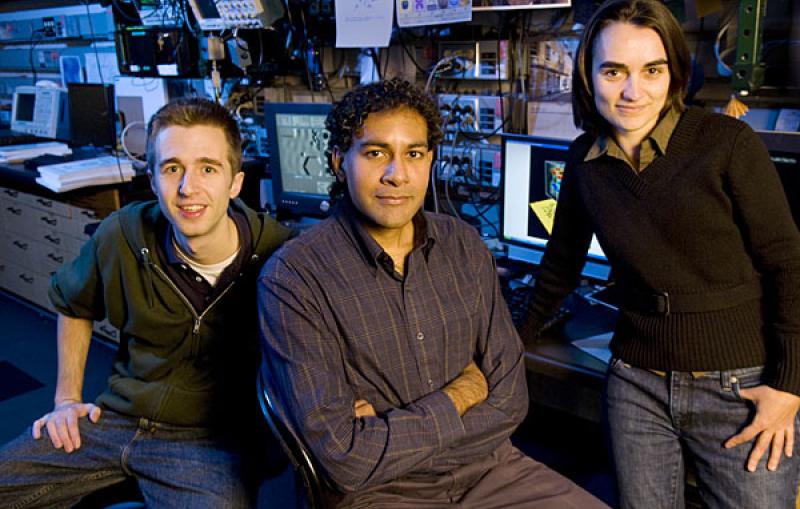
Isleydys Silva Torrecilla, Emmanuel Aneke and Bhavna Nayak
Feature

Closing the gate on manganese could open doors to new drugs to treat pneumonia

Drawing on SLAC facilities, Australian researchers have revealed how Streptococcus pneumoniae bacteria obtain manganese from our bodies, which could lead to better therapies to...

August 30, 2021  ·  4 min read
A protein molecule with intertwined spirals around a small yellow center form.
  • Go to previous page
  • Page 1
  • …
  • Page 113
  • Page 114
  • Page 115
  • Page 116
  • Currently on page 117
  • Page 118
  • Page 119
  • Page 120
  • Page 121
  • …
  • Page 148
  • Go to next page

SLAC National Accelerator Laboratory 
2575 Sand Hill Road  
Menlo Park, CA 94025-7015  
650.926.3300

  • Coming to SLAC
  • Connect with us
  • Contact us
  • Facebook
  • Flickr
  • Instagram
  • LinkedIn
  • Twitter
  • YouTube

Sign up for our email

Monthly newsletter for cutting-edge science, SLAC milestones and events.

Sign up

Bold People
Visionary Science
Real Impact

We explore how the universe works at the biggest, smallest and fastest scales and invent powerful tools used by scientists around the globe.

  • About
    • Our story
    • Our people
    • Lab overview
    • Visit SLAC
    • Resources
    • Connect with us
  • Research
    • X-ray & ultrafast science
    • Advanced accelerators
    • New technologies
    • Physics of the universe
    • Science of life
    • Energy sciences
    • SLAC science explained
  • Facilities & centers
    • Scientific facilities
    • Joint institutes & centers
  • Work with us
    • Partner with us
    • Become a supplier
    • Use our facilities
    • Careers at SLAC
  • News & events
    • News center
    • Symmetry Magazine
    • Media resources
    • Events
    • Educational programs
    • Connect with us
  • Staff portal
  • Privacy policy
  • Accessibility
  • Vulnerability disclosure
  • A–Z index
  • Website feedback
Home
  • SLAC home
  • Maps & directions
  • Emergency info
  • Careers

© 2026 SLAC National Accelerator Laboratory is operated by Stanford University for the U.S. Department of Energy Office of Science.

Stanford University U.S. Department of Energy
Top Top
Back to top Back to top