SLAC National Accelerator Laboratory
    • About

      Learn about our science, people, facilities and partners. Discover our history and vision for the future.

    • OUR STORY
      • Mission, vision, values
      • History
    • LAB OVERVIEW
      • SLAC at a glance
      • Lab organization
      • Our partnerships
    • OUR PEOPLE
      • Leadership
      • Meet our teams
      • Faculty
    • VISIT SLAC
      • Public tours
      • Contact us
    • Resources
      • Images, videos & more
      • Brochures & fact sheets
    • Connect With Us
      • Facebook
      • Flickr
      • Instagram
      • LinkedIn
      • Twitter
      • YouTube
    video

    Who we are

    We explore radically new ideas with an entrepreneurial mindset.

    Science and User Support Building to the left and Arrillaga Science Center building to the right from above the Main Quad at SLAC's campus.
    • Research

      Get an overview of research at SLAC: X-ray and ultrafast science, particle and astrophysics, cosmology, particle accelerators, biology, energy and technology.

    • X-ray and Ultrafast science icon X-ray & ultrafast science

      Revealing nature’s fastest processes with X-rays, lasers and electrons

    • Physics of the universe science icon Physics of the universe

      Studying the particles and forces that knit the cosmos together

    • Advanced Accelerators science icon Advanced accelerators

      Building smaller, faster, more powerful accelerators for all

    • Science of life science icon Science of life

      Understanding the machinery of life at its most basic level

    • New technologies science icon New technologies

      Inventing new tools for science and society

    • Energy sciences science icon Energy sciences

      Finding clean, sustainable solutions for the world’s energy challenges

    Spotlight

    SLAC science explained

    Cut through the jargon while exploring our research.

    SAGE campers have fun experimenting with a Van de Graff generator
    • Facilities & Centers

      Learn more about the places where science happens at SLAC: our major facilities, institutes and centers.

    • SCIENTIFIC FACILITIES
      • LCLS website

        Linac Coherent Light Source

      • SSRL website

        Stanford Synchrotron Radiation Lightsource

      • FACET-II website

        Facility for Advanced Accelerator Experimental Tests

      • CryoEM website

        Cryogenic Electron Microscopy

    • JOINT INSTITUTES & CENTERS
      • SIMES website

        Stanford Institute for Materials & Energy Science

      • KIPAC website

        Kavli Institute for Particle Astrophysics & Cosmology

      • PULSE website

        Stanford PULSE Institute

      • SUNCAT website

        Center for Interface Science & Catalysis

      • SLAC-Stanford Battery Center

    NSF-DOE Vera C. Rubin Observatory LSST

    SLAC & Stanford build the world’s largest digital camera for the Legacy Survey of Space and Time (LSST).

    A drone photo of Rubin Observatory while taking pictures during the First Look observing campaign
    • Work with Us

      Find a career, partner with us or apply to use our tools and facilities.

    • PARTNER WITH US
      • For industry partners
      • Research partnerships & tech transfer
      • Technology Innovation
    • CAREERS AT SLAC
      • Job openings
      • Internships
      • Life at SLAC
    • USE OUR FACILITIES

      Apply to become a user of our scientific research facilities and instruments.

    • COMING TO SLAC
    • BECOME A SUPPLIER

    Careers at SLAC

    Join our united workforce.

    SLAC staff in main quad
    • News & Events

      Get the latest news about the lab, our science and discoveries. Explore SLAC events and learn how to participate.

    • NEWS CENTER
      • News archive
      • Media resources
      • Images & videos
    • SLAC EVENTS
      • Public lectures
      • Scientific seminars
      • Community events
    • SYMMETRY MAGAZINE

      This joint publication of SLAC and Fermilab is your view into the world of particle physics.

    • EDUCATIONAL PROGRAMS
      • Educational tours
      • Resources for students & educators
    • Connect With Us
      • Facebook
      • Flickr
      • Instagram
      • LinkedIn
      • Twitter
      • YouTube
    Upcoming public lecture

    Reinventing the way we break down plastic waste

    Thursday, March 26, 2026
    7:00–8:00 p.m. PDT

    Public Lecture: Ozge Bozkurt
Filter search by
Staff portalStanford directoryComing to SLACResources for…
  1. Home
  2. …
Filter by research area
  • X-ray and ultrafast science (183)
  • Physics of the universe (128)
  • Energy sciences (47)
  • Science of life (29)
  • New technologies (24)
  • Advanced accelerators (10)
Filter by Type
  • (-) News (1773)
  • Image (387)
  • Video (227)
  • Event (157)
  • Page (67)
  • (-) Person (66)
  • resource (64)
  • News Collection (4)
Sort by
1839 results
Display Grid Display List
Clear all
Feature

Feng Lin Wins Spicer Award for Smart Window, Battery Research

A researcher who performed a variety of X-ray experiments at SLAC’s synchrotron will receive an annual scientific award during a SLAC conference next month.

September 25, 2015  ·  3 min read
Feng Lin
Feature
VIA Symmetry Magazine

New Discovery? Or Just Another Bump?

For physicists, seeing is not always believing.

September 29, 2015
Feature
VIA Symmetry Magazine

The Burgeoning Field of Neutrino Astronomy

A new breed of experiments seeks sources of cosmic rays and other astrophysics phenomena.

October 2, 2015
Feature
VIA Stanford News

Battery Experiments Highlight Stanford's Dual Mission of Teaching and Research

SIMES research, which confounds two decades of assumptions on lithium-ion battery design, could lead to better batteries with more power and greater capacity.

October 2, 2015
Feature

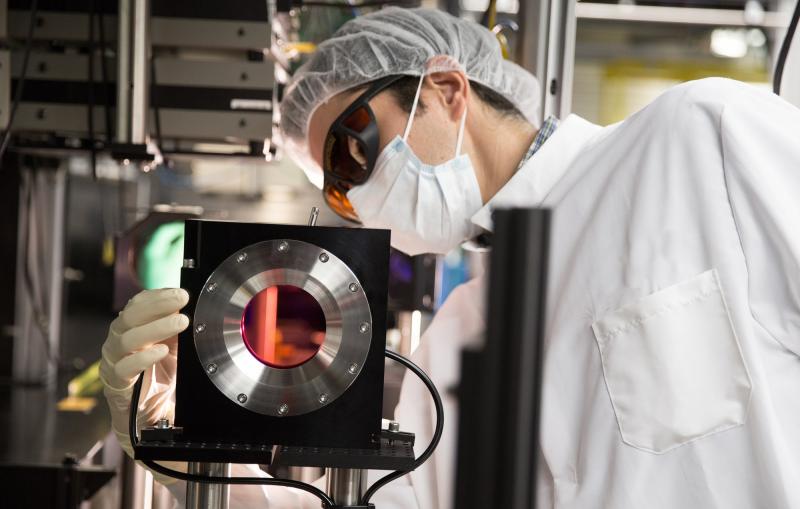
200-terawatt Laser Brings New Extremes in Heat, Pressure to X-ray Experiments

A 200-terawatt laser at SLAC will synchronize with X-ray laser pulses to precisely measure more extreme temperatures and pressures in exotic forms of matter.

October 5, 2015  ·  4 min read
Image - Eduardo Granados inspects a large titanium sapphire crystal, the operative component in a newly upgraded high-power laser system that is designed to work in conjunction with a unique X-ray laser at SLAC.
Feature

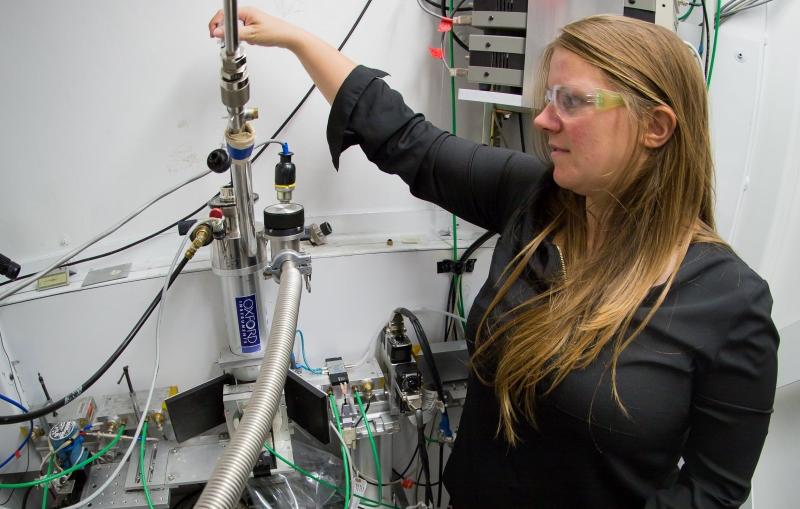
SLAC Experiment Finds Key to Natural Detoxifier’s Reactivity

A tiny change in the length of a chemical bond makes a big difference in the activity of a molecule important in health, drug...

October 7, 2015  ·  3 min read
Image - Courtney Krest Roach (SLAC National Accelerator Laboratory)
Feature
VIA Symmetry Magazine

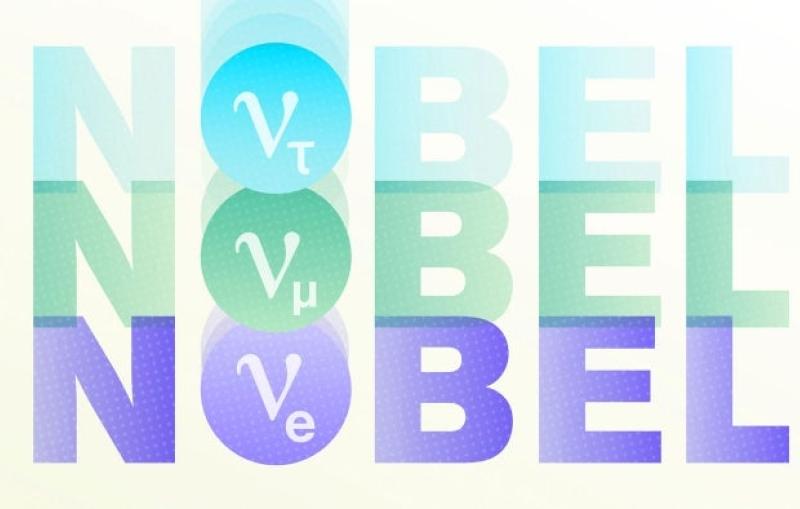
Nobel Prize Awarded for Discovery of Neutrino Oscillations

Takaaki Kajita and Arthur B. McDonald received the call from Sweden for their work on the Super-Kamiokande and SNO experiments.

October 6, 2015
Feature

X-ray Study Reveals New Details of How Burrowing Sea Creatures Shape Geology

X-ray research on 80-million-year-old fossilized burrows, likely the work of tiny marine worms, is helping scientists understand how living organisms affected the chemistry of...

October 14, 2015  ·  5 min read
Image - This marine worm, commonly known as a ragworm, can grow up to 4 inches in length. It is part of a class of worms known as polychaetes. A far smaller variety of polychaetes was likely responsible for creating ancient burrows studied at SLAC.
Feature

SLAC Gets Sporty at First ‘Nerd Bowl’

Facebook ultimately prevailed in a flag football tournament organized by Lawrence Livermore National Laboratory and hosted by SLAC.

February 1, 2018  ·  3 min read
athletic field at Stanford University’s Arrillaga Recreation Center at SLAC
Feature

SLAC Celebrates Legacy of Theoretical Physicist Sidney Drell

Nearly 200 guests attended a symposium on fundamental physics to celebrate the former deputy director’s numerous scientific contributions, which continue to have a tremendous...

February 5, 2018  ·  5 min read
Sid Drell Symposium January 2018
Feature

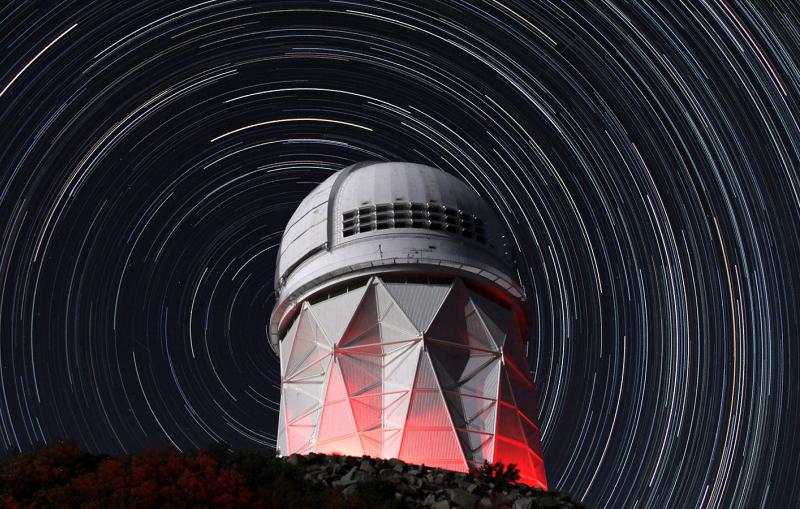
45-Year-Old Telescope Gets a Makeover to Demystify Dark Energy

Installation of the Dark Energy Spectroscopic Instrument begins at Kitt Peak National Observatory in Arizona.

February 12, 2018  ·  5 min read
Mayall Telescope Star Trails
Feature
VIA Symmetry Magazine

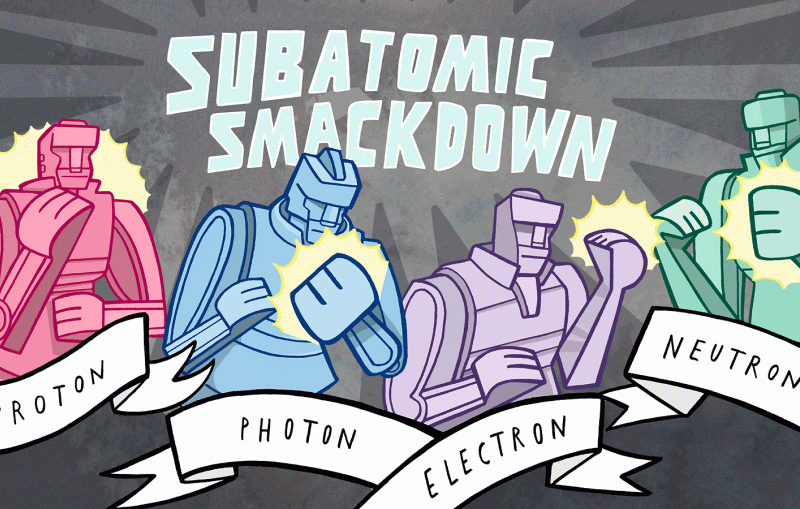
Subatomic Smackdown

When it comes to talent, versatility and the power to change the world, which atomic particle is the champ?

February 9, 2018
  • Go to previous page
  • Page 1
  • …
  • Page 36
  • Page 37
  • Page 38
  • Page 39
  • Currently on page 40
  • Page 41
  • Page 42
  • Page 43
  • Page 44
  • …
  • Page 154
  • Go to next page

SLAC National Accelerator Laboratory 
2575 Sand Hill Road  
Menlo Park, CA 94025-7015  
650.926.3300

  • Coming to SLAC
  • Connect with us
  • Contact us
  • Facebook
  • Flickr
  • Instagram
  • LinkedIn
  • Twitter
  • YouTube

Sign up for our email

Monthly newsletter for cutting-edge science, SLAC milestones and events.

Sign up

Bold People
Visionary Science
Real Impact

We explore how the universe works at the biggest, smallest and fastest scales and invent powerful tools used by scientists around the globe.

  • About
    • Our story
    • Our people
    • Lab overview
    • Visit SLAC
    • Resources
    • Connect with us
  • Research
    • X-ray & ultrafast science
    • Advanced accelerators
    • New technologies
    • Physics of the universe
    • Science of life
    • Energy sciences
    • SLAC science explained
  • Facilities & centers
    • Scientific facilities
    • Joint institutes & centers
  • Work with us
    • Partner with us
    • Become a supplier
    • Use our facilities
    • Careers at SLAC
  • News & events
    • News center
    • Symmetry Magazine
    • Media resources
    • Events
    • Educational programs
    • Connect with us
  • Staff portal
  • Privacy policy
  • Accessibility
  • Vulnerability disclosure
  • A–Z index
  • Website feedback
Home
  • SLAC home
  • Maps & directions
  • Emergency info
  • Careers

© 2026 SLAC National Accelerator Laboratory is operated by Stanford University for the U.S. Department of Energy Office of Science.

Stanford University U.S. Department of Energy
Top Top
Back to top Back to top