SLAC National Accelerator Laboratory
    • About

      Learn about our science, people, facilities and partners. Discover our history and vision for the future.

    • OUR STORY
      • Mission, vision, values
      • History
    • LAB OVERVIEW
      • SLAC at a glance
      • Lab organization
      • Our partnerships
    • OUR PEOPLE
      • Leadership
      • Meet our teams
      • Faculty
    • VISIT SLAC
      • Public tours
      • Contact us
    • Resources
      • Images, videos & more
      • Brochures & fact sheets
    • Connect With Us
      • Facebook
      • Flickr
      • Instagram
      • LinkedIn
      • Twitter
      • YouTube
    video

    Who we are

    We explore radically new ideas with an entrepreneurial mindset.

    Science and User Support Building to the left and Arrillaga Science Center building to the right from above the Main Quad at SLAC's campus.
    • Research

      Get an overview of research at SLAC: X-ray and ultrafast science, particle and astrophysics, cosmology, particle accelerators, biology, energy and technology.

    • X-ray and Ultrafast science icon X-ray & ultrafast science

      Revealing nature’s fastest processes with X-rays, lasers and electrons

    • Physics of the universe science icon Physics of the universe

      Studying the particles and forces that knit the cosmos together

    • Advanced Accelerators science icon Advanced accelerators

      Building smaller, faster, more powerful accelerators for all

    • Science of life science icon Science of life

      Understanding the machinery of life at its most basic level

    • New technologies science icon New technologies

      Inventing new tools for science and society

    • Energy sciences science icon Energy sciences

      Finding clean, sustainable solutions for the world’s energy challenges

    Spotlight

    SLAC science explained

    Cut through the jargon while exploring our research.

    SAGE campers have fun experimenting with a Van de Graff generator
    • Facilities & Centers

      Learn more about the places where science happens at SLAC: our major facilities, institutes and centers.

    • SCIENTIFIC FACILITIES
      • LCLS website

        Linac Coherent Light Source

      • SSRL website

        Stanford Synchrotron Radiation Lightsource

      • FACET-II website

        Facility for Advanced Accelerator Experimental Tests

      • CryoEM website

        Cryogenic Electron Microscopy

    • JOINT INSTITUTES & CENTERS
      • SIMES website

        Stanford Institute for Materials & Energy Science

      • KIPAC website

        Kavli Institute for Particle Astrophysics & Cosmology

      • PULSE website

        Stanford PULSE Institute

      • SUNCAT website

        Center for Interface Science & Catalysis

      • SLAC-Stanford Battery Center

    NSF-DOE Vera C. Rubin Observatory LSST

    SLAC & Stanford build the world’s largest digital camera for the Legacy Survey of Space and Time (LSST).

    A drone photo of Rubin Observatory while taking pictures during the First Look observing campaign
    • Work with Us

      Find a career, partner with us or apply to use our tools and facilities.

    • PARTNER WITH US
      • For industry partners
      • Research partnerships & tech transfer
      • Technology Innovation
    • CAREERS AT SLAC
      • Job openings
      • Internships
      • Life at SLAC
    • USE OUR FACILITIES

      Apply to become a user of our scientific research facilities and instruments.

    • COMING TO SLAC
    • BECOME A SUPPLIER

    Careers at SLAC

    Join our united workforce.

    SLAC staff in main quad
    • News & Events

      Get the latest news about the lab, our science and discoveries. Explore SLAC events and learn how to participate.

    • NEWS CENTER
      • News archive
      • Media resources
      • Images & videos
    • SLAC EVENTS
      • Public lectures
      • Scientific seminars
      • Community events
    • SYMMETRY MAGAZINE

      This joint publication of SLAC and Fermilab is your view into the world of particle physics.

    • EDUCATIONAL PROGRAMS
      • Educational tours
      • Resources for students & educators
    • Connect With Us
      • Facebook
      • Flickr
      • Instagram
      • LinkedIn
      • Twitter
      • YouTube
    Upcoming public lecture

    Reinventing the way we break down plastic waste

    Thursday, March 26, 2026
    7:00–8:00 p.m. PDT

    Public Lecture: Ozge Bozkurt
Filter search by
Staff portalStanford directoryComing to SLACResources for…
  1. Home
  2. …
Filter by research area
  • X-ray and ultrafast science (183)
  • Physics of the universe (128)
  • Energy sciences (47)
  • Science of life (29)
  • New technologies (24)
  • Advanced accelerators (10)
Filter by Type
  • (-) News (1773)
  • Image (387)
  • Video (227)
  • Event (157)
  • Page (67)
  • (-) Person (66)
  • resource (64)
  • News Collection (4)
Sort by
1839 results
Display Grid Display List
Clear all
Feature
VIA Stanford News

Stanford's Global Climate and Energy Project Awards $9.3 Million for Innovative Energy Research

SUNCAT and SIMES researchers have received funding from Stanford's Global Climate and Energy Project to support research related to generating renewable fuels.

August 12, 2015
Feature

Microscopic Rake Doubles Efficiency of Low-cost Solar Cells

A SLAC/Stanford manufacturing technique could help make inexpensive polymer-based solar cells an attractive alternative to silicon-crystal wafers.

August 12, 2015  ·  4 min read
News Release

Scientists Discover Atomic-resolution Details of Brain Signaling

Scientists have revealed never-before-seen details of how our brain sends rapid-fire messages between its cells using SLAC's X-ray laser.

August 17, 2015  ·  6 min read
Image - This illustration shows a protein complex at work in brain signaling. Its structure, which contains joined protein complexes known as SNARE and synaptotagmin-1, is shown in the foreground. (SLAC National Accelerator Laboratory)
Feature
VIA Fermilab

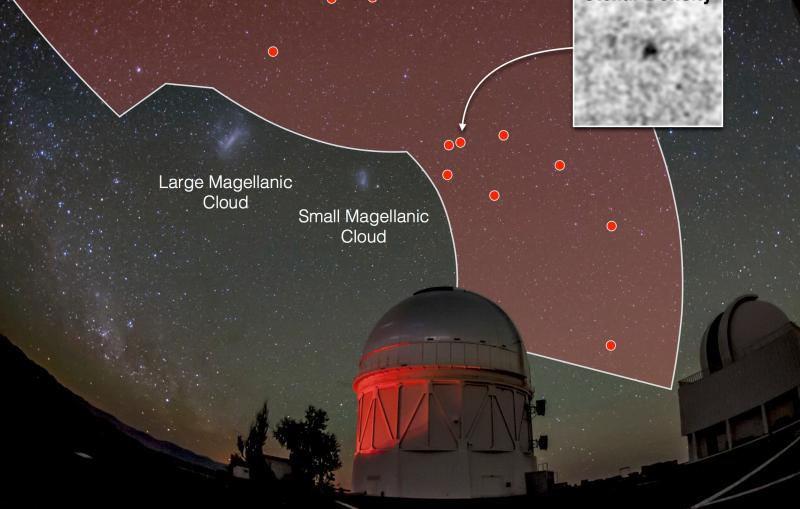
Dark Energy Survey Finds More Celestial Neighbors

Scientists on the Dark Energy Survey, using one of the world’s most powerful digital cameras, have discovered eight more faint celestial objects hovering near...

August 17, 2015
Feature
VIA Symmetry Magazine

The Age of the Universe

How can we figure out when the universe began?

August 18, 2015
Feature

Global Team Seeks Individual X-ray Portraits of Active Viruses, Bacteria and Cell Components

A major international effort at SLAC is focused on improving our views of intact viruses, living bacteria and other tiny samples using the brightest...

September 1, 2015  ·  6 min read
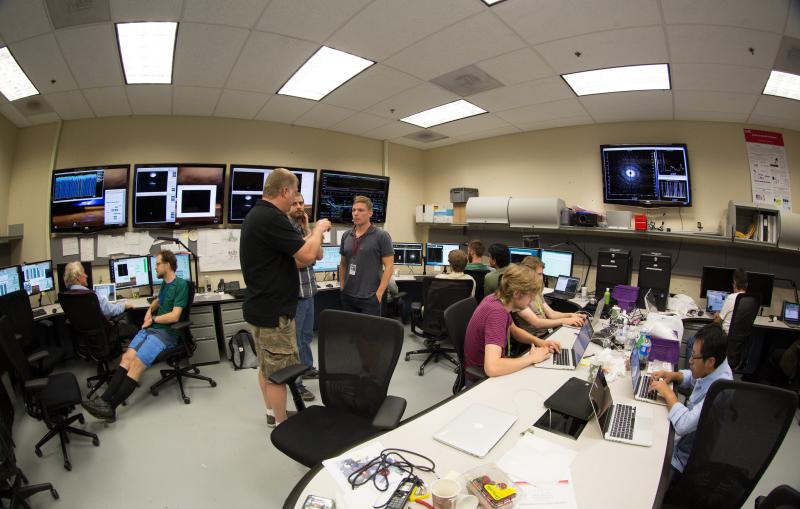
Researchers monitor the performance of a single particle imaging experiment
Feature

X-ray Duo's Research Helps Launch Human Trial for Treatment of Arsenic Poisoning

Graham George and Ingrid Pickering, a husband and wife X-ray research team, are co-leading a new study in Bangladesh to test whether selenium supplements...

August 20, 2015  ·  4 min read
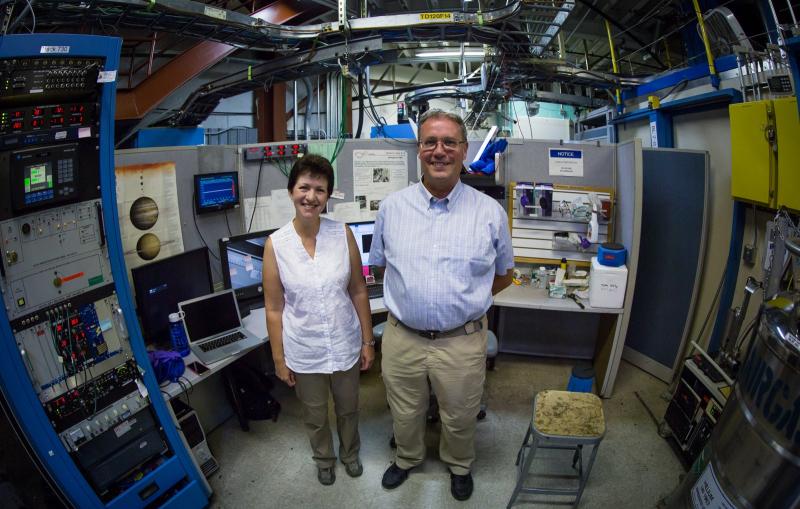
Image - Ingrid Pickering and Graham George, a husband-and-wife X-ray research team, stand next to the controls of SSRL Beam Line 7-3 during a research sabbatical at SLAC. (SLAC National Accelerator Laboratory)
News Release

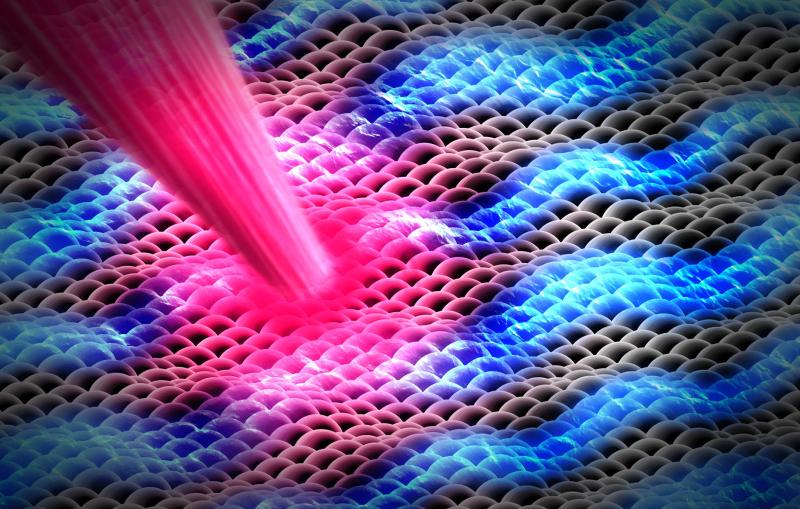
Antimatter Catches a Wave at SLAC

A SLAC-led research team working at the lab’s FACET facility has demonstrated a new way of accelerating positrons that could help develop smaller, more...

August 26, 2015  ·  5 min read
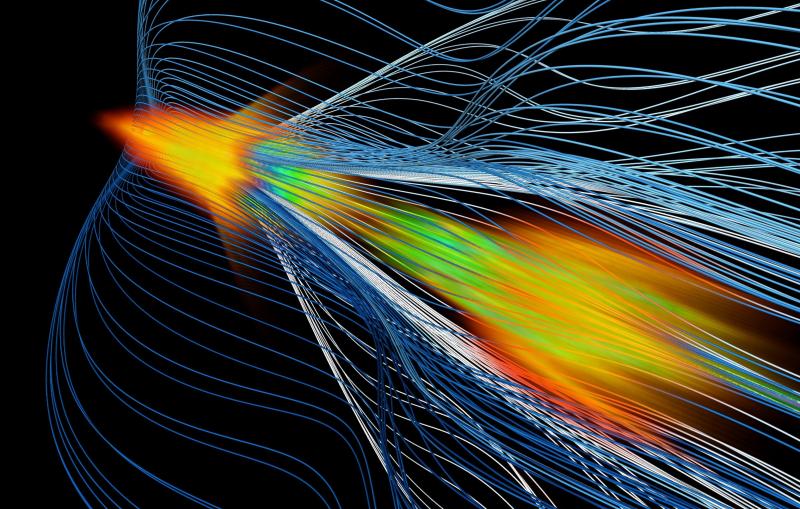
Simulation of high-energy positron acceleration in an ionized gas, or plasma
Feature
VIA Symmetry Magazine

All About Supernovae

Exploding stars have an immense capacity to destroy—and create.

August 25, 2015
Feature
VIA Symmetry Magazine

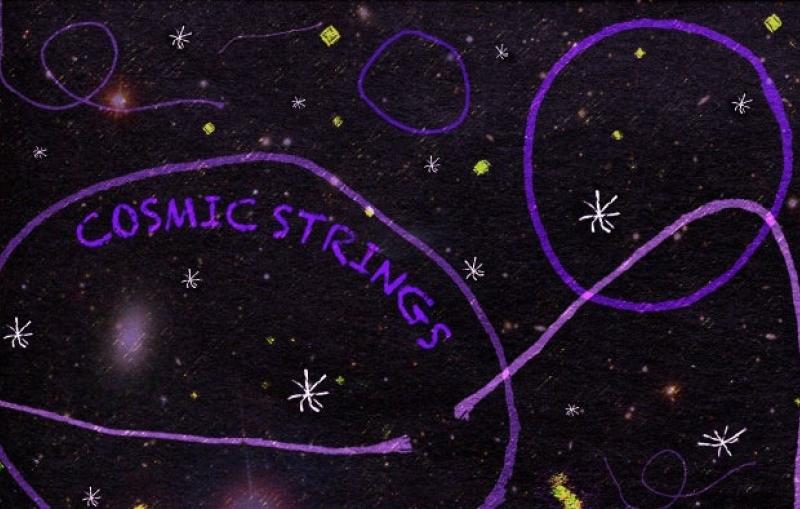
Looking for Strings Inside Inflation

Theorists from the Institute for Advanced Study have proposed a way forward in the quest to test string theory.

August 27, 2015
Feature

Q&A: Researchers Explain a Strange High-Intensity Result at SLAC's X-ray Laser

In a first-of-its-kind experiment, scientists got a textbook-worthy result that may change the way matter is probed at X-ray free-electron lasers.

August 31, 2015  ·  4 min read
The Linac Coherent Light Source X-ray laser at SLAC
Feature
VIA Symmetry Magazine

Combined Results Find Higgs Still Standard

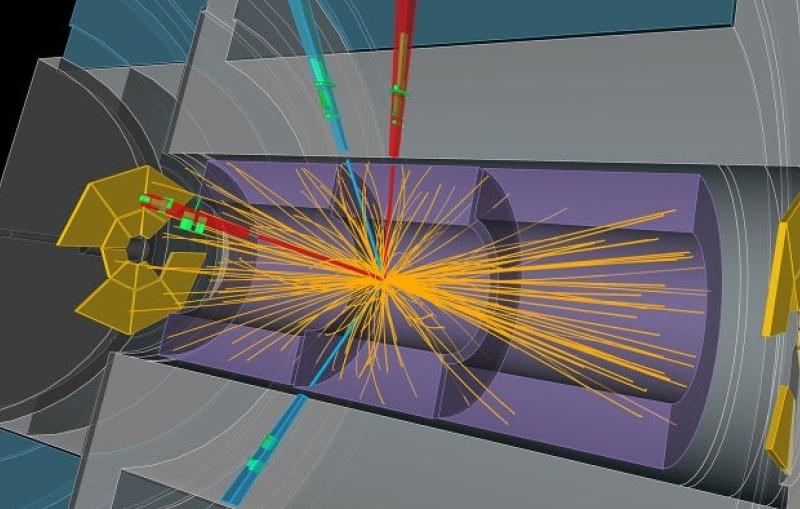
The CMS and ATLAS experiments combined forces to more precisely measure properties of the Higgs boson.

September 1, 2015
ATLAS experiment image
  • Go to previous page
  • Page 1
  • …
  • Page 34
  • Page 35
  • Page 36
  • Page 37
  • Currently on page 38
  • Page 39
  • Page 40
  • Page 41
  • Page 42
  • …
  • Page 154
  • Go to next page

SLAC National Accelerator Laboratory 
2575 Sand Hill Road  
Menlo Park, CA 94025-7015  
650.926.3300

  • Coming to SLAC
  • Connect with us
  • Contact us
  • Facebook
  • Flickr
  • Instagram
  • LinkedIn
  • Twitter
  • YouTube

Sign up for our email

Monthly newsletter for cutting-edge science, SLAC milestones and events.

Sign up

Bold People
Visionary Science
Real Impact

We explore how the universe works at the biggest, smallest and fastest scales and invent powerful tools used by scientists around the globe.

  • About
    • Our story
    • Our people
    • Lab overview
    • Visit SLAC
    • Resources
    • Connect with us
  • Research
    • X-ray & ultrafast science
    • Advanced accelerators
    • New technologies
    • Physics of the universe
    • Science of life
    • Energy sciences
    • SLAC science explained
  • Facilities & centers
    • Scientific facilities
    • Joint institutes & centers
  • Work with us
    • Partner with us
    • Become a supplier
    • Use our facilities
    • Careers at SLAC
  • News & events
    • News center
    • Symmetry Magazine
    • Media resources
    • Events
    • Educational programs
    • Connect with us
  • Staff portal
  • Privacy policy
  • Accessibility
  • Vulnerability disclosure
  • A–Z index
  • Website feedback
Home
  • SLAC home
  • Maps & directions
  • Emergency info
  • Careers

© 2026 SLAC National Accelerator Laboratory is operated by Stanford University for the U.S. Department of Energy Office of Science.

Stanford University U.S. Department of Energy
Top Top
Back to top Back to top