SLAC National Accelerator Laboratory
    • About

      Learn about our science, people, facilities and partners. Discover our history and vision for the future.

    • OUR STORY
      • Mission, vision, values
      • History
    • LAB OVERVIEW
      • SLAC at a glance
      • Lab organization
      • Our partnerships
    • OUR PEOPLE
      • Leadership
      • Meet our teams
      • Faculty
    • VISIT SLAC
      • Public tours
      • Contact us
    • Resources
      • Images, videos & more
      • Brochures & fact sheets
    • Connect With Us
      • Facebook
      • Flickr
      • Instagram
      • LinkedIn
      • Twitter
      • YouTube
    video

    Who we are

    We explore radically new ideas with an entrepreneurial mindset.

    Science and User Support Building to the left and Arrillaga Science Center building to the right from above the Main Quad at SLAC's campus.
    • Research

      Get an overview of research at SLAC: X-ray and ultrafast science, particle and astrophysics, cosmology, particle accelerators, biology, energy and technology.

    • X-ray and Ultrafast science icon X-ray & ultrafast science

      Revealing nature’s fastest processes with X-rays, lasers and electrons

    • Physics of the universe science icon Physics of the universe

      Studying the particles and forces that knit the cosmos together

    • Advanced Accelerators science icon Advanced accelerators

      Building smaller, faster, more powerful accelerators for all

    • Science of life science icon Science of life

      Understanding the machinery of life at its most basic level

    • New technologies science icon New technologies

      Inventing new tools for science and society

    • Energy sciences science icon Energy sciences

      Finding clean, sustainable solutions for the world’s energy challenges

    Spotlight

    SLAC science explained

    Cut through the jargon while exploring our research.

    SAGE campers have fun experimenting with a Van de Graff generator
    • Facilities & Centers

      Learn more about the places where science happens at SLAC: our major facilities, institutes and centers.

    • SCIENTIFIC FACILITIES
      • LCLS website

        Linac Coherent Light Source

      • SSRL website

        Stanford Synchrotron Radiation Lightsource

      • FACET-II website

        Facility for Advanced Accelerator Experimental Tests

      • CryoEM website

        Cryogenic Electron Microscopy

    • JOINT INSTITUTES & CENTERS
      • SIMES website

        Stanford Institute for Materials & Energy Science

      • KIPAC website

        Kavli Institute for Particle Astrophysics & Cosmology

      • PULSE website

        Stanford PULSE Institute

      • SUNCAT website

        Center for Interface Science & Catalysis

      • SLAC-Stanford Battery Center

    NSF-DOE Vera C. Rubin Observatory LSST

    SLAC & Stanford build the world’s largest digital camera for the Legacy Survey of Space and Time (LSST).

    A drone photo of Rubin Observatory while taking pictures during the First Look observing campaign
    • Work with Us

      Find a career, partner with us or apply to use our tools and facilities.

    • PARTNER WITH US
      • For industry partners
      • Research partnerships & tech transfer
      • Technology Innovation
    • CAREERS AT SLAC
      • Job openings
      • Internships
      • Life at SLAC
    • USE OUR FACILITIES

      Apply to become a user of our scientific research facilities and instruments.

    • COMING TO SLAC
    • BECOME A SUPPLIER

    Careers at SLAC

    Join our united workforce.

    SLAC staff in main quad
    • News & Events

      Get the latest news about the lab, our science and discoveries. Explore SLAC events and learn how to participate.

    • NEWS CENTER
      • News archive
      • Media resources
      • Images & videos
    • SLAC EVENTS
      • Public lectures
      • Scientific seminars
      • Community events
    • SYMMETRY MAGAZINE

      This joint publication of SLAC and Fermilab is your view into the world of particle physics.

    • EDUCATIONAL PROGRAMS
      • Educational tours
      • Resources for students & educators
    • Connect With Us
      • Facebook
      • Flickr
      • Instagram
      • LinkedIn
      • Twitter
      • YouTube
    Upcoming public lecture

    Reinventing the way we break down plastic waste

    Thursday, March 26, 2026
    7:00–8:00 p.m. PDT

    Public Lecture: Ozge Bozkurt
Filter search by
Staff portalStanford directoryComing to SLACResources for…
  1. Home
  2. …
Filter by research area
  • X-ray and ultrafast science (183)
  • Physics of the universe (128)
  • Energy sciences (47)
  • Science of life (29)
  • New technologies (24)
  • Advanced accelerators (10)
Filter by Type
  • (-) News (1773)
  • Image (387)
  • Video (227)
  • Event (157)
  • Page (67)
  • (-) Person (66)
  • resource (64)
  • News Collection (4)
Sort by
1839 results
Display Grid Display List
Clear all
Feature

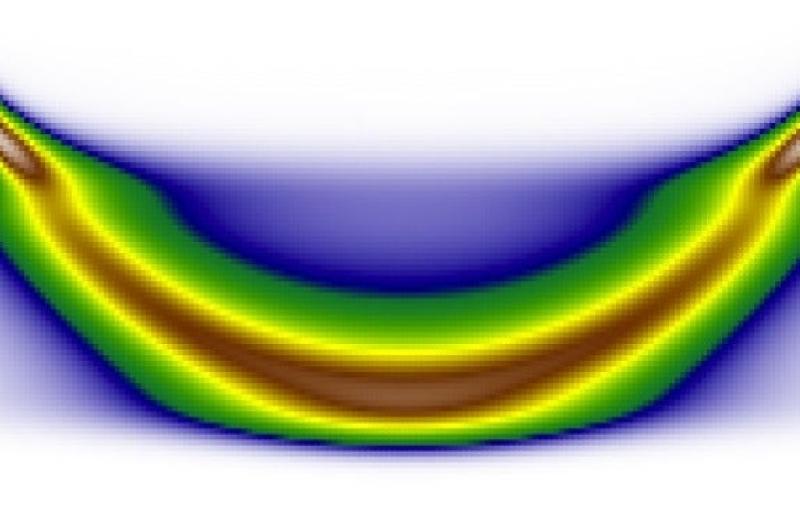
SIMES Simulations Track Energized Electrons to Understand Complex Materials

Jolting complex materials with bursts of energy from rapid-fire lasers can help scientists learn why some of these materials exhibit useful properties such as...

January 31, 2014  ·  4 min read
Image - Pictured is the initial, equilibrium distribution of electron energy after an intense pulse of near-infrared light. (SIMES)
Feature
VIA Symmetry Magazine

Virtual Field Trips Take Students into the Labs

Teachers are using Google+ to bring their classes behind the scenes at national laboratories and to teach students about careers in STEM.

February 6, 2014

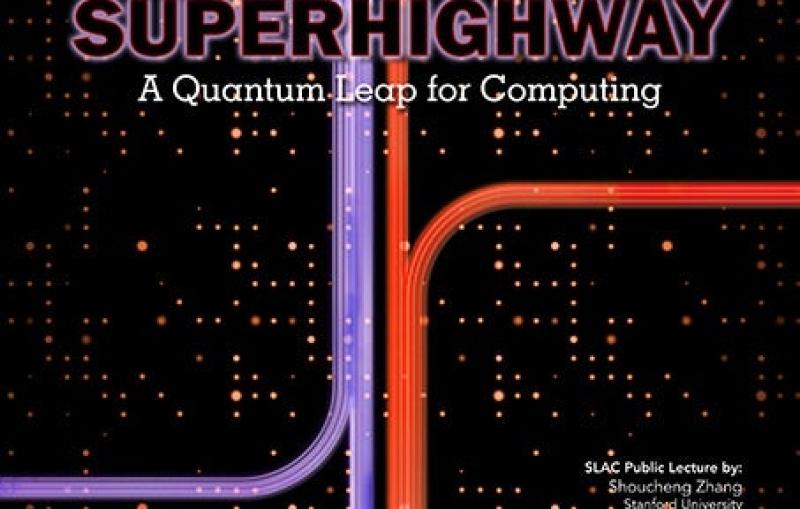
Public Lecture — Electron Superhighway: a Quantum Leap for Computing

The recent discovery of a new state of matter -- the topological insulator -- may lead to a new paradigm of information processing, in...

February 10, 2014
Feature

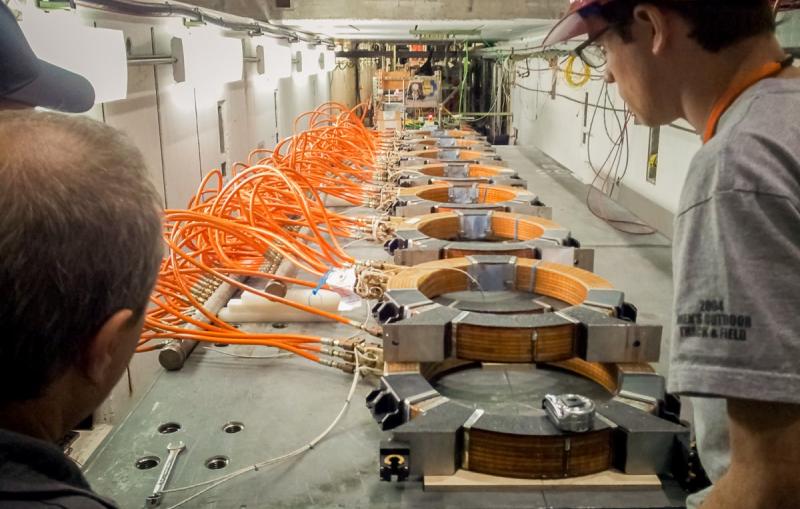
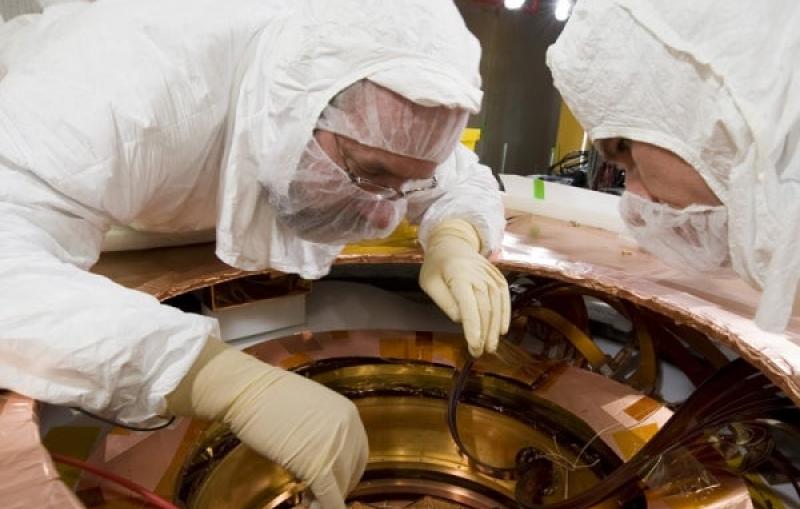
Cosmic Rays on Demand

In a SLAC test facility, scientists have set the stage for an experiment that mimics what happens when incredibly energetic cosmic ray particles hit...

February 10, 2014  ·  4 min read
Photo - Researchers look over the magnetic coils that will impersonate the Earth's magnetic field.

Explain it in 60 Seconds: Quantum Entanglement

Through ‘spooky action at a distance,’ the properties of two systems remain correlated even after they are separated.

February 10, 2014
Feature

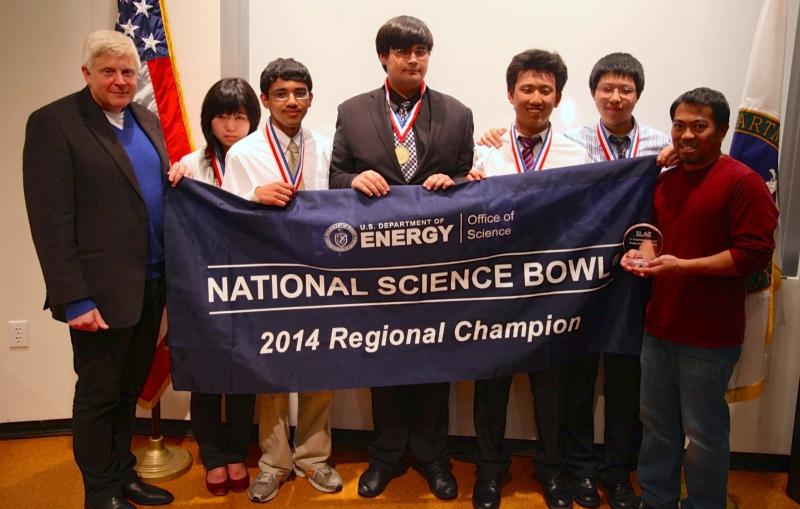
Future Scientists Compete at 10th Annual Regional Science Bowl at SLAC

SLAC hosted 21 teams at the Department of Energy Regional Bay Area Science Bowl on Feb. 8. The winners from Homestead High School will...

February 13, 2014  ·  3 min read
Photo - Homestead High School team wins 2014 Science Bowl at SLAC
News Release

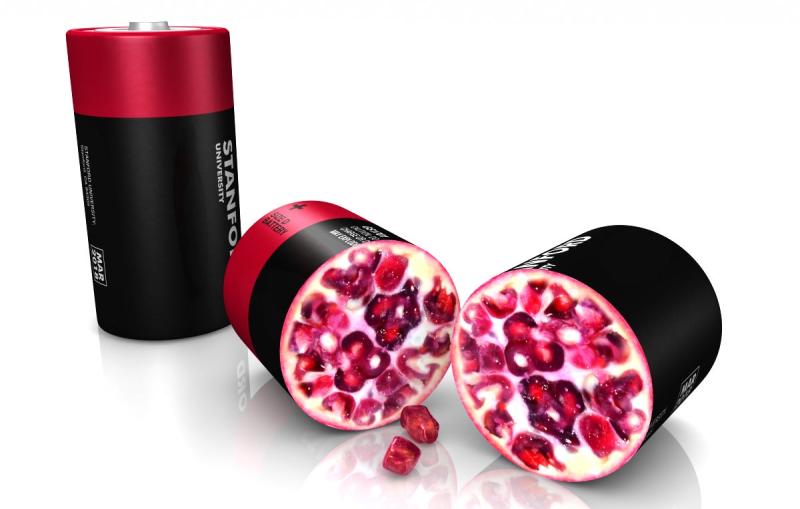
New ‘Pomegranate-inspired’ Design Solves Problems for Lithium-Ion Batteries

An electrode designed like a pomegranate – with silicon nanoparticles clustered like seeds in a tough carbon rind – overcomes several remaining obstacles to...

February 16, 2014  ·  4 min read
A fanciful illustration of pomegranate seeds inside a conventional battery
Feature
VIA Symmetry Magazine

BaBar Still Breaking New Ground

Twenty years after a cutting-edge particle physics experiment at SLAC adopted a royal elephant from a series of children's books as its mascot, BaBar...

February 18, 2014
Feature

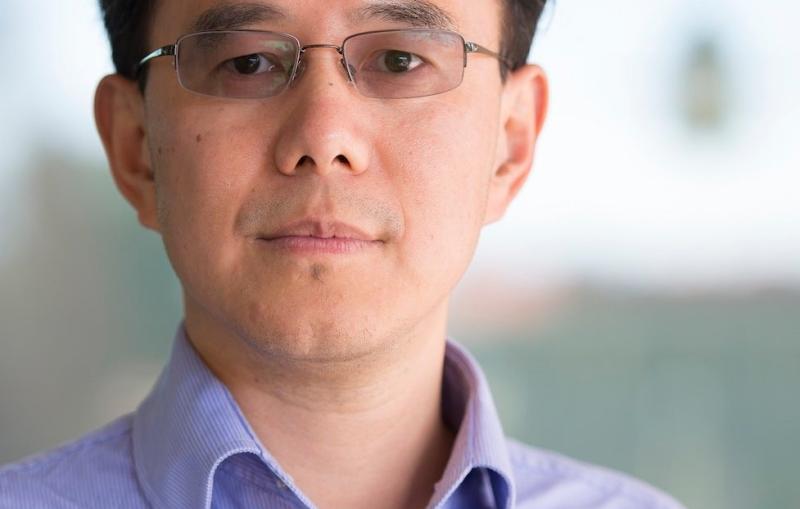
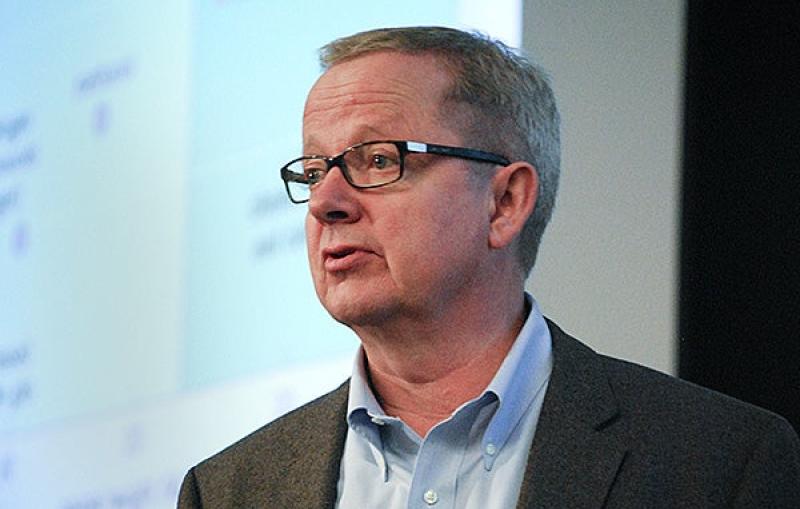
Physics and a Common Goal: Zhirong Huang's Road to Success at SLAC

Growing up in China shortly after the Cultural Revolution, Zhirong Huang may have been the only middle-school child in Beijing who knew anything about...

February 19, 2014  ·  4 min read
Zhirong Huang, associate professor of physics
Feature
VIA NASA

With A Deadly Embrace, 'Spidery' Pulsars Consume Their Mates

Black widow spiders and their Australian cousins, known as redbacks, are notorious for their tainted love, expressed as an unsettling tendency to kill and...

February 20, 2014
Image - Illustration of black widow pulsar blasting material off companion star
Feature
VIA Symmetry Magazine

CDMS Result Covers New Ground in Search for Dark Matter

In a newly announced result from the Cryogenic Dark Matter Search experiment, scientists have placed a more stringent limit on "light," or low-mass, dark...

February 28, 2014
Feature

Scientists Say New Catalyst Could Lead to Clean, Low-Cost Methanol Production

Created by scientists from Stanford, SLAC and Denmark, the new nickel-gallium catalyst converts carbon dioxide emissions into an important industrial chemical and potential fuel
March 3, 2014  ·  4 min read
Jens Norskov
  • Go to previous page
  • Page 1
  • …
  • Page 13
  • Page 14
  • Page 15
  • Page 16
  • Currently on page 17
  • Page 18
  • Page 19
  • Page 20
  • Page 21
  • …
  • Page 154
  • Go to next page

SLAC National Accelerator Laboratory 
2575 Sand Hill Road  
Menlo Park, CA 94025-7015  
650.926.3300

  • Coming to SLAC
  • Connect with us
  • Contact us
  • Facebook
  • Flickr
  • Instagram
  • LinkedIn
  • Twitter
  • YouTube

Sign up for our email

Monthly newsletter for cutting-edge science, SLAC milestones and events.

Sign up

Bold People
Visionary Science
Real Impact

We explore how the universe works at the biggest, smallest and fastest scales and invent powerful tools used by scientists around the globe.

  • About
    • Our story
    • Our people
    • Lab overview
    • Visit SLAC
    • Resources
    • Connect with us
  • Research
    • X-ray & ultrafast science
    • Advanced accelerators
    • New technologies
    • Physics of the universe
    • Science of life
    • Energy sciences
    • SLAC science explained
  • Facilities & centers
    • Scientific facilities
    • Joint institutes & centers
  • Work with us
    • Partner with us
    • Become a supplier
    • Use our facilities
    • Careers at SLAC
  • News & events
    • News center
    • Symmetry Magazine
    • Media resources
    • Events
    • Educational programs
    • Connect with us
  • Staff portal
  • Privacy policy
  • Accessibility
  • Vulnerability disclosure
  • A–Z index
  • Website feedback
Home
  • SLAC home
  • Maps & directions
  • Emergency info
  • Careers

© 2026 SLAC National Accelerator Laboratory is operated by Stanford University for the U.S. Department of Energy Office of Science.

Stanford University U.S. Department of Energy
Top Top
Back to top Back to top