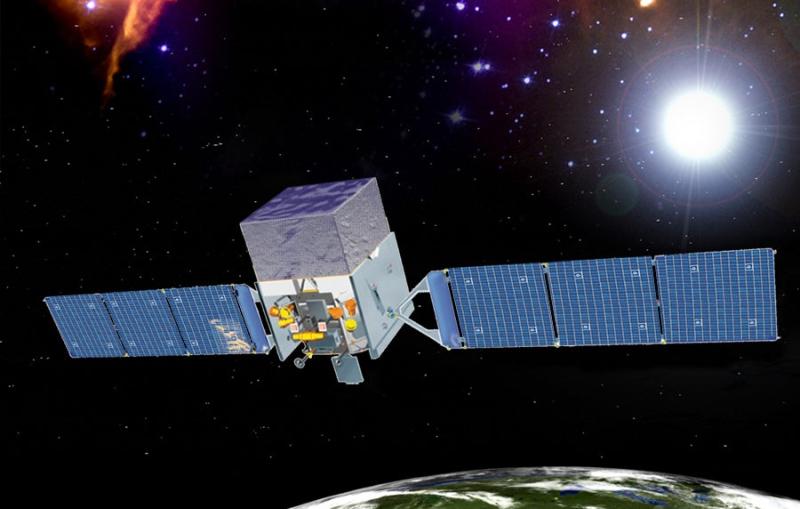
Researchers around the world pursue three approaches to look for fingerprints of dark matter's ghostly components: on the Earth’s surface, underground and in space.

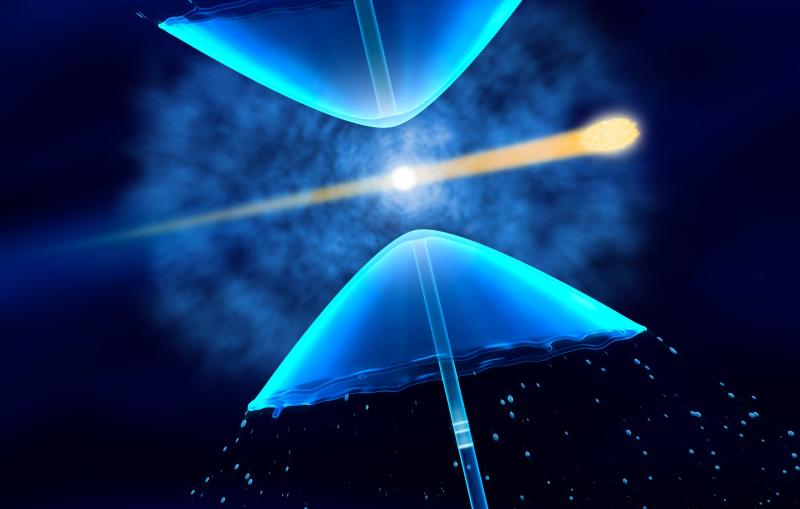
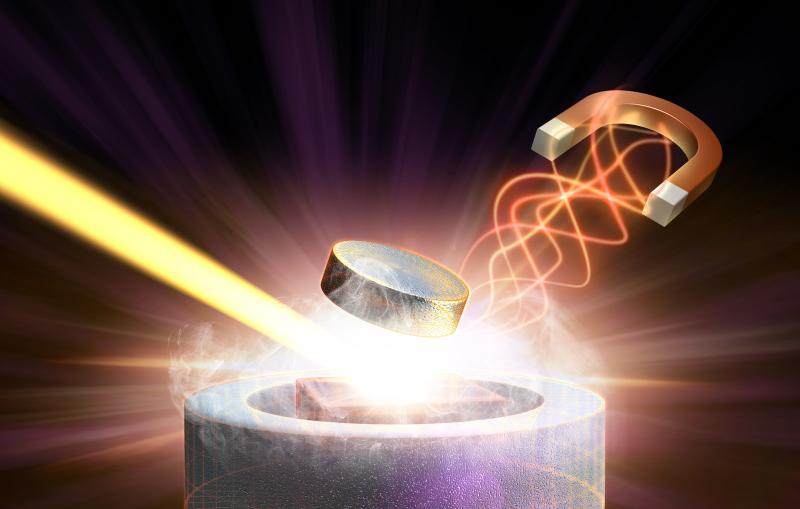
This illustration shows how an ultrabright X-ray laser pulse vaporizes part of a liquid jet, creating umbrella-shaped films of liquid and sending shock waves...
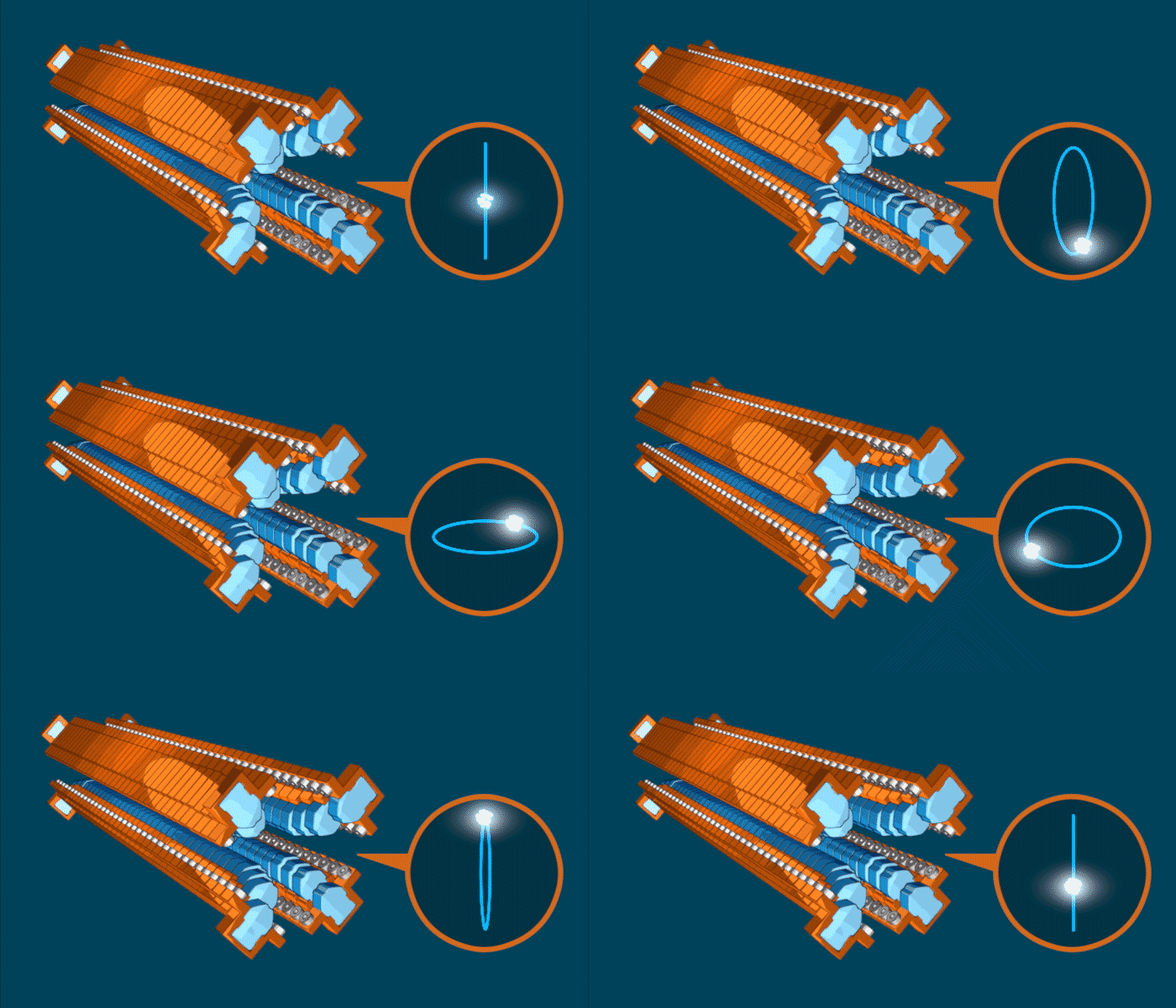
The side-to-side motion of electrons in a beam can be circular, elliptical, or linear, depending on the position of the Delta undulator's magnet rows...
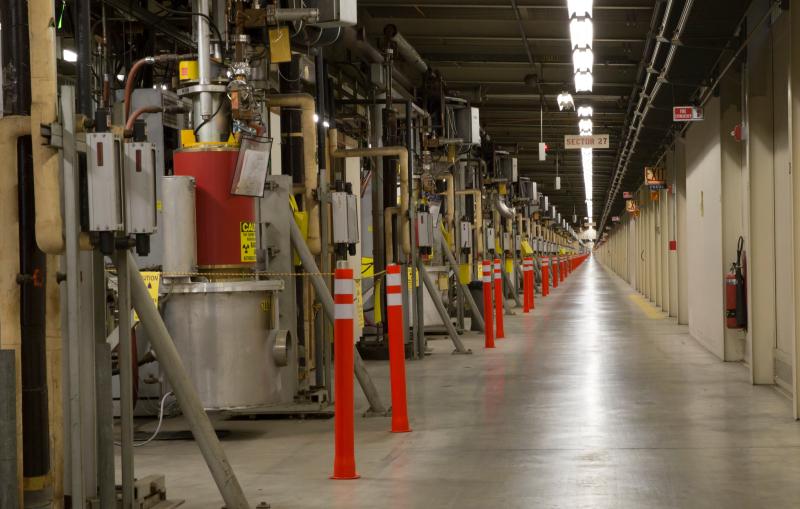
The klystron gallery at SLAC’s 2-mile-long linear accelerator contains more than 150 klystrons that produce microwave pulses for accelerating electrons to high energies.

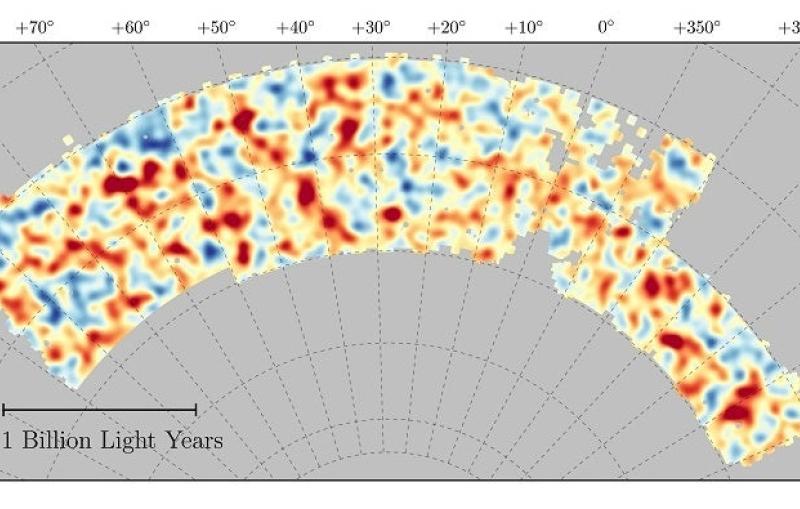
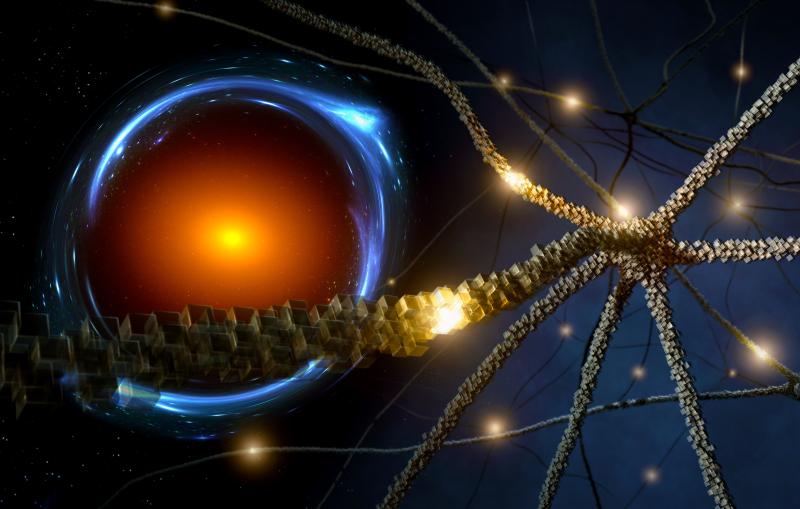
KIPAC scientists have for the first time used artificial neural networks to analyze complex distortions in spacetime, called gravitational lenses, demonstrating that the method...