
Learn about our science, people, facilities and partners. Discover our history and vision for the future.
Who we are
We explore radically new ideas with an entrepreneurial mindset.
Get an overview of research at SLAC: X-ray and ultrafast science, particle and astrophysics, cosmology, particle accelerators, biology, energy and technology.
Revealing nature’s fastest processes with X-rays, lasers and electrons
Studying the particles and forces that knit the cosmos together
Building smaller, faster, more powerful accelerators for all
Understanding the machinery of life at its most basic level
Inventing new tools for science and society
Finding clean, sustainable solutions for the world’s energy challenges
SLAC science explained
Cut through the jargon while exploring our research.
Learn more about the places where science happens at SLAC: our major facilities, institutes and centers.
Linac Coherent Light Source
Stanford Synchrotron Radiation Lightsource
Facility for Advanced Accelerator Experimental Tests
Cryogenic Electron Microscopy
Stanford Institute for Materials & Energy Science
Kavli Institute for Particle Astrophysics & Cosmology
Stanford PULSE Institute
Center for Interface Science & Catalysis
NSF-DOE Vera C. Rubin Observatory LSST
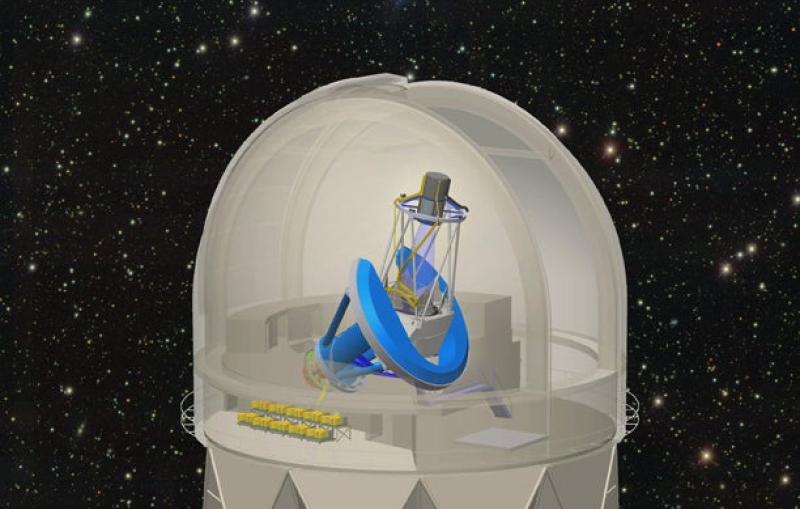
SLAC & Stanford build the world’s largest digital camera for the Legacy Survey of Space and Time (LSST).
Find a career, partner with us or apply to use our tools and facilities.
Apply to become a user of our scientific research facilities and instruments.
Careers at SLAC
Join our united workforce.
Get the latest news about the lab, our science and discoveries. Explore SLAC events and learn how to participate.
This joint publication of SLAC and Fermilab is your view into the world of particle physics.
STEM Community Day 2026
Saturday, September 12
The colony of honeybees that's lived in an old blue oak tree in front of Building 41 for nearly 50 years has been relocated...
Science-interested teens spent a week at the lab learning more about STEM at the inaugural Greene Scholars Program Summer Science Institute at SLAC.
Before Hitomi died, it sent back X-ray data that explain how turbulent motions may prevent cooling of hot gas.
Four Stanford students receive funding for work on novel accelerators and beams for SLAC's X-ray laser.
What’s the difference between a synchrotron and a cyclotron, anyway?
The new MFX station expands the X-ray laser’s capability and flexibility for biological studies, which are increasingly in demand at SLAC's Linac Coherent Light...
The goal: Develop high-tech coatings that make the detector’s mirrors less “noisy”.
Now the startup, Lumeras LLC, has a viable commercial product, and scientists have a new tool for studying the behavior of complex materials.
In its final run, the LUX experiment increased its sensitivity four-fold, but dark matter remains elusive.
The first website to be hosted in the US has grown to be an invaluable hub for open science.
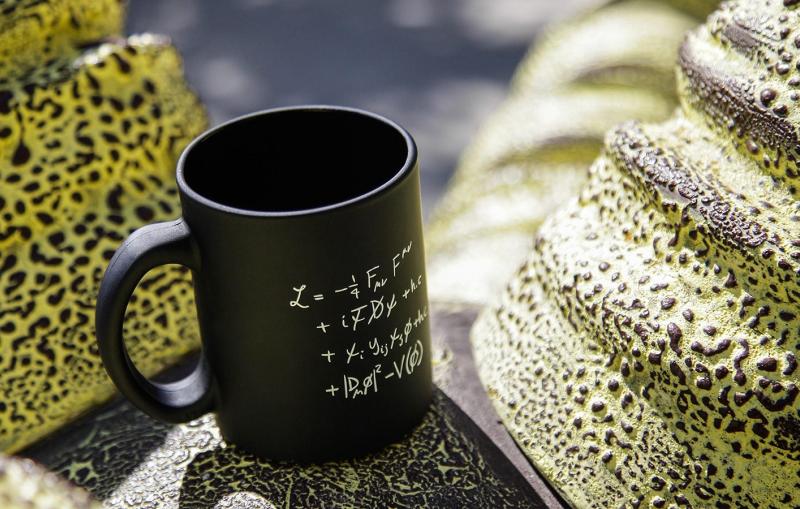
The Standard Model is far more than elementary particles arranged in a table.
Scientists are using plasma to create electronic sensors that will track the health of astronauts.