SLAC National Accelerator Laboratory
    • About

      Learn about our science, people, facilities and partners. Discover our history and vision for the future.

    • OUR STORY
      • Mission, vision, values
      • History
    • LAB OVERVIEW
      • SLAC at a glance
      • Lab organization
      • Our partnerships
    • OUR PEOPLE
      • Leadership
      • Meet our teams
      • Faculty
    • VISIT SLAC
      • Public tours
      • Contact us
    • Resources
      • Images, videos & more
      • Brochures & fact sheets
    • Connect With Us
      • Facebook
      • Flickr
      • Instagram
      • LinkedIn
      • Twitter
      • YouTube
    video

    Who we are

    We explore radically new ideas with an entrepreneurial mindset.

    Science and User Support Building to the left and Arrillaga Science Center building to the right from above the Main Quad at SLAC's campus.
    • Research

      Get an overview of research at SLAC: X-ray and ultrafast science, particle and astrophysics, cosmology, particle accelerators, biology, energy and technology.

    • X-ray and Ultrafast science icon X-ray & ultrafast science

      Revealing nature’s fastest processes with X-rays, lasers and electrons

    • Physics of the universe science icon Physics of the universe

      Studying the particles and forces that knit the cosmos together

    • Advanced Accelerators science icon Advanced accelerators

      Building smaller, faster, more powerful accelerators for all

    • Science of life science icon Science of life

      Understanding the machinery of life at its most basic level

    • New technologies science icon New technologies

      Inventing new tools for science and society

    • Energy sciences science icon Energy sciences

      Finding clean, sustainable solutions for the world’s energy challenges

    Spotlight

    SLAC science explained

    Cut through the jargon while exploring our research.

    SAGE campers have fun experimenting with a Van de Graff generator
    • Facilities & Centers

      Learn more about the places where science happens at SLAC: our major facilities, institutes and centers.

    • SCIENTIFIC FACILITIES
      • LCLS website

        Linac Coherent Light Source

      • SSRL website

        Stanford Synchrotron Radiation Lightsource

      • FACET-II website

        Facility for Advanced Accelerator Experimental Tests

      • CryoEM website

        Cryogenic Electron Microscopy

    • JOINT INSTITUTES & CENTERS
      • SIMES website

        Stanford Institute for Materials & Energy Science

      • KIPAC website

        Kavli Institute for Particle Astrophysics & Cosmology

      • PULSE website

        Stanford PULSE Institute

      • SUNCAT website

        Center for Interface Science & Catalysis

      • SLAC-Stanford Battery Center

    NSF-DOE Vera C. Rubin Observatory LSST

    SLAC & Stanford build the world’s largest digital camera for the Legacy Survey of Space and Time (LSST).

    A drone photo of Rubin Observatory while taking pictures during the First Look observing campaign
    • Work with Us

      Find a career, partner with us or apply to use our tools and facilities.

    • PARTNER WITH US
      • For industry partners
      • Research partnerships & tech transfer
      • Technology Innovation
    • CAREERS AT SLAC
      • Job openings
      • Internships
      • Life at SLAC
    • USE OUR FACILITIES

      Apply to become a user of our scientific research facilities and instruments.

    • COMING TO SLAC
    • BECOME A SUPPLIER

    Careers at SLAC

    Join our united workforce.

    SLAC staff in main quad
    • News & Events

      Get the latest news about the lab, our science and discoveries. Explore SLAC events and learn how to participate.

    • NEWS CENTER
      • News archive
      • Media resources
      • Images & videos
    • SLAC EVENTS
      • Public lectures
      • Scientific seminars
      • Community events
    • SYMMETRY MAGAZINE

      This joint publication of SLAC and Fermilab is your view into the world of particle physics.

    • EDUCATIONAL PROGRAMS
      • Educational tours
      • Resources for students & educators
    • Connect With Us
      • Facebook
      • Flickr
      • Instagram
      • LinkedIn
      • Twitter
      • YouTube
    Spotlight

    SLAC events

    Event attendees listen to a science lecture
Filter search by
Staff portalStanford directoryComing to SLACResources for…
  1. Home
  2. …
Filter by research area
  • X-ray and ultrafast science (258)
  • Physics of the universe (190)
  • Energy sciences (64)
  • Science of life (55)
  • Advanced accelerators (33)
  • New technologies (33)
Filter by Type
  • (-) News (1787)
  • (-) Image (387)
  • Video (228)
  • Event (159)
  • Page (67)
  • Person (67)
  • resource (64)
  • News Collection (5)
Sort by
2174 results
Display Grid Display List
Clear all
Feature
VIA Stanford Energy

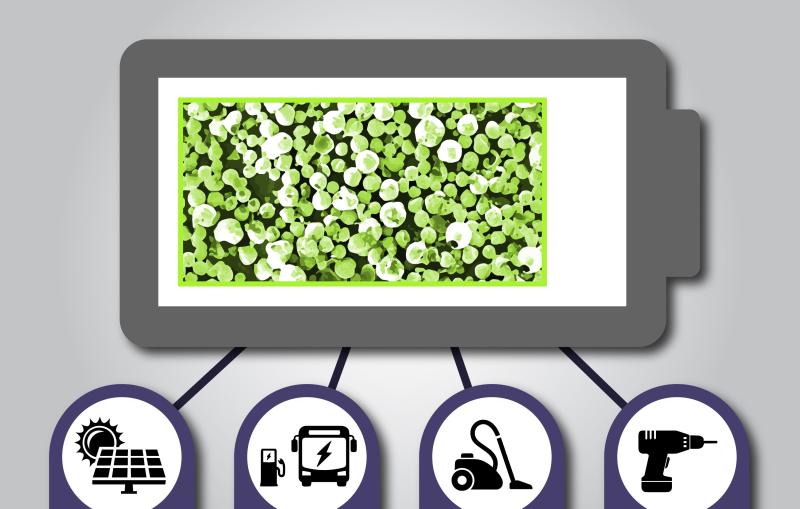
Coating developed by Stanford, SLAC researchers brings lithium metal battery closer to reality

The coating significantly extends the battery's life and reduces the problems that cause batteries to burst into flames.

August 26, 2019
Stanford PhD students David Mackanic, left, and Zhiao Yu with their battery tester
News Release

First report of superconductivity in a nickel oxide material

Made with ‘Jenga chemistry,’ the discovery could help crack the mystery of how high-temperature superconductors work.

August 28, 2019  ·  5 min read
Illustration of 'Jenga chemistry' step of making new superconductor
Feature

SLAC summer programs encourage students to explore STEM careers

From middle schoolers to graduate students, more than 300 were introduced this year to real-world science, technology, engineering and math.

September 4, 2019  ·  4 min read
Participant in a SLAC SAGE-S summer camp
Feature

Plastics, fuels and chemical feedstocks from CO2? They’re working on it.

SUNCAT researchers discover a way to improve a key step in these conversions, and explore what it would take to turn the climate-changing gas...

September 9, 2019  ·  6 min read
Diagram of scheme for turning CO2 from smokestacks into products
Feature

Xinru Wang wins 2019 Klein Award for research on cell signaling in enzymes

Using SLAC’s X-ray synchrotron SSRL, Wang improves fundamental knowledge about how cells communicate, which could enable the development of more effective drugs.

September 10, 2019  ·  3 min read
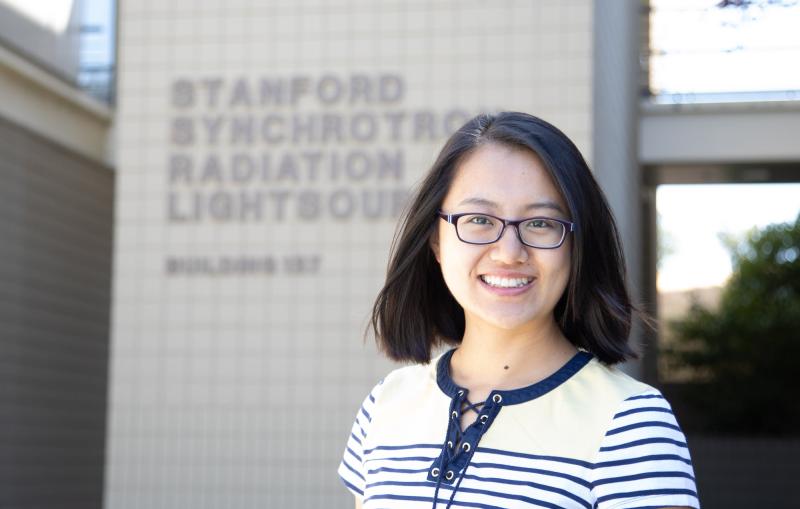
Xinru Wang
Feature
VIA Stanford News

A new route to carbon-neutral fuels from CO2

SLAC/Stanford scientists and their colleagues find a new way to efficiently convert CO2 into the building block for sustainable liquid fuels.

September 16, 2019
Graves-Bajdich-Machalo
Feature

In brief: New round of DOE awards bolsters quantum information science at SLAC

Two projects will look for ways to link individual quantum devices into networks for quantum computing and ultrasensitive detectors.

September 16, 2019  ·  1 min read
QIS microantenna
Feature

What is a molecular movie?

Molecular movie-making is both an art and a science; the results let us watch how nature works on the smallest scales.

October 7, 2019  ·  12 min read
Molecular movie frames for the light-triggered transition of the ring-shaped 1,3-CHD molecule.
Feature

Matteo Mitrano receives 2019 LCLS Young Investigator Award for pioneering new techniques to probe high-temperature superconductivity

Early career award recognizes Mitrano’s work in ultrafast X-ray scattering.

September 20, 2019  ·  3 min read
Matteo Mitrano
Feature

In brief: Breaking up buckyballs is hard to do

A new study shows how soccer ball-shaped molecules burst more slowly than expected when blasted with an X-ray laser beam.

September 23, 2019  ·  2 min read
Buckyballs
Feature
VIA Stanford News

William Madia retiring as Stanford’s vice president for SLAC

William Madia, Stanford vice president for SLAC since 2008, plans to retire at the end of September.

September 24, 2019
Portrait of William Madia
Feature

In brief: Researchers home in on extremely rare nuclear process

The complete data from the EXO-200 experiment provide new information on neutrinoless double beta decay and set the stage for future experiments that will...

September 24, 2019  ·  2 min read
The EXO-200 underground detector.
  • Go to previous page
  • Page 1
  • …
  • Page 125
  • Page 126
  • Page 127
  • Page 128
  • Currently on page 129
  • Page 130
  • Page 131
  • Page 132
  • Page 133
  • …
  • Page 182
  • Go to next page

SLAC National Accelerator Laboratory 
2575 Sand Hill Road  
Menlo Park, CA 94025-7015  
650.926.3300

  • Coming to SLAC
  • Connect with us
  • Contact us
  • Facebook
  • Flickr
  • Instagram
  • LinkedIn
  • Twitter
  • YouTube

Sign up for our email

Monthly newsletter for cutting-edge science, SLAC milestones and events.

Sign up

Bold People
Visionary Science
Real Impact

We explore how the universe works at the biggest, smallest and fastest scales and invent powerful tools used by scientists around the globe.

  • About
    • Our story
    • Our people
    • Lab overview
    • Visit SLAC
    • Resources
    • Connect with us
  • Research
    • X-ray & ultrafast science
    • Advanced accelerators
    • New technologies
    • Physics of the universe
    • Science of life
    • Energy sciences
    • SLAC science explained
  • Facilities & centers
    • Scientific facilities
    • Joint institutes & centers
  • Work with us
    • Partner with us
    • Become a supplier
    • Use our facilities
    • Careers at SLAC
  • News & events
    • News center
    • Symmetry Magazine
    • Media resources
    • Events
    • Educational programs
    • Connect with us
  • Staff portal
  • Privacy policy
  • Accessibility
  • Vulnerability disclosure
  • A–Z index
  • Website feedback
Home
  • SLAC home
  • Maps & directions
  • Emergency info
  • Careers

© 2026 SLAC National Accelerator Laboratory is operated by Stanford University for the U.S. Department of Energy Office of Science.

Stanford University U.S. Department of Energy
Top Top
Back to top Back to top