Scientists studying neutrinos have found with the highest degree of sensitivity yet that these mysterious particles behave like other elementary particles at the quantum...
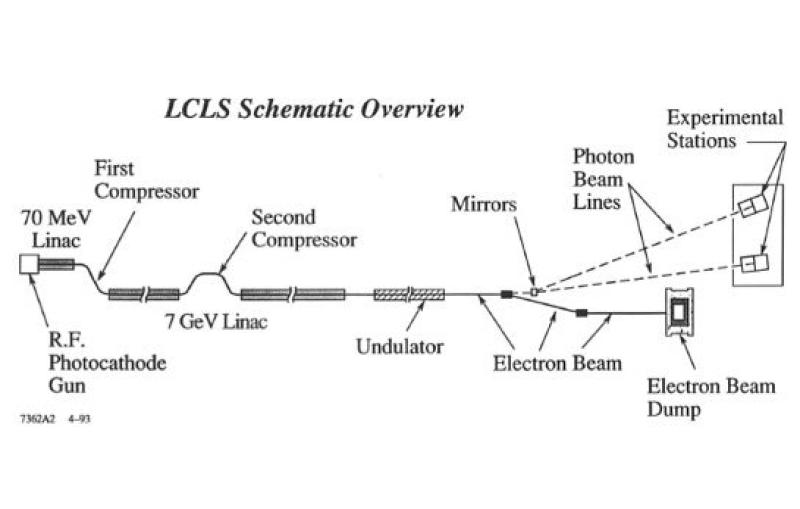
The spectacular success of the Linac Coherent Light Source (LCLS), the world’s first hard X-ray free-electron laser, has put SLAC National Accelerator Laboratory at...
Although physicists from two experiments at CERN's Large Hadron Collider and from Fermilab’s Tevatron collider recently reported at the Europhysics Conference on High Energy...
More than eight years worth of pristine particle physics data will remain available for analysis or re-analysis at least until 2018, now that BaBar's...
Scientists have engineered a cheap, abundant alternative to the expensive platinum catalyst and coupled it with a light-absorbing electrode to make hydrogen fuel from...
A tool developed half a century ago for sorting subatomic particles has been redesigned to measure X-ray laser pulses at SLAC's Linac Coherent Light...
In a paper published Nov. 2 in Nature Communications, a team of researchers led by University of Maryland's Ichiro Takeuchi, in collaboration with Stanford...
In experiments at SLAC National Accelerator Laboratory's Linac Coherent Light Source X-ray laser, researchers made snapshots of atomic-scale fluctuations in liquids and glasses.
Menlo Park, Calif. — An international group of scientists working at the Department of Energy's (DOE) SLAC National Accelerator Laboratory has mapped a weak...
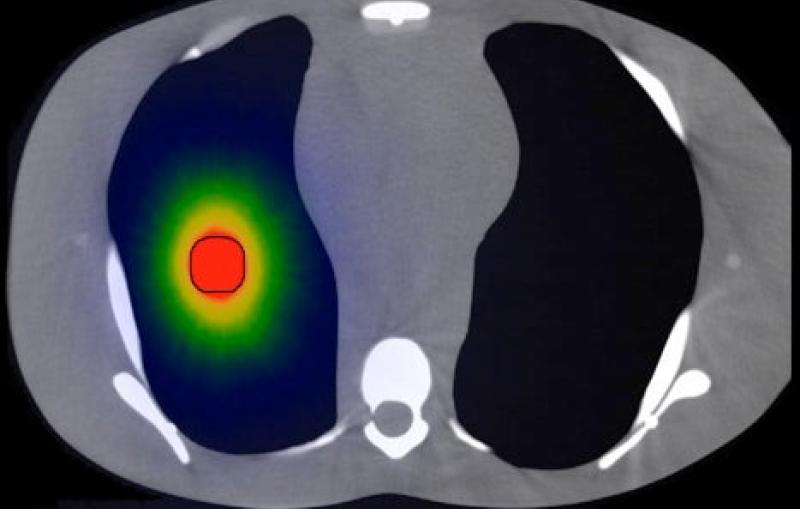
Accelerator physicists at SLAC and cancer specialists from Stanford are working on a new technology that could dramatically reduce the time needed for cancer...