SLAC National Accelerator Laboratory
    • About

      Learn about our science, people, facilities and partners. Discover our history and vision for the future.

    • OUR STORY
      • Mission, vision, values
      • History
    • LAB OVERVIEW
      • SLAC at a glance
      • Lab organization
      • Our partnerships
    • OUR PEOPLE
      • Leadership
      • Meet our teams
      • Faculty
    • VISIT SLAC
      • Public tours
      • Contact us
    • Resources
      • Images, videos & more
      • Brochures & fact sheets
    • Connect With Us
      • Facebook
      • Flickr
      • Instagram
      • LinkedIn
      • Twitter
      • YouTube
    video

    Who we are

    We explore radically new ideas with an entrepreneurial mindset.

    Science and User Support Building to the left and Arrillaga Science Center building to the right from above the Main Quad at SLAC's campus.
    • Research

      Get an overview of research at SLAC: X-ray and ultrafast science, particle and astrophysics, cosmology, particle accelerators, biology, energy and technology.

    • X-ray and Ultrafast science icon X-ray & ultrafast science

      Revealing nature’s fastest processes with X-rays, lasers and electrons

    • Physics of the universe science icon Physics of the universe

      Studying the particles and forces that knit the cosmos together

    • Advanced Accelerators science icon Advanced accelerators

      Building smaller, faster, more powerful accelerators for all

    • Science of life science icon Science of life

      Understanding the machinery of life at its most basic level

    • New technologies science icon New technologies

      Inventing new tools for science and society

    • Energy sciences science icon Energy sciences

      Finding clean, sustainable solutions for the world’s energy challenges

    Spotlight

    SLAC science explained

    Cut through the jargon while exploring our research.

    SAGE campers have fun experimenting with a Van de Graff generator
    • Facilities & Centers

      Learn more about the places where science happens at SLAC: our major facilities, institutes and centers.

    • SCIENTIFIC FACILITIES
      • LCLS website

        Linac Coherent Light Source

      • SSRL website

        Stanford Synchrotron Radiation Lightsource

      • FACET-II website

        Facility for Advanced Accelerator Experimental Tests

      • CryoEM website

        Cryogenic Electron Microscopy

    • JOINT INSTITUTES & CENTERS
      • SIMES website

        Stanford Institute for Materials & Energy Science

      • KIPAC website

        Kavli Institute for Particle Astrophysics & Cosmology

      • PULSE website

        Stanford PULSE Institute

      • SUNCAT website

        Center for Interface Science & Catalysis

      • SLAC-Stanford Battery Center

    NSF-DOE Vera C. Rubin Observatory LSST

    SLAC & Stanford build the world’s largest digital camera for the Legacy Survey of Space and Time (LSST).

    A drone photo of Rubin Observatory while taking pictures during the First Look observing campaign
    • Work with Us

      Find a career, partner with us or apply to use our tools and facilities.

    • PARTNER WITH US
      • For industry partners
      • Research partnerships & tech transfer
      • Technology Innovation
    • CAREERS AT SLAC
      • Job openings
      • Internships
      • Life at SLAC
    • USE OUR FACILITIES

      Apply to become a user of our scientific research facilities and instruments.

    • COMING TO SLAC
    • BECOME A SUPPLIER

    Careers at SLAC

    Join our united workforce.

    SLAC staff in main quad
    • News & Events

      Get the latest news about the lab, our science and discoveries. Explore SLAC events and learn how to participate.

    • NEWS CENTER
      • News archive
      • Media resources
      • Images & videos
    • SLAC EVENTS
      • Public lectures
      • Scientific seminars
      • Community events
    • SYMMETRY MAGAZINE

      This joint publication of SLAC and Fermilab is your view into the world of particle physics.

    • EDUCATIONAL PROGRAMS
      • Educational tours
      • Resources for students & educators
    • Connect With Us
      • Facebook
      • Flickr
      • Instagram
      • LinkedIn
      • Twitter
      • YouTube
    Upcoming public lecture

    Reinventing the way we break down plastic waste

    Thursday, March 26, 2026
    7:00–8:00 p.m. PDT

    Public Lecture: Ozge Bozkurt
Filter search by
Staff portalStanford directoryComing to SLACResources for…
  1. Home
  2. …
Filter by research area
  • Physics of the universe (21)
  • X-ray and ultrafast science (18)
  • Science of life (11)
  • Energy sciences (6)
  • New technologies (5)
  • Advanced accelerators (1)
Filter by Type
  • News (1772)
  • Image (387)
  • Video (227)
  • (-) Event (157)
  • Page (67)
  • Person (66)
  • resource (64)
  • (-) News Collection (4)
Sort by
161 results
Display Grid Display List
Clear all
Past Event
Public Lecture

A Sparkle in the Dark: The Outlandish Quest for Dark Matter

Presented by Maria Elena Monzani. The nature and origin of dark matter are among the most compelling mysteries of contemporary science.

Date Tuesday, January 28, 2020
11:30 a.m.  –  12:30 p.m.  PT
Location Panofsky Auditorium, Science and User Support Building (B53)
Past Event
Public Lecture

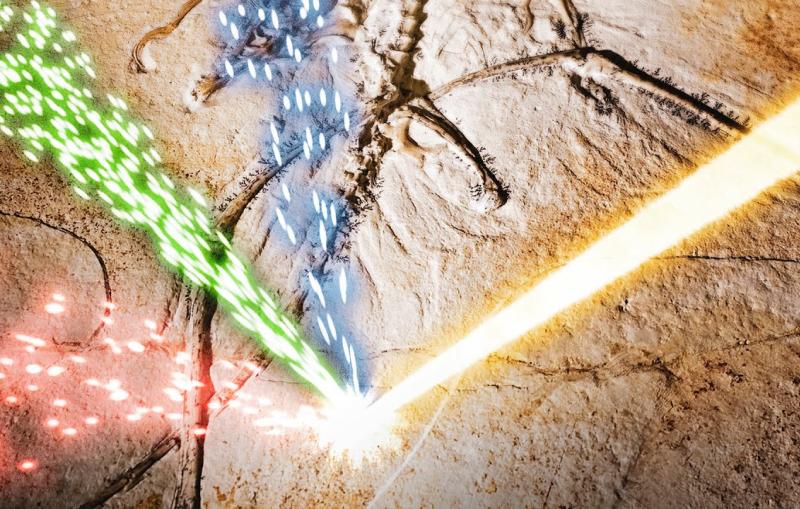
Discovering the Colors of Fossil Creatures

Presented by Nick Edwards. Until recently, the colors of ancient life forms existed only in our imaginations.

Date Tuesday, June 2, 2020
12:30 p.m.  –  1:30 p.m.  PT
video still frame from lecture about fossil colors
Past Event
public lecture

Viewing the Beginning of Time from the Most Remote Places on Earth

Presented by Zeeshan Ahmed. Shortly after the birth of the universe, space was filled by a plasma that was literally red-hot. The light radiated...

Date Thursday, October 8, 2020
10:00 a.m.  –  11:00 a.m.  PT
Past Event
public lecture

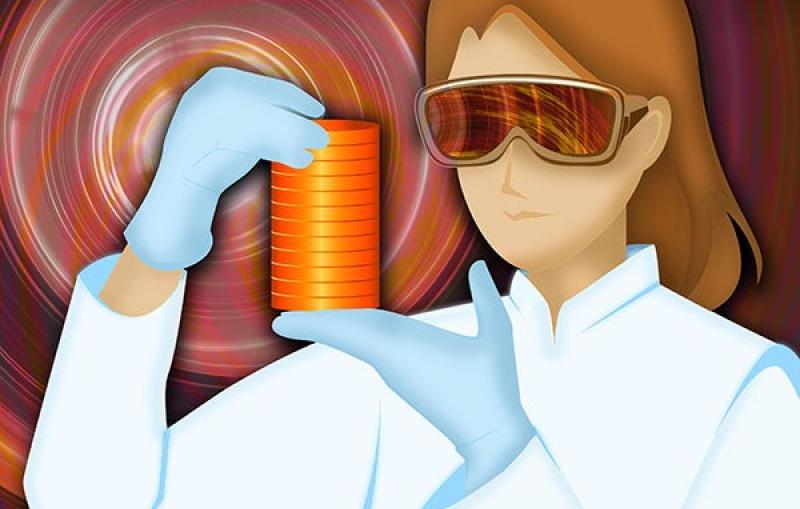
How Science Unlocks Copper's Hidden Powers

Presented by Diana Gamzina. In particle accelerators, electrons are pushed to extreme energies by electromagnetic fields that oscillate inside evacuated metal cavities. Those cavities...

Date Tuesday, November 10, 2020
9:00 a.m.  –  10:00 a.m.  PT
illustration of woman scientist observing stacked copper discs
Past Event
Public Lecture

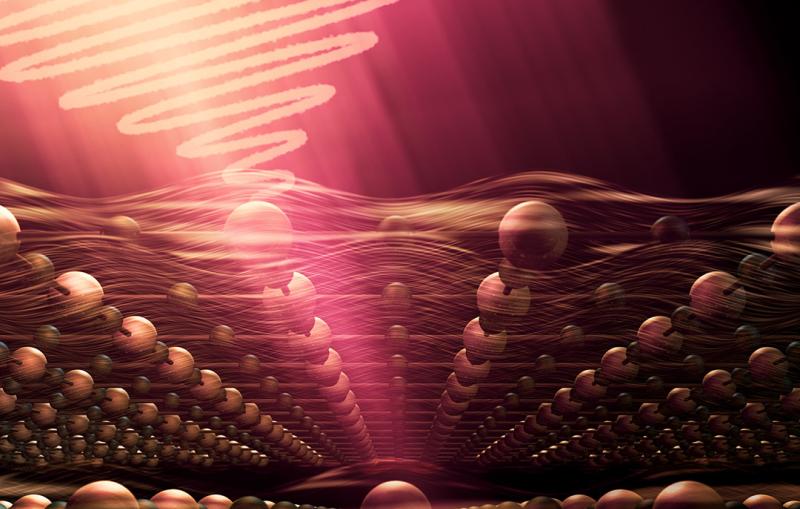
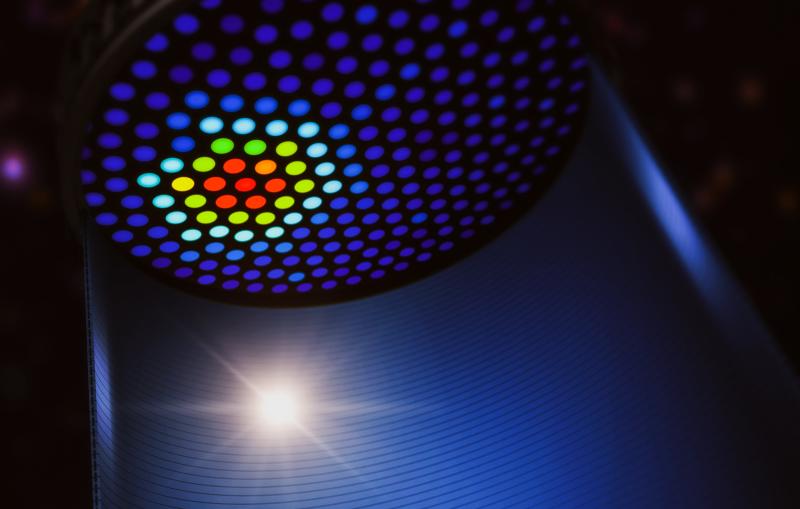
Making Waves in a Superconductor

Superconductors are materials in which electric current flows freely, without resistance. They are used to create the powerful magnetic fields needed to operate MRI...
Date Tuesday, January 29, 2019
11:30 a.m.  –  12:30 p.m.  PT
Location Panofsky Auditorium, Science and User Support Building (B53)
Stillframe for public lecture
Past Event
Public Lecture

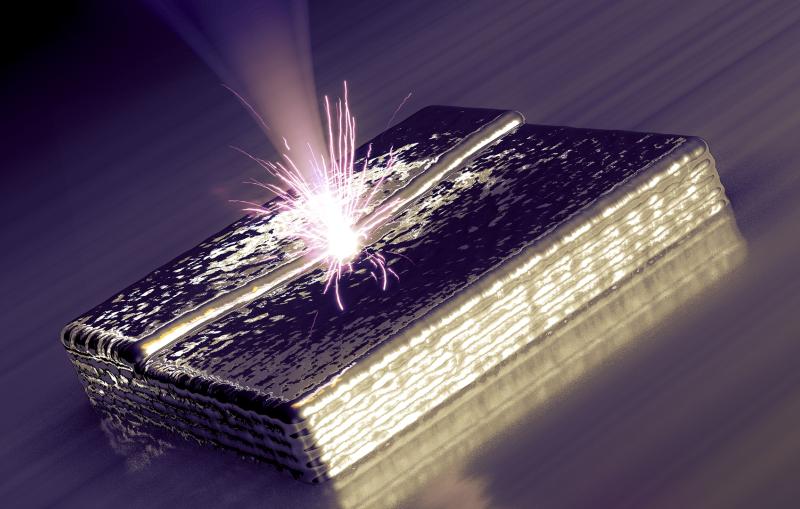
3D Printing for Perfect Metal Parts

Presented by Christopher Tassone. Throughout human history, improvements in the structure of metals have been essential to the sharpness of swords and the strength...

Date Tuesday, March 26, 2019
12:30 p.m.  –  1:30 p.m.  PT
Location Panofsky Auditorium, Science and User Support Building (B53)
stillframe for public lecture
Past Event
Public Lecture

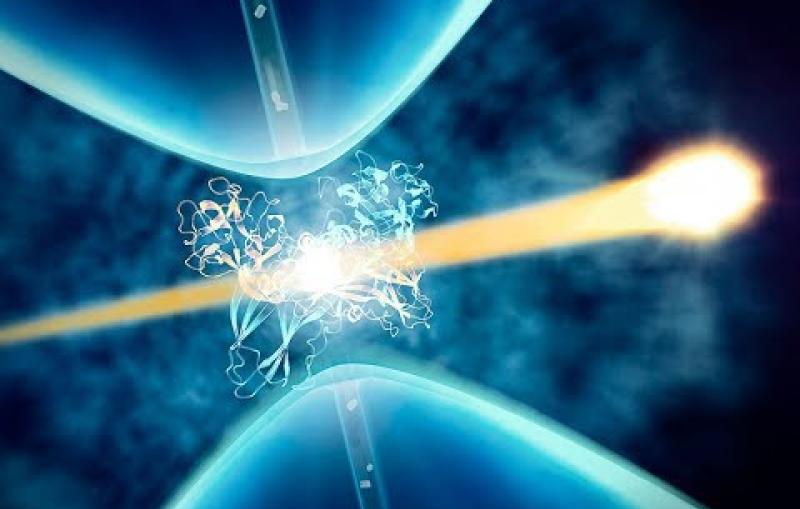
Seeing is Exploding: Snapping Biological Images with X-ray Laser Blasts

Presented by Sebastien Boutet. SLAC's X-ray laser, the Linac Coherent Light Source, launched a new generation of light sources when it opened 10 years...

Date Tuesday, May 21, 2019
12:30 p.m.  –  1:30 p.m.  PT
Location Panofsky Auditorium, Science and User Support Building (B53)
stillframe from public lecture video Seeing is Exploding
Past Event
public lecture

Brown Dwarfs: Failed Stars or Overachieving Planets?

Giant planets can be up to 13 times the mass of Jupiter, while the least massive stars are about 80 times the mass of...
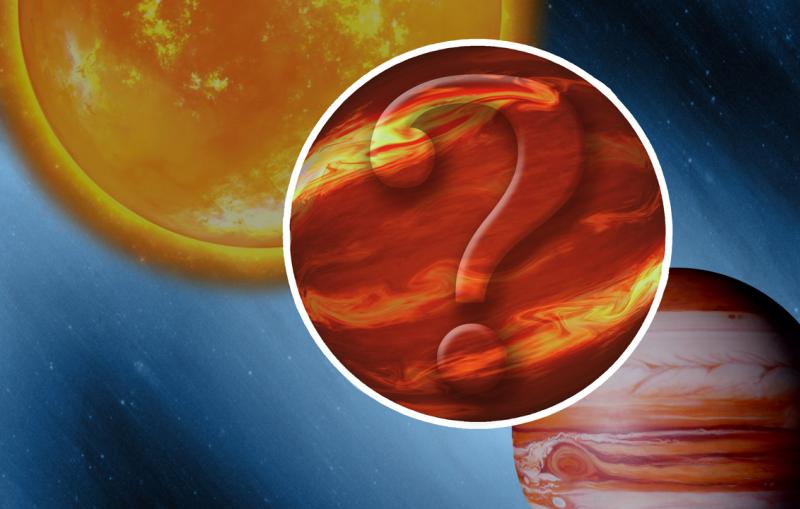
Date Tuesday, July 30, 2019
12:30 p.m.  –  1:30 p.m.  PT
Location Panofsky Auditorium, Science and User Support Building (B53)
stillframe for public lecture
Past Event
public lecture

Super-Human Operator: Controlling Accelerators with Machine Learning

Particle accelerators are used every day in a wide range of scientific, medical and industrial applications. But did you know that the task of...

Date Tuesday, October 1, 2019
12:30 p.m.  –  1:30 p.m.  PT
Location Panofsky Auditorium, Science and User Support Building (B53)
stillframe public lecture super human operator
Past Event
Public lecture

How to Bend a Stream of Dark Matter and Make it Shine

Presented by Sebastian Ellis. The nature of dark matter is one of the most captivating and fundamental open problems facing physicists today. Over many...

Date Tuesday, November 19, 2019
11:30 a.m.  –  12:30 p.m.  PT
Location Panofsky Auditorium, Science and User Support Building (B53)
illustration bending a stream of dark matter
Past Event
Public lecture

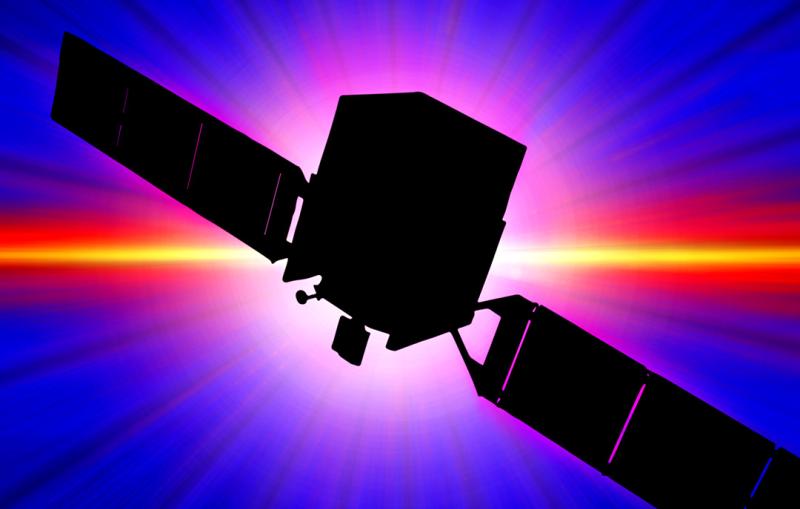
10 Years of Cosmic Fireworks with the Fermi Gamma-ray Space Telescope

Presented by Eric Charles. A single gamma ray carries millions of times the energy of a single photon of visible light.  This means that...

Date Tuesday, July 24, 2018
12:30 p.m.  –  1:30 p.m.  PT
Location Panofsky Auditorium, Science and User Support Building (B53)
stillframe image from lecture titled 10 Years of Cosmic Fireworks with the Fermi Gamma-ray Space Telescope
Past Event
Public lecture

Cryo-EM: Amazing 3D Views of Life’s Molecular Machines

Presented by Wah Chiu. Cryogenic electron microscopy (cryo-EM) is a revolutionary technology for making 3D images of the inner workings of cells in much...

Date Tuesday, September 25, 2018
12:30 p.m.  –  1:30 p.m.  PT
Location Panofsky Auditorium, Science and User Support Building (B53)
stillframe for public lecture
  • Go to previous page
  • Page 1
  • …
  • Page 4
  • Page 5
  • Page 6
  • Page 7
  • Currently on page 8
  • Page 9
  • Page 10
  • Page 11
  • Page 12
  • …
  • Page 14
  • Go to next page

SLAC National Accelerator Laboratory 
2575 Sand Hill Road  
Menlo Park, CA 94025-7015  
650.926.3300

  • Coming to SLAC
  • Connect with us
  • Contact us
  • Facebook
  • Flickr
  • Instagram
  • LinkedIn
  • Twitter
  • YouTube

Sign up for our email

Monthly newsletter for cutting-edge science, SLAC milestones and events.

Sign up

Bold People
Visionary Science
Real Impact

We explore how the universe works at the biggest, smallest and fastest scales and invent powerful tools used by scientists around the globe.

  • About
    • Our story
    • Our people
    • Lab overview
    • Visit SLAC
    • Resources
    • Connect with us
  • Research
    • X-ray & ultrafast science
    • Advanced accelerators
    • New technologies
    • Physics of the universe
    • Science of life
    • Energy sciences
    • SLAC science explained
  • Facilities & centers
    • Scientific facilities
    • Joint institutes & centers
  • Work with us
    • Partner with us
    • Become a supplier
    • Use our facilities
    • Careers at SLAC
  • News & events
    • News center
    • Symmetry Magazine
    • Media resources
    • Events
    • Educational programs
    • Connect with us
  • Staff portal
  • Privacy policy
  • Accessibility
  • Vulnerability disclosure
  • A–Z index
  • Website feedback
Home
  • SLAC home
  • Maps & directions
  • Emergency info
  • Careers

© 2026 SLAC National Accelerator Laboratory is operated by Stanford University for the U.S. Department of Energy Office of Science.

Stanford University U.S. Department of Energy
Top Top
Back to top Back to top