SLAC National Accelerator Laboratory
    • About

      Learn about our science, people, facilities and partners. Discover our history and vision for the future.

    • OUR STORY
      • Mission, vision, values
      • History
    • LAB OVERVIEW
      • SLAC at a glance
      • Lab organization
      • Our partnerships
    • OUR PEOPLE
      • Leadership
      • Meet our teams
      • Faculty
    • VISIT SLAC
      • Public tours
      • Contact us
    • Resources
      • Images, videos & more
      • Brochures & fact sheets
    • Connect With Us
      • Facebook
      • Flickr
      • Instagram
      • LinkedIn
      • Twitter
      • YouTube
    video

    Who we are

    We explore radically new ideas with an entrepreneurial mindset.

    Science and User Support Building to the left and Arrillaga Science Center building to the right from above the Main Quad at SLAC's campus.
    • Research

      Get an overview of research at SLAC: X-ray and ultrafast science, particle and astrophysics, cosmology, particle accelerators, biology, energy and technology.

    • X-ray and Ultrafast science icon X-ray & ultrafast science

      Revealing nature’s fastest processes with X-rays, lasers and electrons

    • Physics of the universe science icon Physics of the universe

      Studying the particles and forces that knit the cosmos together

    • Advanced Accelerators science icon Advanced accelerators

      Building smaller, faster, more powerful accelerators for all

    • Science of life science icon Science of life

      Understanding the machinery of life at its most basic level

    • New technologies science icon New technologies

      Inventing new tools for science and society

    • Energy sciences science icon Energy sciences

      Finding clean, sustainable solutions for the world’s energy challenges

    Spotlight

    SLAC science explained

    Cut through the jargon while exploring our research.

    SAGE campers have fun experimenting with a Van de Graff generator
    • Facilities & Centers

      Learn more about the places where science happens at SLAC: our major facilities, institutes and centers.

    • SCIENTIFIC FACILITIES
      • LCLS website

        Linac Coherent Light Source

      • SSRL website

        Stanford Synchrotron Radiation Lightsource

      • FACET-II website

        Facility for Advanced Accelerator Experimental Tests

      • CryoEM website

        Cryogenic Electron Microscopy

    • JOINT INSTITUTES & CENTERS
      • SIMES website

        Stanford Institute for Materials & Energy Science

      • KIPAC website

        Kavli Institute for Particle Astrophysics & Cosmology

      • PULSE website

        Stanford PULSE Institute

      • SUNCAT website

        Center for Interface Science & Catalysis

      • SLAC-Stanford Battery Center

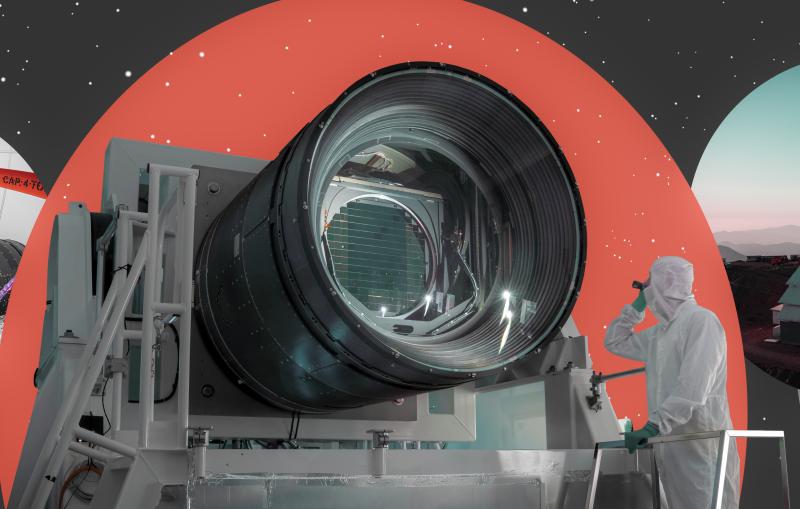
    NSF-DOE Vera C. Rubin Observatory LSST

    SLAC & Stanford build the world’s largest digital camera for the Legacy Survey of Space and Time (LSST).

    A drone photo of Rubin Observatory while taking pictures during the First Look observing campaign
    • Work with Us

      Find a career, partner with us or apply to use our tools and facilities.

    • PARTNER WITH US
      • For industry partners
      • Research partnerships & tech transfer
      • Technology Innovation
    • CAREERS AT SLAC
      • Job openings
      • Internships
      • Life at SLAC
    • USE OUR FACILITIES

      Apply to become a user of our scientific research facilities and instruments.

    • COMING TO SLAC
    • BECOME A SUPPLIER

    Careers at SLAC

    Join our united workforce.

    SLAC staff in main quad
    • News & Events

      Get the latest news about the lab, our science and discoveries. Explore SLAC events and learn how to participate.

    • NEWS CENTER
      • News archive
      • Media resources
      • Images & videos
    • SLAC EVENTS
      • Public lectures
      • Scientific seminars
      • Community events
    • SYMMETRY MAGAZINE

      This joint publication of SLAC and Fermilab is your view into the world of particle physics.

    • EDUCATIONAL PROGRAMS
      • Educational tours
      • Resources for students & educators
    • Connect With Us
      • Facebook
      • Flickr
      • Instagram
      • LinkedIn
      • Twitter
      • YouTube
    Upcoming public lecture

    Reinventing the way we break down plastic waste

    Thursday, March 26, 2026
    7:00–8:00 p.m. PDT

    Public Lecture: Ozge Bozkurt
Filter search by
Staff portalStanford directoryComing to SLACResources for…
  1. Home
  2. …
Filter by research area
  • X-ray and ultrafast science (336)
  • (-) Physics of the universe (280)
  • Energy sciences (96)
  • Science of life (86)
  • New technologies (58)
  • Advanced accelerators (41)
Filter by Type
  • News (126)
  • Video (66)
  • Image (58)
  • Event (21)
  • resource (4)
  • Page (3)
  • Person (2)
Sort by
280 results
Display Grid Display List
Clear all
Feature

New analysis of SuperCDMS data sets tighter detection limits for dark matter

The reanalysis considered new types of particle collisions and how dark matter particles interact with the Earth. 

July 28, 2023  ·  4 min read
clusters of galaxies collide showing separation of dark matter
Feature
VIA Symmetry Magazine

Applications of quantum mechanics at the beach

How does sunscreen work on the atomic level?

August 8, 2023
Illustration of a beach scene with a sunburned man
Feature

The universe’s missing teenage pictures

Line intensity mapping measurements taken with a new instrument will allow astrophysicists to study galaxies too far away for traditional methods.

August 14, 2023  ·  5 min read
The South Pole Telescope
Feature

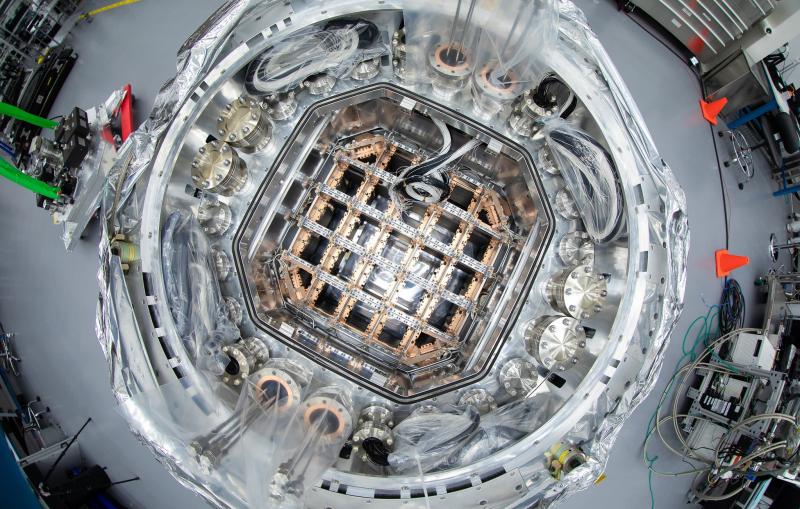
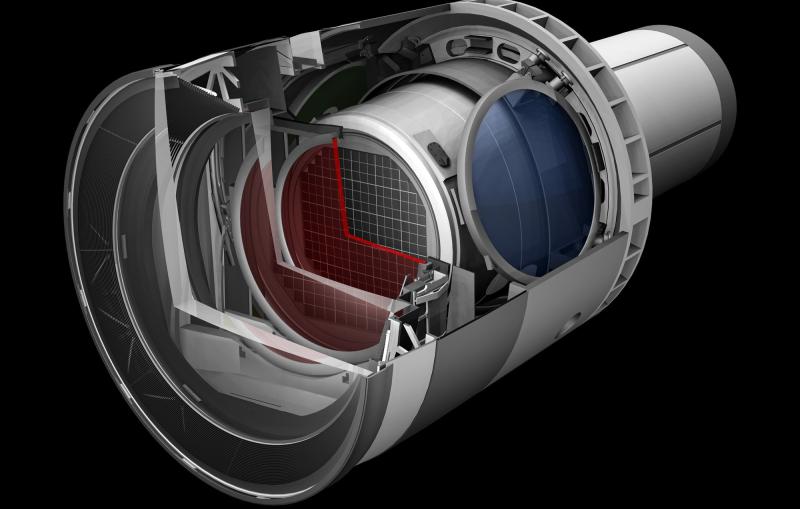
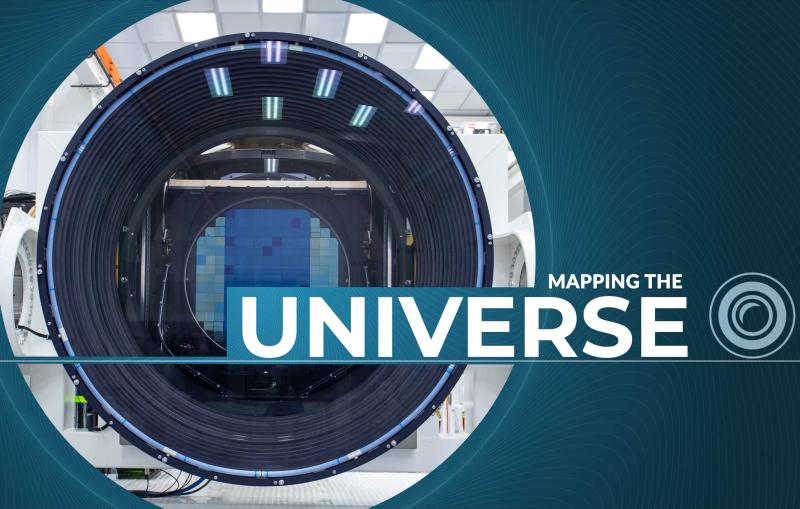
Testing, testing, testing: How researchers make sure the LSST Camera is the best it can be

Three SLAC scientists explain what they do to ensure the world's largest digital camera for astronomy is ready for the big time.

September 29, 2023  ·  5 min read
A digital sensor array is visible through a large camera lens inside a white room.
Past Event
KIPAC public lecture

The next decade of discovery with the Vera C. Rubin Observatory

Date Wednesday, September 13, 2023
7:00 p.m.  –  8:00 p.m.  PT
Milky Way above Rubin Observatory
Feature
VIA Symmetry Magazine

Imagining the future of gravitational-wave research

To understand why scientists are excited about detecting a new background, just look to the history of studies of the CMB.

September 12, 2023
Illustration of galaxies in a Petri dish
Feature
via Symmetry Magazine

SAGE Journey program ignites interest in STEM

Three SAGE alumni talk about their experiences with a program meant to broaden gender diversity in STEM.

July 25, 2023
SAGE Journey program collage of photos
Feature

LHC experiments see four top quarks

The ATLAS and CMS experiments have observed a process 4,000 times rarer than the production of Higgs bosons.

March 28, 2023  ·  5 min read
A person wearing a helmet kneels in front of a long metal particle accelerator tube.
News Brief

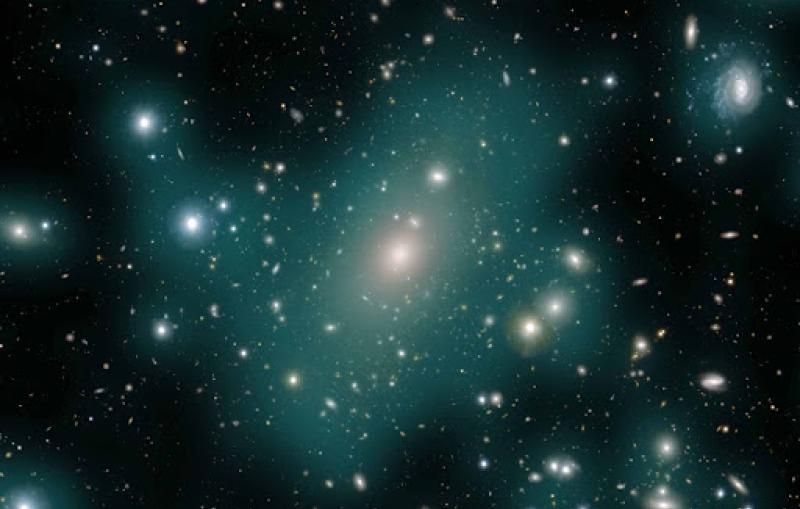
Galaxy clusters yield new evidence for standard model of cosmology

A new study probing the structure and evolution of galaxy clusters shows good agreement with the predictions of standard cosmological models. 

April 3, 2023  ·  2 min read
A cluster of bright galaxies on a black background.
Feature
VIA Stanford

KIPAC celebrates 20 years of research

An astronomy festival will mark the milestone.

April 10, 2023
Visitors at KIPAC are observing the sun through telescopes and sun-spotters.
Feature

Particle trio exceeds expectations at LHC

The ATLAS experiment measured more than expected of a trio of particles in the aftermath of proton collisions. The results will refine physicists’ understanding...

April 19, 2023  ·  3 min read
A series of straight and squiggly lines representing interactions between elementary particles such as quarks.
Feature

First SuperCDMS detector towers journey from SLAC to SNOLAB

The first pair of towers are now at the Ontario facility, where they'll further the hunt for dark matter particles.

May 17, 2023  ·  4 min read
SuperCDMS tower
  • Go to previous page
  • Page 1
  • …
  • Page 14
  • Page 15
  • Page 16
  • Page 17
  • Currently on page 18
  • Page 19
  • Page 20
  • Page 21
  • Page 22
  • …
  • Page 24
  • Go to next page

SLAC National Accelerator Laboratory 
2575 Sand Hill Road  
Menlo Park, CA 94025-7015  
650.926.3300

  • Coming to SLAC
  • Connect with us
  • Contact us
  • Facebook
  • Flickr
  • Instagram
  • LinkedIn
  • Twitter
  • YouTube

Sign up for our email

Monthly newsletter for cutting-edge science, SLAC milestones and events.

Sign up

Bold People
Visionary Science
Real Impact

We explore how the universe works at the biggest, smallest and fastest scales and invent powerful tools used by scientists around the globe.

  • About
    • Our story
    • Our people
    • Lab overview
    • Visit SLAC
    • Resources
    • Connect with us
  • Research
    • X-ray & ultrafast science
    • Advanced accelerators
    • New technologies
    • Physics of the universe
    • Science of life
    • Energy sciences
    • SLAC science explained
  • Facilities & centers
    • Scientific facilities
    • Joint institutes & centers
  • Work with us
    • Partner with us
    • Become a supplier
    • Use our facilities
    • Careers at SLAC
  • News & events
    • News center
    • Symmetry Magazine
    • Media resources
    • Events
    • Educational programs
    • Connect with us
  • Staff portal
  • Privacy policy
  • Accessibility
  • Vulnerability disclosure
  • A–Z index
  • Website feedback
Home
  • SLAC home
  • Maps & directions
  • Emergency info
  • Careers

© 2026 SLAC National Accelerator Laboratory is operated by Stanford University for the U.S. Department of Energy Office of Science.

Stanford University U.S. Department of Energy
Top Top
Back to top Back to top