Learn about our science, people, facilities and partners. Discover our history and vision for the future.
Who we are
We explore radically new ideas with an entrepreneurial mindset.
Get an overview of research at SLAC: X-ray and ultrafast science, particle and astrophysics, cosmology, particle accelerators, biology, energy and technology.
Revealing nature’s fastest processes with X-rays, lasers and electrons
Studying the particles and forces that knit the cosmos together
Building smaller, faster, more powerful accelerators for all
Understanding the machinery of life at its most basic level
Inventing new tools for science and society
Finding clean, sustainable solutions for the world’s energy challenges
SLAC science explained
Cut through the jargon while exploring our research.
Learn more about the places where science happens at SLAC: our major facilities, institutes and centers.
Linac Coherent Light Source
Stanford Synchrotron Radiation Lightsource
Facility for Advanced Accelerator Experimental Tests
Cryogenic Electron Microscopy
Stanford Institute for Materials & Energy Science
Kavli Institute for Particle Astrophysics & Cosmology
Stanford PULSE Institute
Center for Interface Science & Catalysis
NSF-DOE Vera C. Rubin Observatory LSST
SLAC & Stanford build the world’s largest digital camera for the Legacy Survey of Space and Time (LSST).
Find a career, partner with us or apply to use our tools and facilities.
Apply to become a user of our scientific research facilities and instruments.
Careers at SLAC
Join our united workforce.
Get the latest news about the lab, our science and discoveries. Explore SLAC events and learn how to participate.
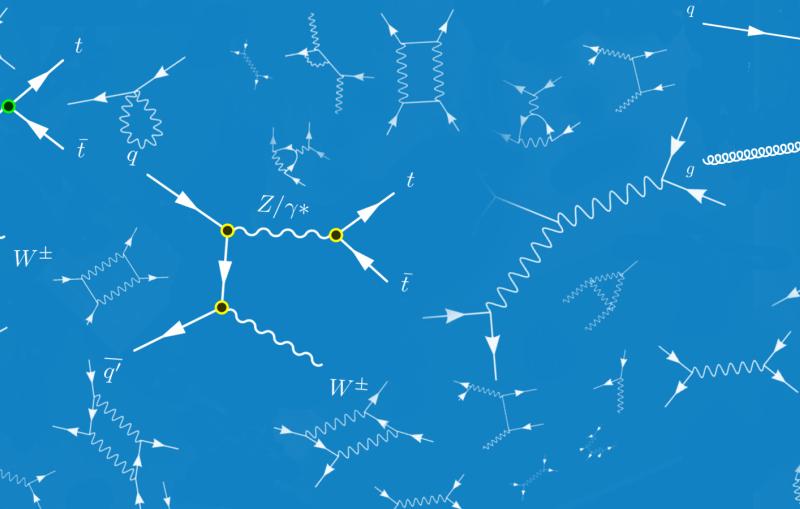
This joint publication of SLAC and Fermilab is your view into the world of particle physics.
SLAC events
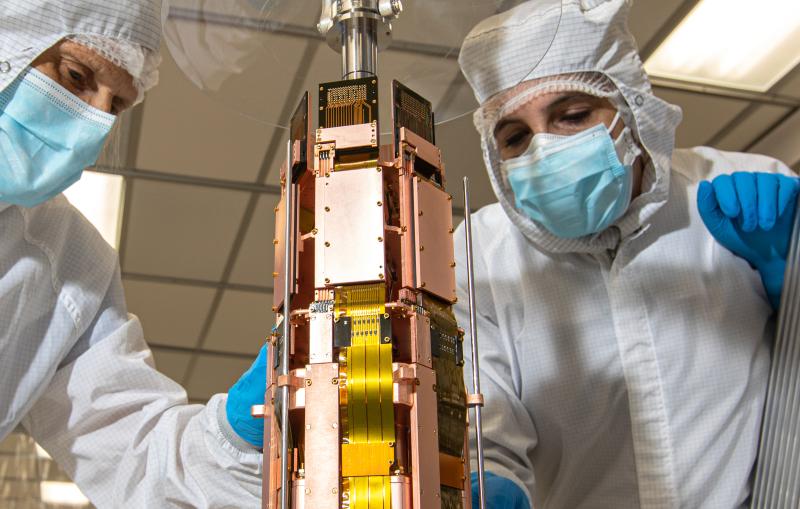
To capture as much information as possible about clouds of atoms at the heart of the MAGIS-100 experiment, SLAC scientists devised a dome of...
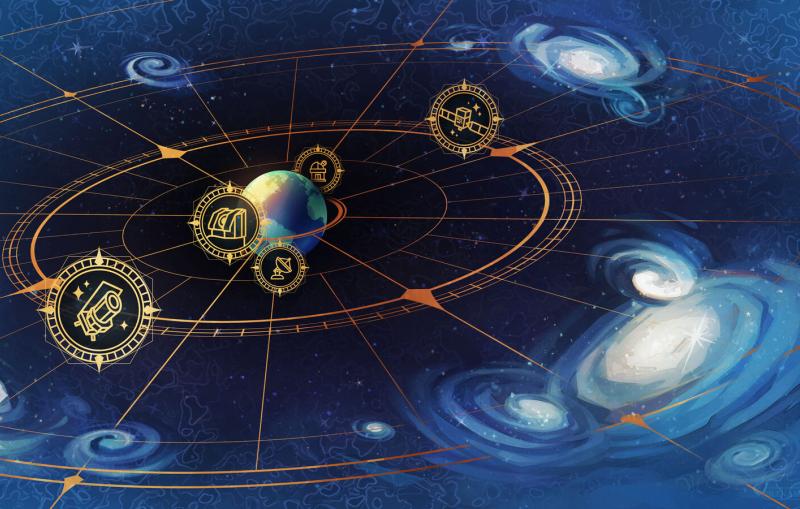
A cosmologist, cultural historian, and neurosurgeon discuss how outer space and otherworldly phenomena can inspire discovery across disciplines and bring people together.
An enormous vat of pure liquid xenon will help scientists at SLAC and around the globe learn more about the universe.
Researchers positioned lasers to compress billions of electrons together, creating a beam five times more powerful than before.
Using the largest digital camera in the world, Rubin Observatory will soon be ready to capture more data than any other observatory in history.
The Hubbard Model was unable to predict electron dynamics in a simplified, one-dimensional cuprate system, hinting at an additional attractive force.
The long and continuing quest to understand dark energy has entered exciting new territory.
Now that NSF–DOE Vera C. Rubin Observatory’s LSST Camera has been installed, what’s next?
The $3 million Breakthrough Prize in Fundamental Physics went to the ATLAS, CMS, ALICE, and LHCb collaborations representing 13,508 researchers.
How do you solve a problem like big data?
SLAC, Stanford researchers estimate that reducing harmful chemical emissions could cut cancer risks from smoke exposure by over 50%.
NSF–DOE Vera C. Rubin Observatory is gearing up to illuminate the Universe’s darkest secrets with groundbreaking new technology.