SLAC National Accelerator Laboratory
    • About

      Learn about our science, people, facilities and partners. Discover our history and vision for the future.

    • OUR STORY
      • Mission, vision, values
      • History
    • LAB OVERVIEW
      • SLAC at a glance
      • Lab organization
      • Our partnerships
    • OUR PEOPLE
      • Leadership
      • Meet our teams
      • Faculty
    • VISIT SLAC
      • Public tours
      • Contact us
    • Resources
      • Images, videos & more
      • Brochures & fact sheets
    • Connect With Us
      • Facebook
      • Flickr
      • Instagram
      • LinkedIn
      • Twitter
      • YouTube
    video

    Who we are

    We explore radically new ideas with an entrepreneurial mindset.

    Science and User Support Building to the left and Arrillaga Science Center building to the right from above the Main Quad at SLAC's campus.
    • Research

      Get an overview of research at SLAC: X-ray and ultrafast science, particle and astrophysics, cosmology, particle accelerators, biology, energy and technology.

    • X-ray and Ultrafast science icon X-ray & ultrafast science

      Revealing nature’s fastest processes with X-rays, lasers and electrons

    • Physics of the universe science icon Physics of the universe

      Studying the particles and forces that knit the cosmos together

    • Advanced Accelerators science icon Advanced accelerators

      Building smaller, faster, more powerful accelerators for all

    • Science of life science icon Science of life

      Understanding the machinery of life at its most basic level

    • New technologies science icon New technologies

      Inventing new tools for science and society

    • Energy sciences science icon Energy sciences

      Finding clean, sustainable solutions for the world’s energy challenges

    Spotlight

    SLAC science explained

    Cut through the jargon while exploring our research.

    SAGE campers have fun experimenting with a Van de Graff generator
    • Facilities & Centers

      Learn more about the places where science happens at SLAC: our major facilities, institutes and centers.

    • SCIENTIFIC FACILITIES
      • LCLS website

        Linac Coherent Light Source

      • SSRL website

        Stanford Synchrotron Radiation Lightsource

      • FACET-II website

        Facility for Advanced Accelerator Experimental Tests

      • CryoEM website

        Cryogenic Electron Microscopy

    • JOINT INSTITUTES & CENTERS
      • SIMES website

        Stanford Institute for Materials & Energy Science

      • KIPAC website

        Kavli Institute for Particle Astrophysics & Cosmology

      • PULSE website

        Stanford PULSE Institute

      • SUNCAT website

        Center for Interface Science & Catalysis

      • SLAC-Stanford Battery Center

    NSF-DOE Vera C. Rubin Observatory LSST

    SLAC & Stanford build the world’s largest digital camera for the Legacy Survey of Space and Time (LSST).

    A drone photo of Rubin Observatory while taking pictures during the First Look observing campaign
    • Work with Us

      Find a career, partner with us or apply to use our tools and facilities.

    • PARTNER WITH US
      • For industry partners
      • Research partnerships & tech transfer
      • Technology Innovation
    • CAREERS AT SLAC
      • Job openings
      • Internships
      • Life at SLAC
    • USE OUR FACILITIES

      Apply to become a user of our scientific research facilities and instruments.

    • COMING TO SLAC
    • BECOME A SUPPLIER

    Careers at SLAC

    Join our united workforce.

    SLAC staff in main quad
    • News & Events

      Get the latest news about the lab, our science and discoveries. Explore SLAC events and learn how to participate.

    • NEWS CENTER
      • News archive
      • Media resources
      • Images & videos
    • SLAC EVENTS
      • Public lectures
      • Scientific seminars
      • Community events
    • SYMMETRY MAGAZINE

      This joint publication of SLAC and Fermilab is your view into the world of particle physics.

    • EDUCATIONAL PROGRAMS
      • Educational tours
      • Resources for students & educators
    • Connect With Us
      • Facebook
      • Flickr
      • Instagram
      • LinkedIn
      • Twitter
      • YouTube
    Spotlight

    SLAC events

    Event attendees listen to a science lecture
Filter search by
Staff portalStanford directoryComing to SLACResources for…
  1. Home
  2. …
Filter by research area
  • (-) X-ray and ultrafast science (344)
  • (-) Physics of the universe (285)
  • Energy sciences (96)
  • Science of life (87)
  • New technologies (58)
  • Advanced accelerators (41)
Filter by Type
  • News (315)
  • Image (131)
  • Video (115)
  • Event (39)
  • resource (12)
  • Page (9)
  • Person (6)
  • News Collection (2)
Sort by
629 results
Display Grid Display List
Clear all
Video

Galaxy Clusters and the Life and Death of the Universe

Public lecture presented by Eli Rykoff

January 31, 2017  ·  00:54:33  runtime
stillframe for public lecture galaxy clusters
Video
Animation

Atomic vibrations

An animation shows how an infrared laser beam (orange) triggers atomic vibrations in a thin layer of iron selenide, which are then recorded by...

June 28, 2017
infrared laser beam triggers atomic vibrations in a thin layer of iron selenide
Past Event
Public Lectures

Archaeopteryx: Bringing the Dino-Bird to Life

Some 150 million years ago, a strange creature died in a tropical lagoon that today is located in Bavaria, Germany. In 1861, a single...
Date Tuesday, January 25, 2011
11:30 a.m.  –  12:30 p.m.  PT
Location Panofsky Auditorium
Stillframe for public lecture
Past Event
Public Lecture

Saving the Mary Rose: Synchrotrons and the Preservation of a Tudor Warship

The Mary Rose, built in 1511, was the flagship of King Henry VIII. She sank in 1545 while en route to confront the French...
Date Tuesday, October 2, 2012
12:30 p.m.  –  1:30 p.m.  PT
Location Panofsky Auditorium
Stillframe for public lecture
Past Event
Public lecture

Cosmic Dawn: The First Star in the Universe

What was the first thing in the Universe? A black hole or a star? How did it form? Even our biggest and best telescopes...
Date Tuesday, April 29, 2008
12:30 p.m.  –  1:30 p.m.  PT
Location Panofsky Auditorium
Stillframe for public lecture
Past Event
Public lecture

The Dark Side of the Universe

Presented by Marusa Bradac. One of the greatest accomplishments in recent astrophysics is the creation of a model for the complete inventory of the...

Date Tuesday, August 28, 2007
12:30 p.m.  –  1:30 p.m.  PT
Location Panofsky Auditorium
Stillframe for public lecture
Past Event
Public lecture

Making Molecular Movies: 10,000,000,000,000 Frames per Second

Presented by Kelly Gaffney. Movies have transformed our perception of the world. With slow motion photography, we can see a hummingbird flap its wings...

Date Tuesday, December 12, 2006
11:30 a.m.  –  12:30 p.m.  PT
Location Panofsky Auditorium
Stillframe for public lecture
Past Event
Public lecture

A Comet on Earth: Results from the Stardust Mission

Presented by Sean Brennan. The Stardust mission returned from a 6-year voyage in January of 2006. During the mission it swept through the tail...

Date Tuesday, August 29, 2006
12:30 p.m.  –  1:30 p.m.  PT
Location Panofsky Auditorium
Stillframe for public lecture
Feature

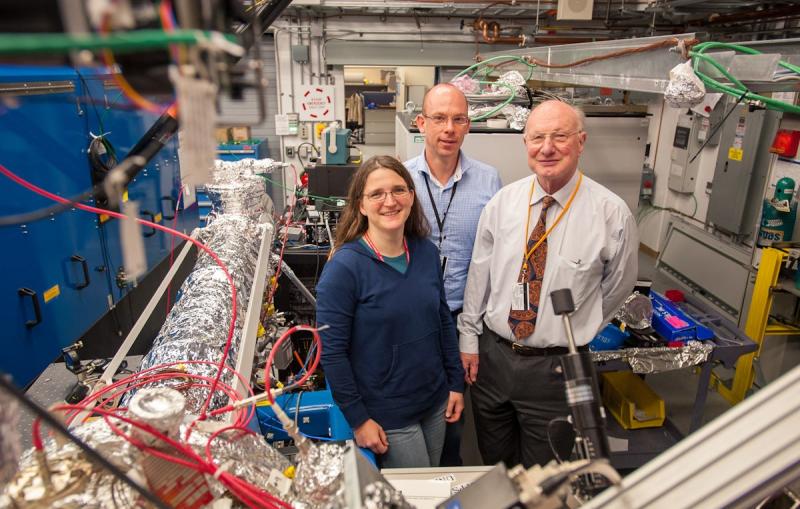
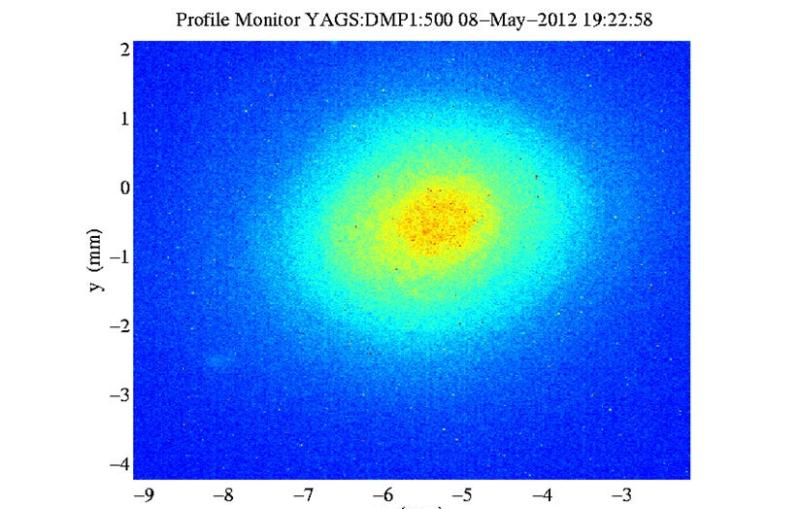
Taking Aim at Electrons: an Atomic-scale Shooting Gallery

In experiments resembling an atomic-scale shooting gallery, researchers are pioneering a new method for chemical analysis by zapping the innermost electrons out of atoms...

June 12, 2012  ·  3 min read
Double-core Team at AMO
Feature

The LSST: Knowing the Telescope Before It is Built

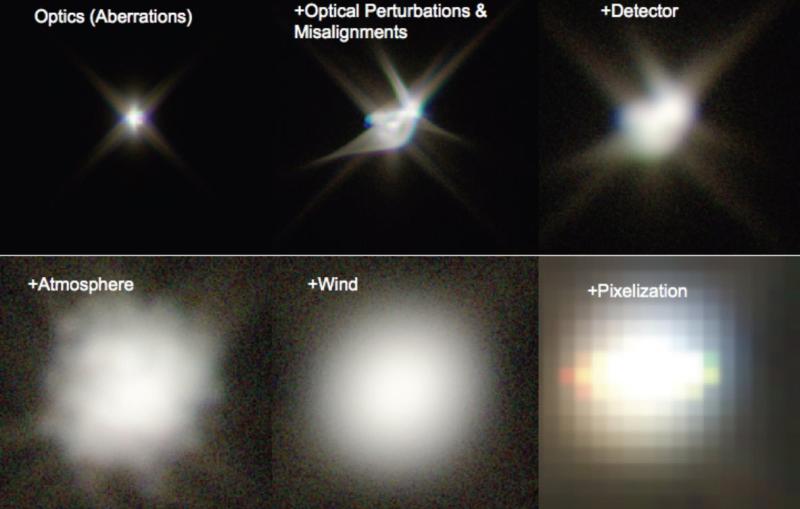
In repeatedly and systematically surveying the sky with deep, large-field-of-view images in six optical color bands on a 3 billion pixel camera for years...

July 19, 2011  ·  2 min read
Possible imperfections in LSST images
Feature

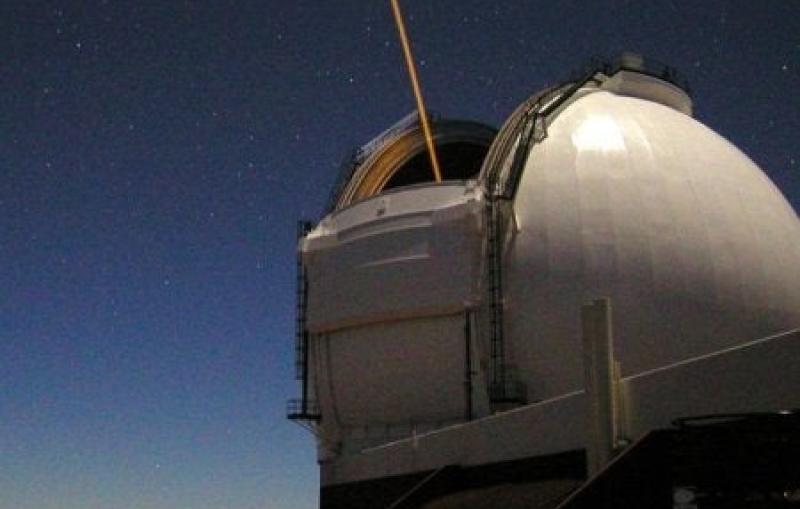
Bringing Telescope Tech to X-ray Lasers

Technology that helps ground-based telescopes cut through the haze of Earth's atmosphere to get a clearer view of the heavens may also be used...

July 10, 2012  ·  3 min read
Keck Laser Guide Star
Feature

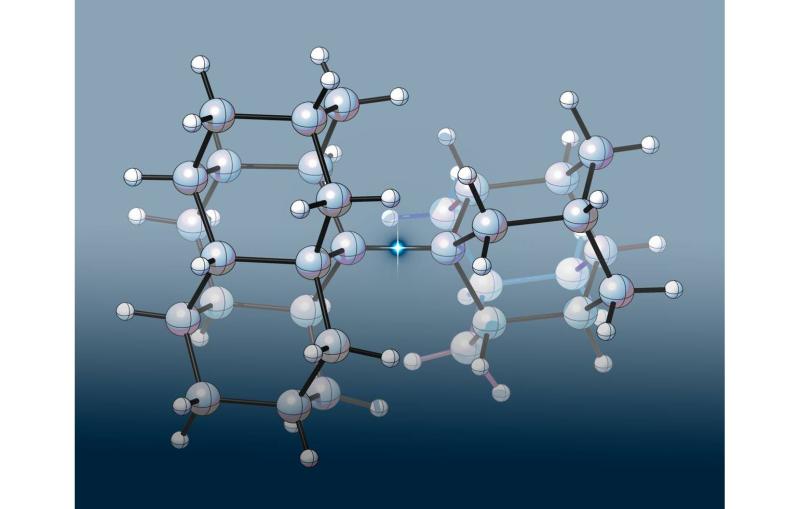
Forces Within Molecules Can Strengthen Extra-long Carbon-carbon Bonds

The strength of a chemical bond between atoms is the fundamental basis for a molecule’s stability and reactivity.

September 15, 2011  ·  3 min read
Representation of the longest carbon-carbon bond ever seen in an alkane
  • Go to previous page
  • Page 1
  • …
  • Page 19
  • Page 20
  • Page 21
  • Page 22
  • Currently on page 23
  • Page 24
  • Page 25
  • Page 26
  • Page 27
  • …
  • Page 53
  • Go to next page

SLAC National Accelerator Laboratory 
2575 Sand Hill Road  
Menlo Park, CA 94025-7015  
650.926.3300

  • Coming to SLAC
  • Connect with us
  • Contact us
  • Facebook
  • Flickr
  • Instagram
  • LinkedIn
  • Twitter
  • YouTube

Sign up for our email

Monthly newsletter for cutting-edge science, SLAC milestones and events.

Sign up

Bold People
Visionary Science
Real Impact

We explore how the universe works at the biggest, smallest and fastest scales and invent powerful tools used by scientists around the globe.

  • About
    • Our story
    • Our people
    • Lab overview
    • Visit SLAC
    • Resources
    • Connect with us
  • Research
    • X-ray & ultrafast science
    • Advanced accelerators
    • New technologies
    • Physics of the universe
    • Science of life
    • Energy sciences
    • SLAC science explained
  • Facilities & centers
    • Scientific facilities
    • Joint institutes & centers
  • Work with us
    • Partner with us
    • Become a supplier
    • Use our facilities
    • Careers at SLAC
  • News & events
    • News center
    • Symmetry Magazine
    • Media resources
    • Events
    • Educational programs
    • Connect with us
  • Staff portal
  • Privacy policy
  • Accessibility
  • Vulnerability disclosure
  • A–Z index
  • Website feedback
Home
  • SLAC home
  • Maps & directions
  • Emergency info
  • Careers

© 2026 SLAC National Accelerator Laboratory is operated by Stanford University for the U.S. Department of Energy Office of Science.

Stanford University U.S. Department of Energy
Top Top
Back to top Back to top