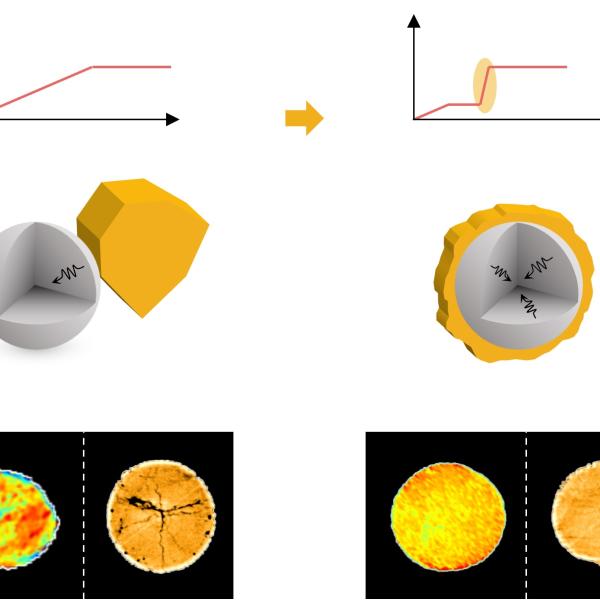
By adjusting the heating process when making lithium-ion cathodes, the team created batteries that retained nearly 93% of their energy after 500 cycles.
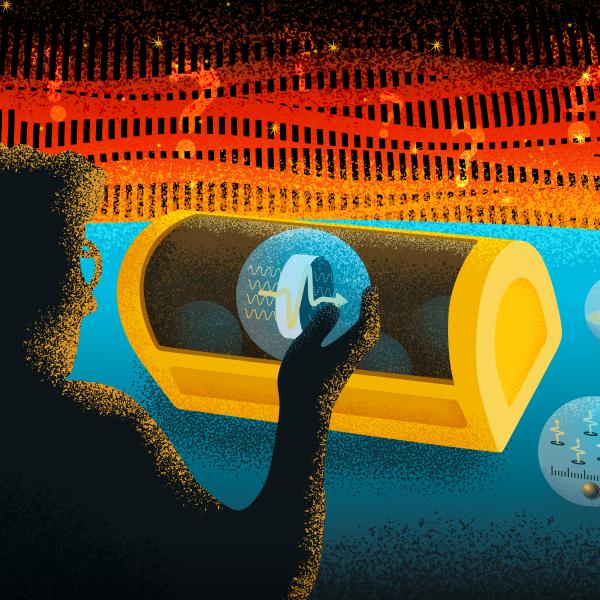
As QuantISED enters its next phase in its effort to develop quantum technologies capable of exploring some of the universe’s biggest unanswered questions, scientists reflect on what the first round made possible and what comes next.
Their strategy revealed new details that open the door to designing proteins with powerful abilities that could ultimately benefit medicine and manufacturing.
Register here to join us in-person, or watch online. How do we find the next super material? How do we discover the next breakthrough drug? How do we unlock the mystery of dark matter and the structure of the universe...
The Accelerator Directorate fosters world-leading accelerator science and technologies for future accelerators, while enabling user research and accelerator R&D programs today.
With up to a million X-ray flashes per second, 8,000 times more than its predecessor, it transforms the ability of scientists to explore atomic-scale, ultrafast phenomena that are key to a broad range of applications, from quantum materials to clean...
This video breaks down how NSF–DOE Vera C. Rubin Observatory will conduct the Legacy Survey of Space and Time and build a 10-year time-lapse of the entire southern sky.
The NSF–DOE Vera C. Rubin Observatory in the Chilean Andes brings the cosmos to life like never before. During the first 10 years of operation, Rubin Observatory will conduct the Legacy Survey of Space and Time (LSST), creating the widest...