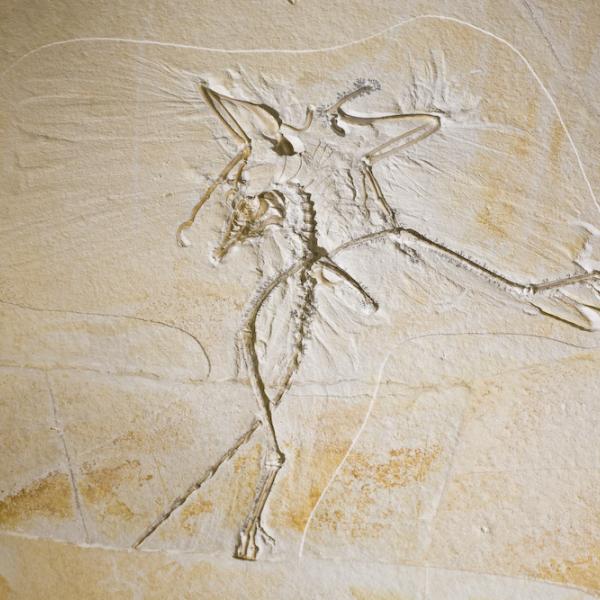
A keystone of evolutionary history, the Thermopolis Archaeopteryx fossil, has come to the U.S. Department of Energy's (DOE) SLAC National Accelerator Laboratory to undergo a revolutionary type of analysis.
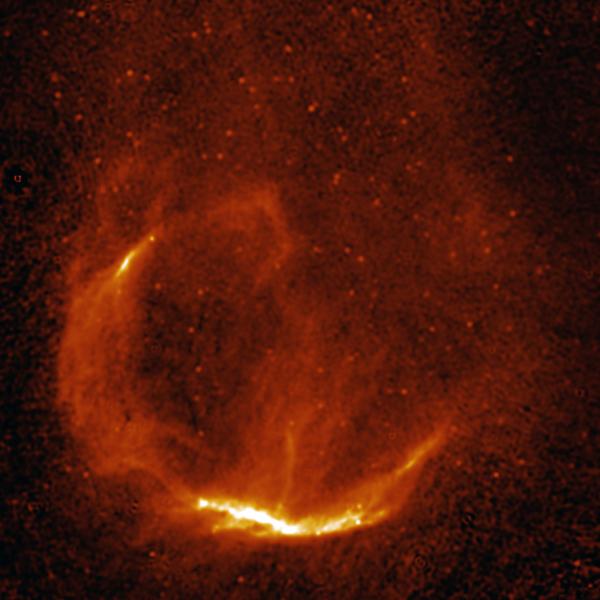
About three times a second, a 10,000-year-old stellar corpse sweeps a beam of gamma-rays toward Earth. This object, known as a pulsar, is the first one known to "blink" only in gamma rays, and was discovered by the Large Area...
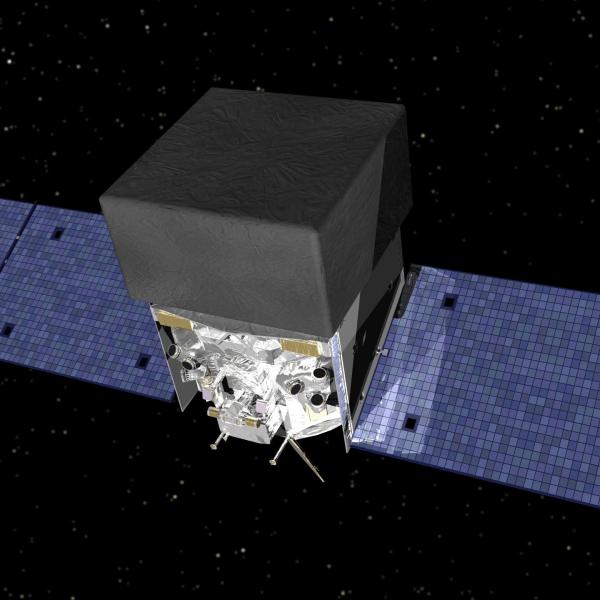
The U.S. Department of Energy (DOE) and NASA announced today that the Gamma-Ray Large Area Space Telescope (GLAST) has revealed its first all-sky map in gamma rays.
Thirty years ago, particle physics delighted in discovering the "bottomonium" family—the set of particles that contain both a bottom quark and an anti-bottom quark but are bound together with different energies.
After their journey into the cold reaches of space, instruments on the Gamma-ray Large Area Space Telescope have been woken up ready to begin operations.
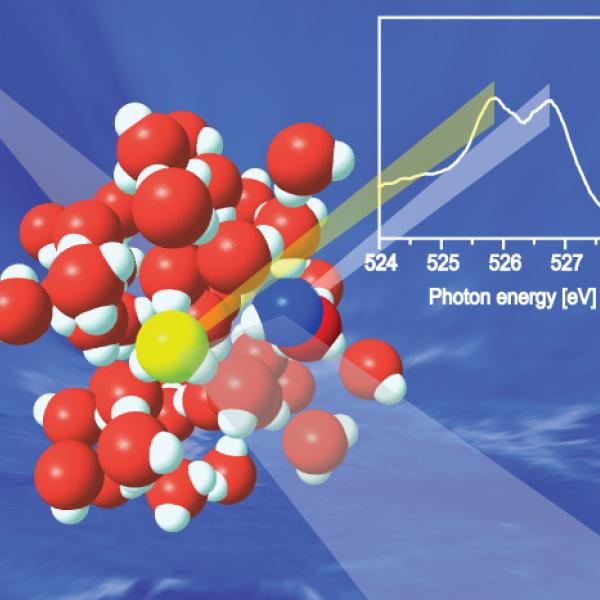
The traditional picture of how liquid water behaves on a molecular level is wrong, according to new experimental evidence collected by a collaboration of researchers from the Department of Energy's Stanford Linear Accelerator Center (SLAC) in California, RIKEN SPring-8 synchrotron...
The next major space observatory, the Gamma-ray Large Area Space Telescope (GLAST), is about to begin unveiling the mysteries of the high-energy universe.
Professor Burton Richter has been named the winner of the 2007 Philip Hauge Abelson Prize by the American Association for the Advancement of Science (AAAS).
William Madia, a former director of two national laboratories and senior executive overseeing research laboratories for Battelle, has been appointed to the position of vice president for the Stanford Linear Accelerator Center (SLAC), Stanford President John Hennessy announced today.
Persis S. Drell has been named director of the Stanford Linear Accelerator Center (SLAC), effective immediately, Stanford University President John Hennessy announced Thursday.
Stanford astrophysicist Sarah Church is the new deputy director of the Kavli Institute for Particle Astrophysics and Cosmology (KIPAC), a joint institute based at Stanford University and the Department of Energy's Stanford Linear Accelerator Center.