Consumers’ real-world electric vehicle driving benefits batteries more than the steady use simulated in almost all laboratory tests of new battery designs, a Stanford-SLAC study finds.
LCLS X-rays allowed researchers to connect the molecular dynamics of supercritical carbon dioxide, used in industrial and environmental applications, with its unique properties.
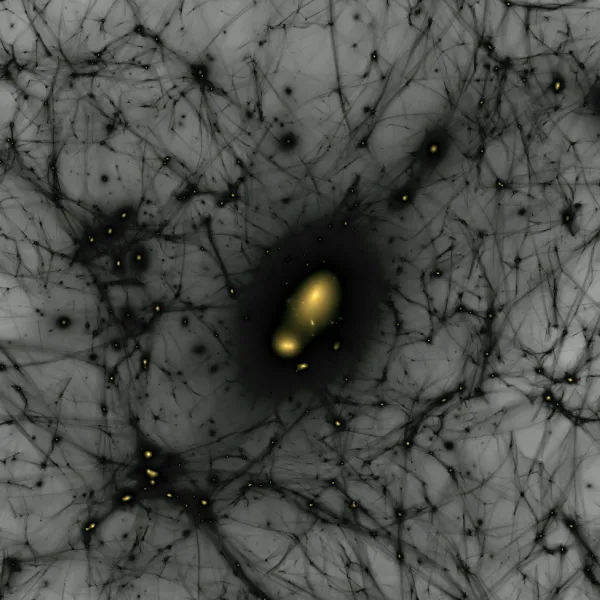
About 30 years ago an ‘ideas guy’ and a team builder joined forces to search for the invisible bulk of existence. In this Q&A, SLAC’s Thomas Shutt and Daniel Akerib discuss the challenges of their field and how future generations...
The microelectronics that power daily life and speed discoveries in science and technology are the focus of a bold new vision to make them more energy efficient and able to operate in extreme environments.
Register to watch in person in the Kavli Auditorium, or watch the lecture live on our YouTube page. Plants supply us with food, clothing, medicines, fuels, and other necessities of life. For their growth, plants need essential minerals from the...
A market and supply chain analysis for sodium- and lithium-ion batteries is the first by STEER, a new Stanford-SLAC energy technology analysis program.
Rubin Observatory’s rapid scanning of the night sky will capture the largest sample of Type Ia supernovae yet, unlocking new insights into dark energy.
The research lays the groundwork for deeper exploration of high-temperature superconducting materials, with real-world applications such as lossless power grids and advanced quantum technologies.