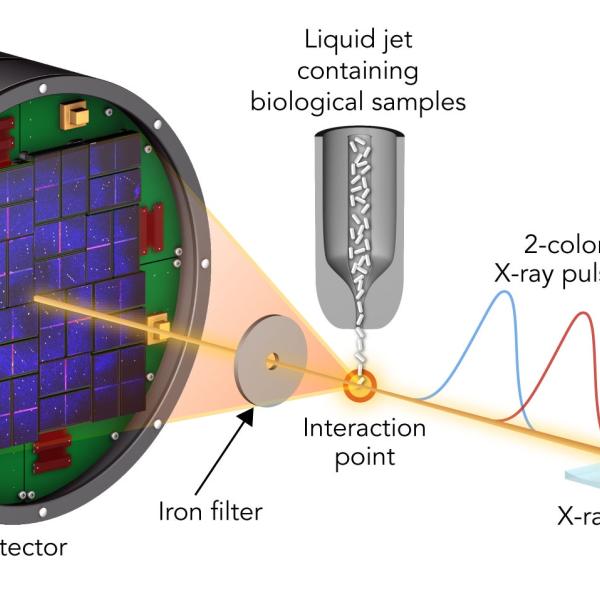
This new technology could enable future insights into chemical and biological processes that occur in solution, such as vision, catalysis and photosynthesis.
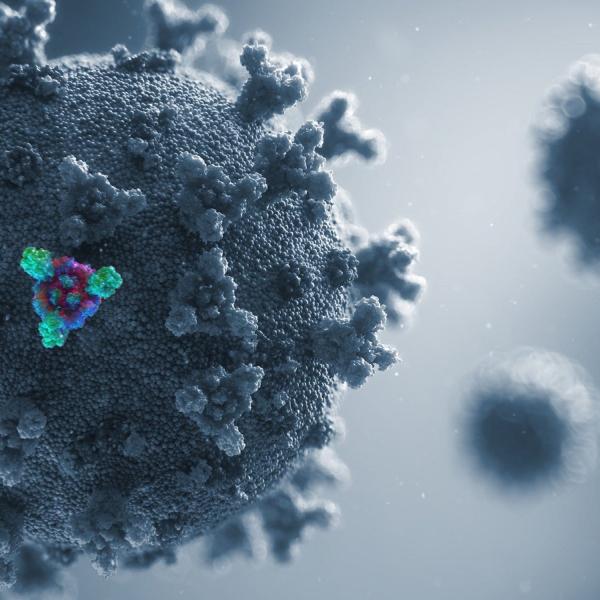
The lab is responding to the coronavirus crisis by imaging disease-related biomolecules, developing standards for reliable coronavirus testing and enabling other essential research.
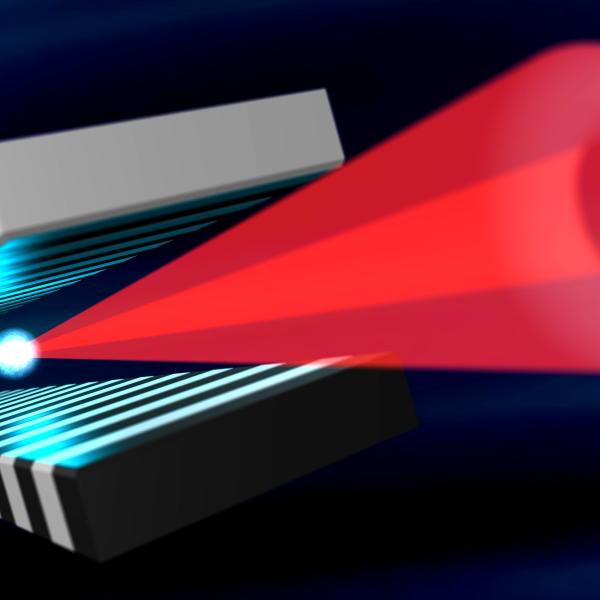
New research shows that when a bunch of electrons zooms through the middle of a ring-shaped laser beam, the bunch can wind up with higher quality and generate a brighter X-ray beam.
Light-driven reactions are at the heart of human vision, photosynthesis and solar power generation. Seeing the very first step opens the door to observing chemical bonds forming and breaking.
Siegfried Glenzer's team and collaborators from Tel Aviv University are working on a method that could make proton accelerators 100 times smaller without giving up any of their power.
Understanding nature’s process could inform the next generation of artificial photosynthetic systems that produce clean and renewable energy from sunlight and water.