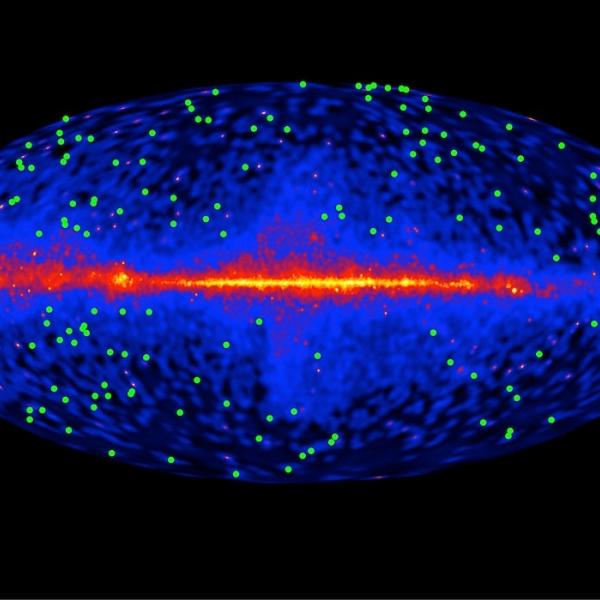
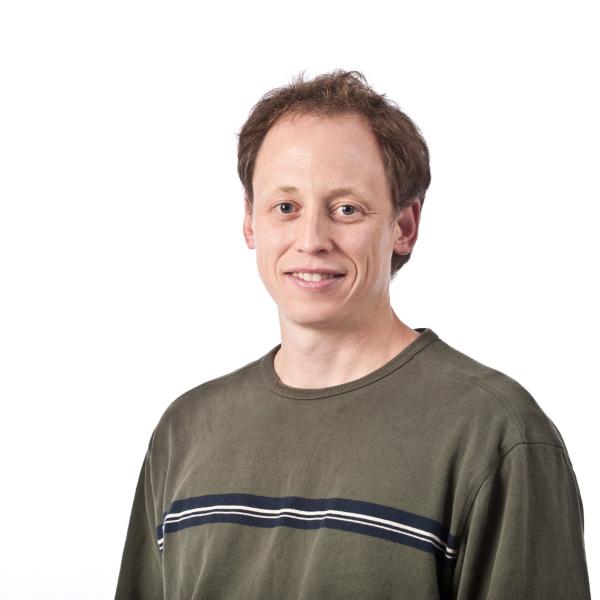
Ph.D. candidate Keith Bechtol, who’s been researching gamma-ray astronomy at SLAC and doing educational outreach as a public tour guide, is just as committed to his running – though if you asked, he would tell you without hesitation that being...
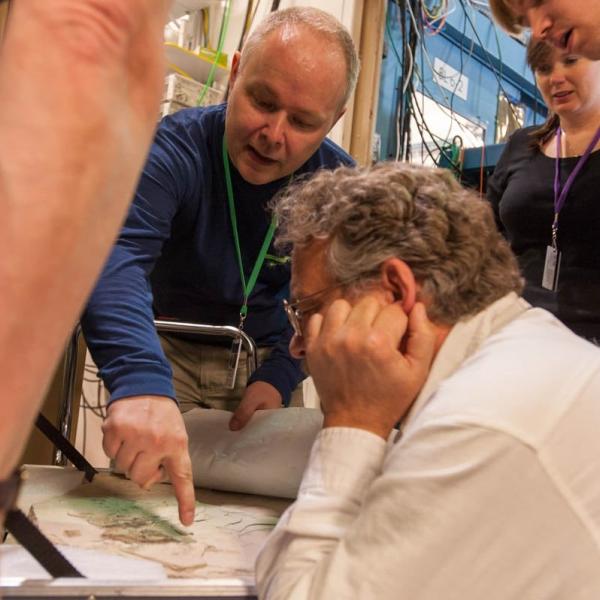
Tom Cahill and his colleagues at the DELTA Group are frequent visitors to the Stanford Synchrotron Radiation Lightsource, where they use Beam Line 2-2 to help them determine detailed lists of the elements found in all sorts of unlikely samples.
Research at SLAC's powerful X-ray laser that could lead to the development of specialized drugs to better combat African sleeping sickness has been recognized by Science magazine as one of the nine runners-up to its selected science "Breakthrough of the...
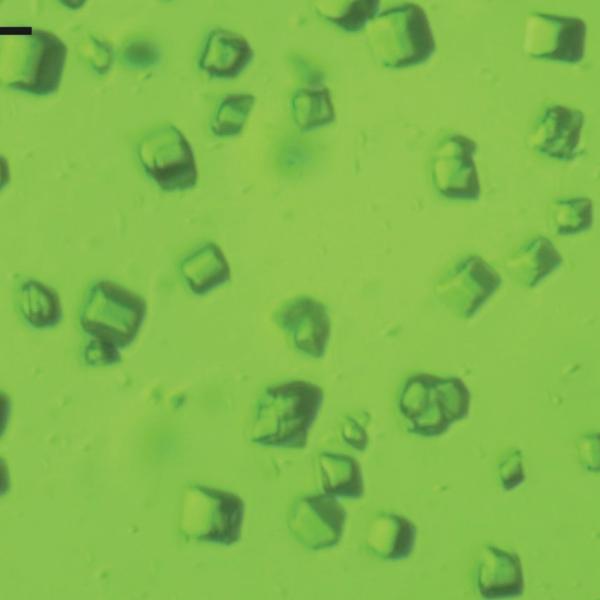
Understanding why proteins interact with certain specific molecules and not with the myriad others in their environment is a major goal of molecular biology.
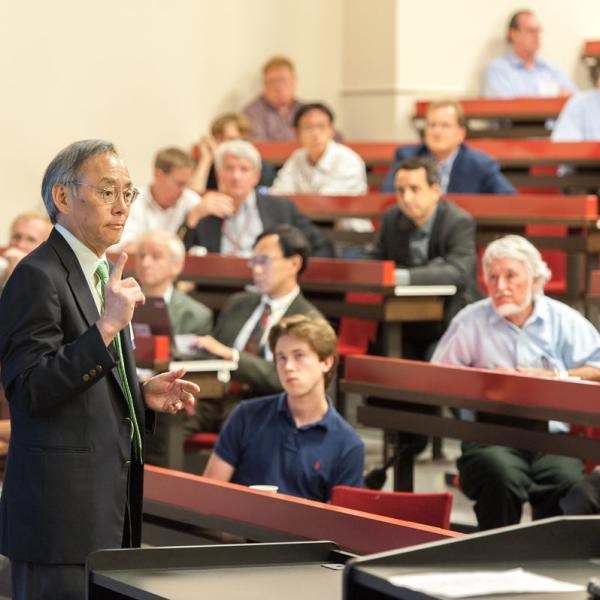
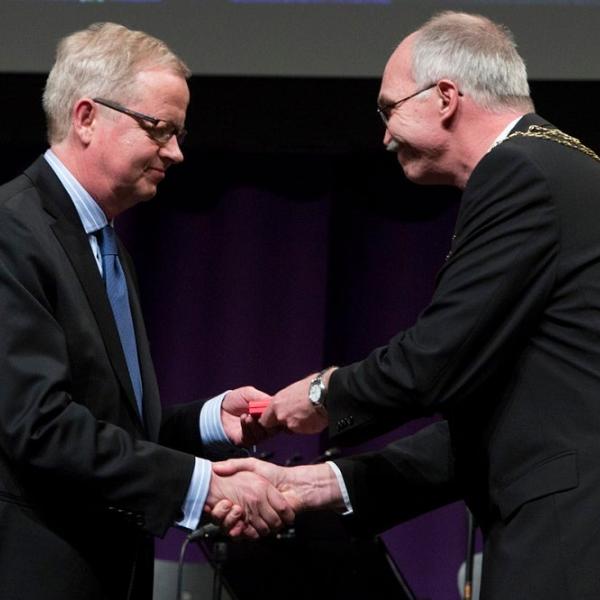
Harold Y. Hwang, professor of applied physics and photon science at Stanford and SLAC, has won the 2013 Ho-Am Award in Science, one of five annual awards often referred to as the Korean equivalent of the Nobel prizes.
Solar, wind and other renewable energy sources reduce consumption of fossil fuels but also pose challenges to the electrical grid because their power generation fluctuates, heightening the need for better battery technology to store their energy until it's needed to...
Scientists studying neutrinos have found with the highest degree of sensitivity yet that these mysterious particles behave like other elementary particles at the quantum level.
The spectacular success of the Linac Coherent Light Source (LCLS), the world’s first hard X-ray free-electron laser, has put SLAC National Accelerator Laboratory at the frontier of photon science.
Although physicists from two experiments at CERN's Large Hadron Collider and from Fermilab’s Tevatron collider recently reported at the Europhysics Conference on High Energy Physics that they didn't find the Higgs boson, they're continuing to home in on the elusive...
More than eight years worth of pristine particle physics data will remain available for analysis or re-analysis at least until 2018, now that BaBar's Long Term Data Access project is complete.
Scientists have engineered a cheap, abundant alternative to the expensive platinum catalyst and coupled it with a light-absorbing electrode to make hydrogen fuel from sunlight and water.
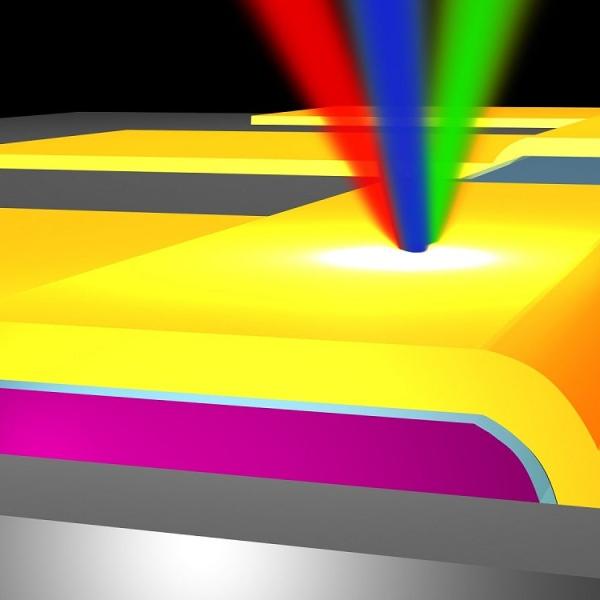
A tool developed half a century ago for sorting subatomic particles has been redesigned to measure X-ray laser pulses at SLAC's Linac Coherent Light Source (LCLS).