Sandwiched among the many lengthy technical titles for experiments conducted at SLAC's Linac Coherent Light Source X-ray laser, one stood out for its two-word simplicity, spelled out in all caps: "GIANT VIRUSES."
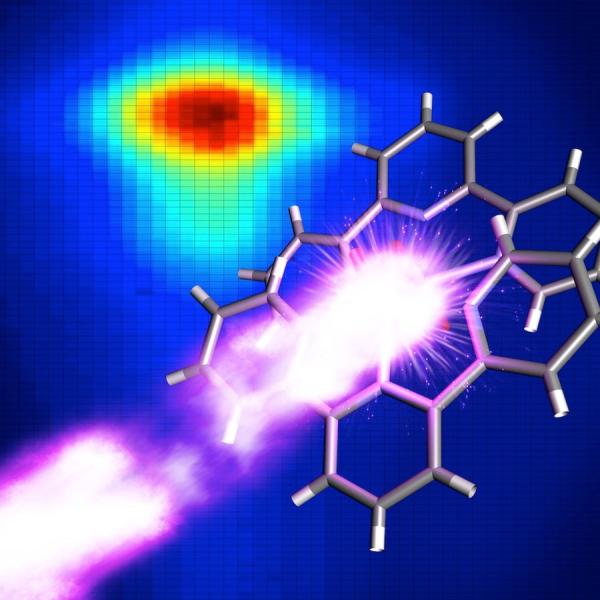
Research at SLAC National Accelerator Laboratory demonstrates that ultrashort, ultrabright X-ray laser pulses can reveal details of chemically important molecules at room temperature and in their natural state.
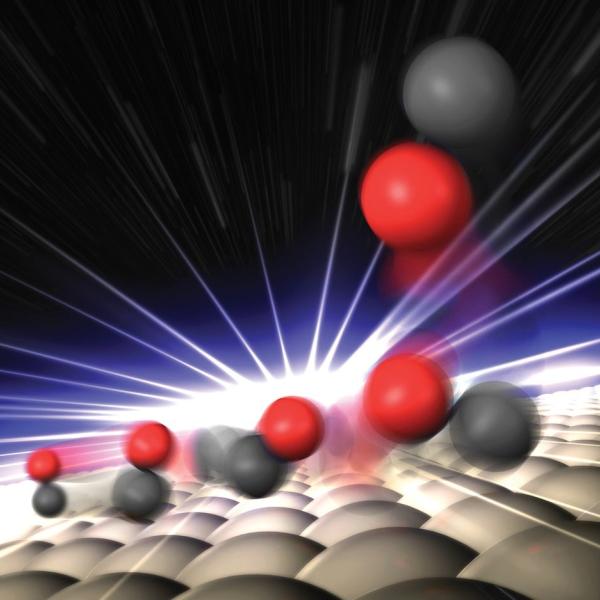
The ultrafast, ultrabright X-ray pulses of the Linac Coherent Light Source (LCLS) have enabled unprecedented views of a catalyst in action, an important step in the effort to develop cleaner and more efficient energy sources.
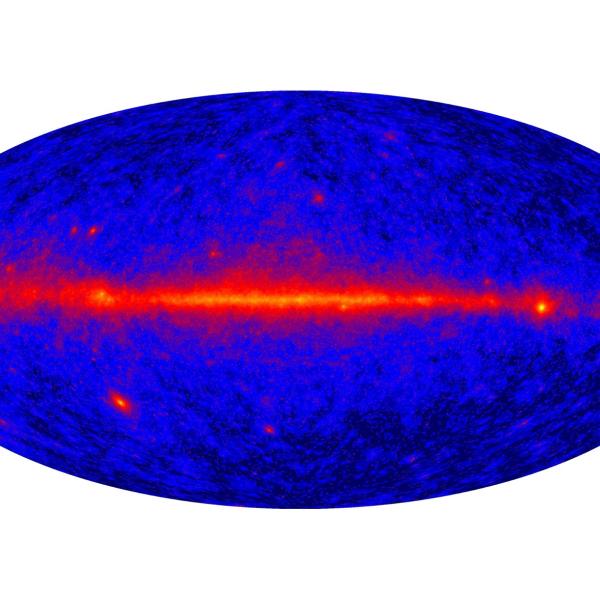
The SLAC-built Large Area Telescope (LAT), the main instrument of the Fermi Gamma-ray Space Telescope, has been studying the gamma-ray sky for almost four years.
Harold Hwang, professor of applied physics and photon science at Stanford and SLAC, has been elected a fellow of the American Physical Society, the largest physics association in the world.
Scientists working at the Stanford Institute for Materials and Energy Sciences (SIMES) have improved an innovative solar-energy device to be about 100 times more efficient than its previous design in converting the sun's light and heat into electricity.
Wendy Li-Wen Mao, a mineral physicist at SLAC and Stanford, says scientists have speculated about various ways the Earth’s iron-rich core and its rocky mantle separate and interact.
The strength, flexibility, transparency and high electrical conductivity of single-layer graphene make it a potentially unique and valuable material for the next generation of electronic devices.
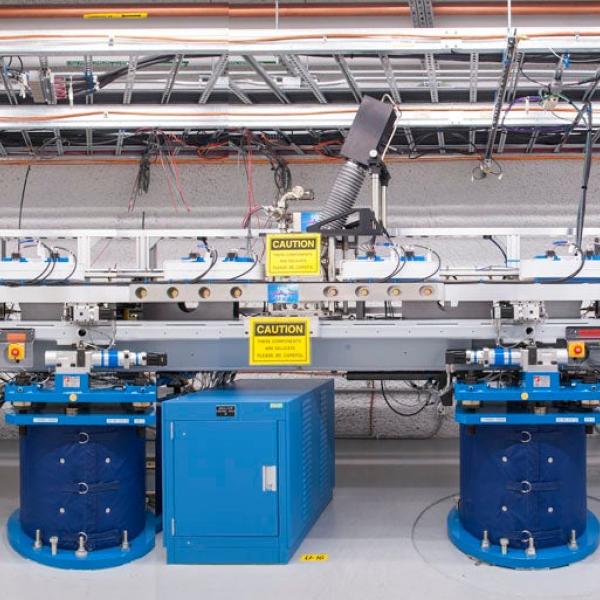
The Linac Coherent Light Source at SLAC is the world’s first hard X-ray free-electron laser, or FEL, and one of the most complex light sources ever developed.
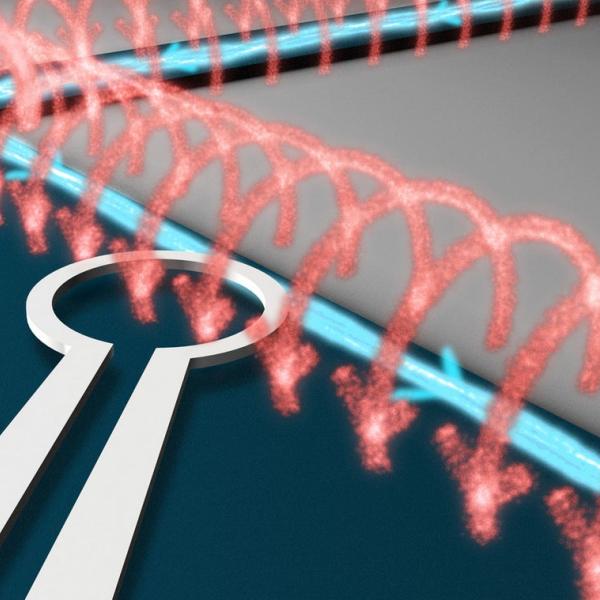
Researchers at a SLAC/Stanford institute have made the first direct images of electrical currents flowing along the edges of a topological insulator – a recently discovered state of matter with potential applications in information technology.