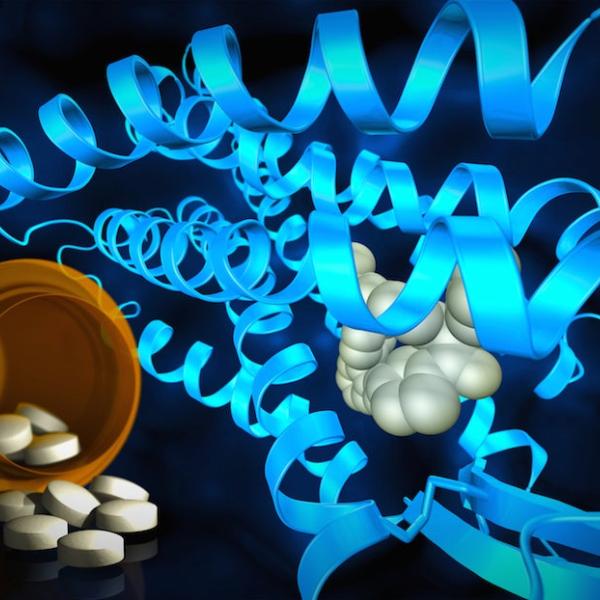
X-ray studies have produced surprising insights into the workings of a hormone receptor associated with blood pressure regulation that could be a target for new medicines related to cardiovascular conditions, neuropathic pain and tissue growth.
Stanford and SLAC researchers are leading a multi-year effort to produce nitrogen-based fertilizers in a sustainable way, by inventing a solar-powered chemistry technology that can make it right on the farm and apply it directly to crops, drip-irrigation style.
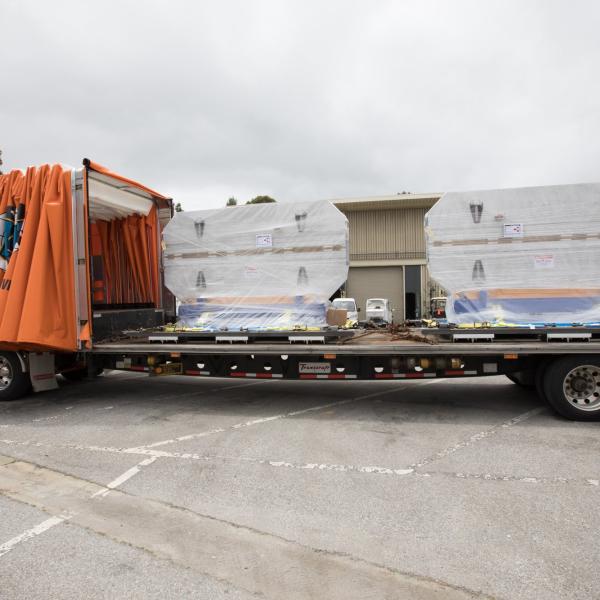
Two astrophysicists and a theoretical physicist discuss how the Large Synoptic Survey Telescope will probe the nature of dark matter and dark energy by taking an unprecedentedly enormous scan of the sky.
Z-X Shen, SLAC science and technology advisor, professor of photon science and of physics, and a senior fellow of the Precourt Institute for Energy, is among 11 Stanford faculty members elected to the American Academy of Arts and Sciences.
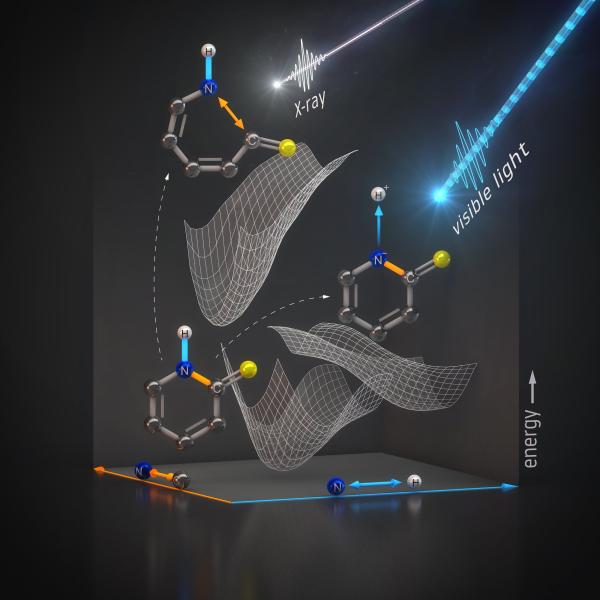
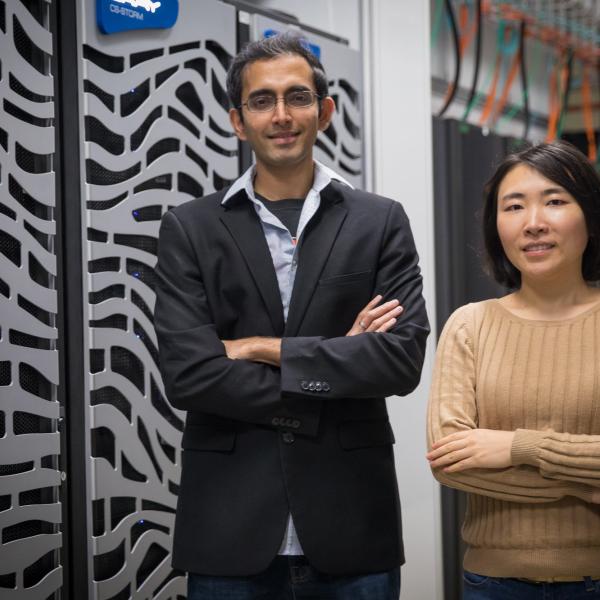
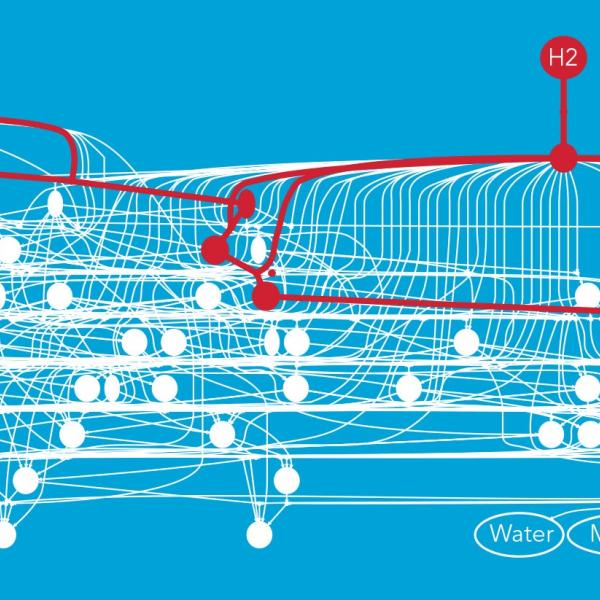
An advance by SLAC and Stanford researchers greatly reduces the time needed to analyze complex catalytic reactions for making fuel, industrial chemicals and other products, and should improve computational analysis throughout chemistry.
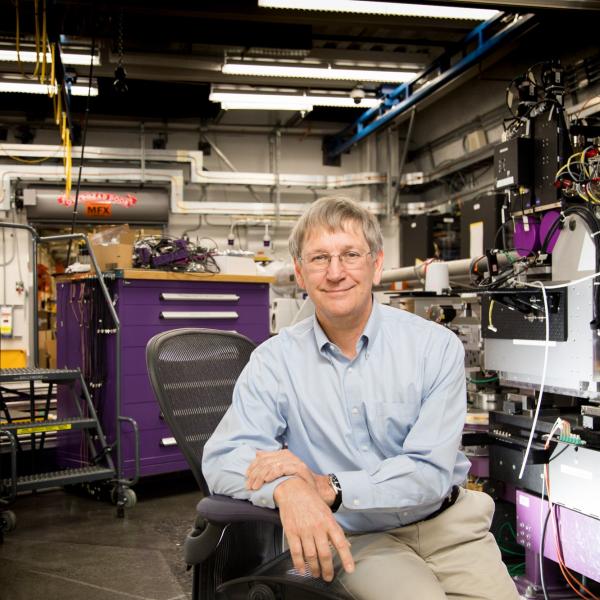
Paul Fuoss, the new head of experimental design at LCLS, aims to make experiments at light sources here and around the world more productive and user-friendly.
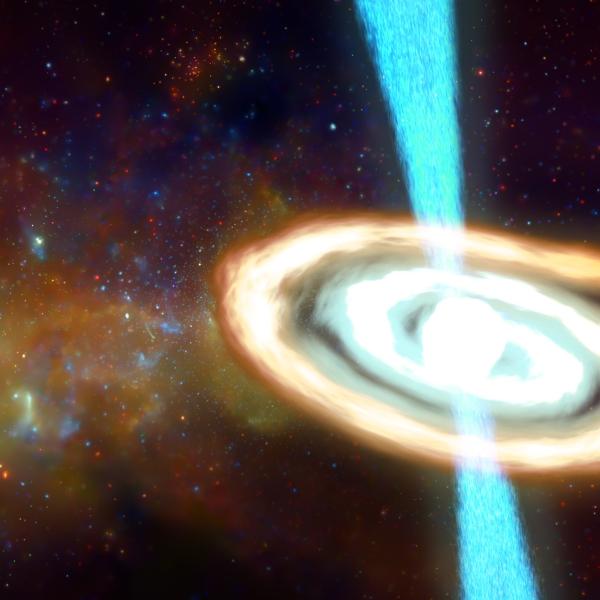
An excess of gamma rays at the center of the Milky Way, previously discussed as a sign of dark matter, is likely caused by the superdense remains of ancient stars.
A new study reveals that organic matter whose breakdown would yield only minimal energy for hungry microorganisms preferentially builds up in floodplains, illuminating a new mechanism of carbon sequestration.