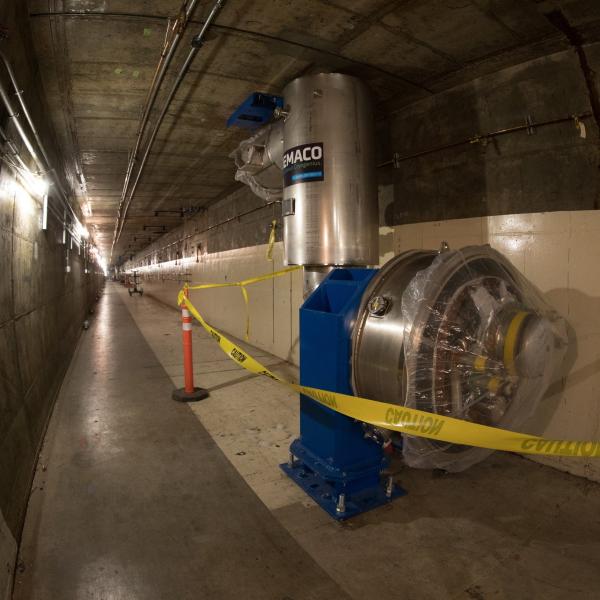
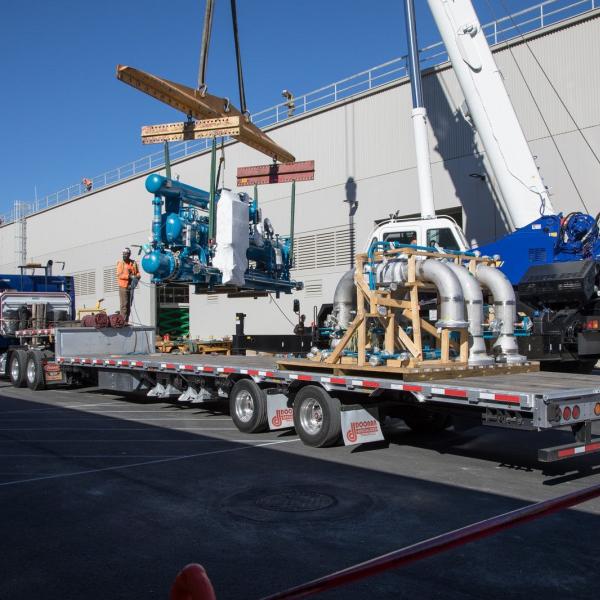
The cryogenic plant responsible for keeping LCLS-II’s superconducting linear accelerator at just a few degrees above absolute zero recently received its first warm helium compressors.
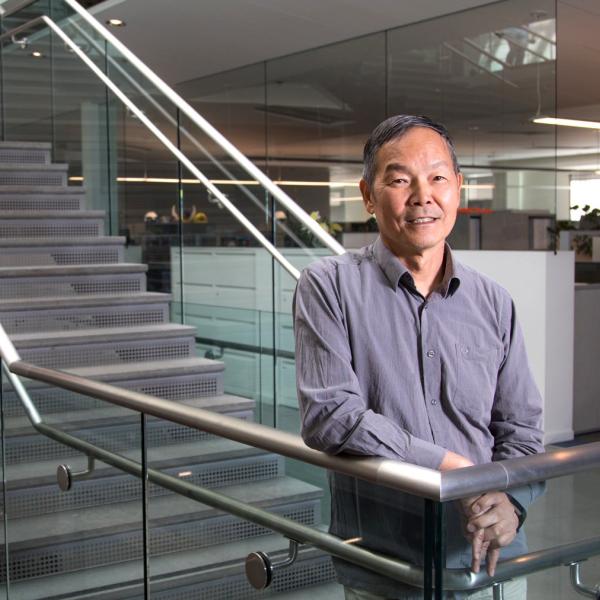
The award honors his contributions to research and education as founding president of the Okinawa Institute of Science and Technology Graduate University (OIST).
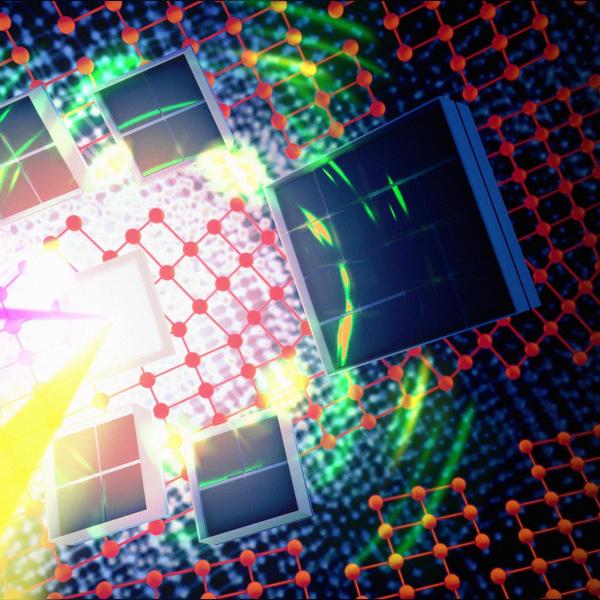
A new way to observe this deformation as it happens can help study a wide range of phenomena, from meteor impacts to high-performance ceramics used in armor, as well as how to protect spacecraft from high-speed dust impacts.