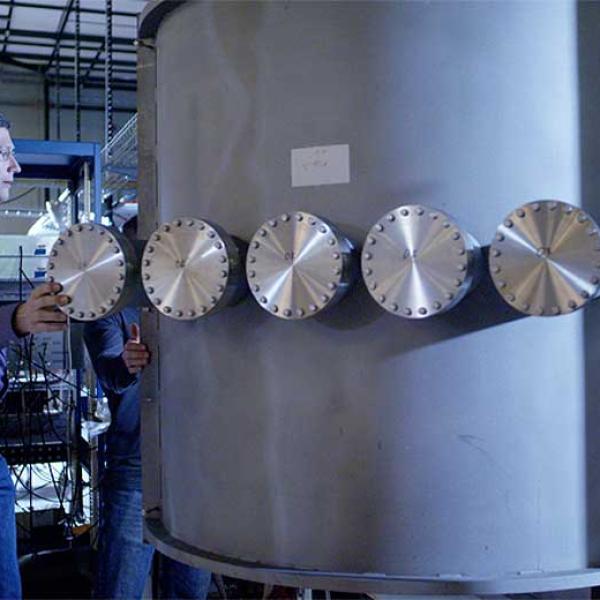
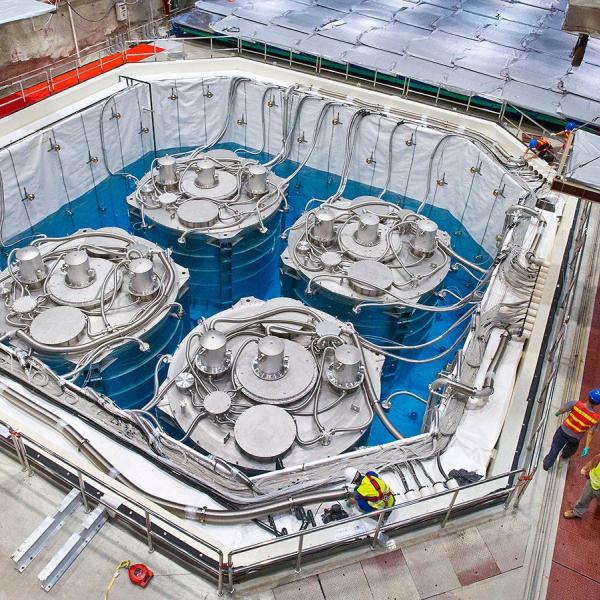
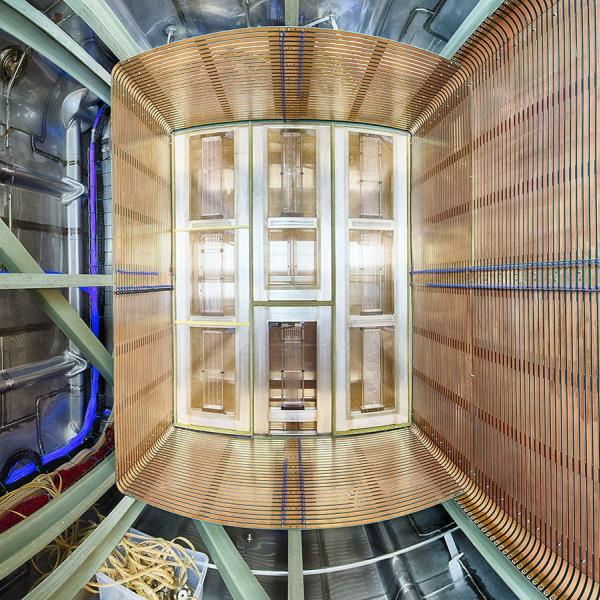
Dark matter hunters around the world pursue three approaches to look for fingerprints of ghostly WIMPs: on the Earth’s surface, underground and in space.
A new study with the LCLS X-ray laser could change the way researchers take atomic-level snapshots of important biological machineries, potentially affecting research in drug development, clean energy production and many more areas.
Contributions to LIGO have come from many Stanford teams, including SLAC, Applied Physics, Mechanical Engineering, Aeronautics and Astronautics and the School of Earth, Energy and Environmental Sciences.
Toward next-generation electronics, better medications and green energy solutions: "The First Five Years" point to a bright future of high-impact discovery at LCLS.
Scientists have determined in atomic detail how a potential drug molecule fits into and blocks a channel in cell membranes that Ebola and related “filoviruses” need to infect victims’ cells.