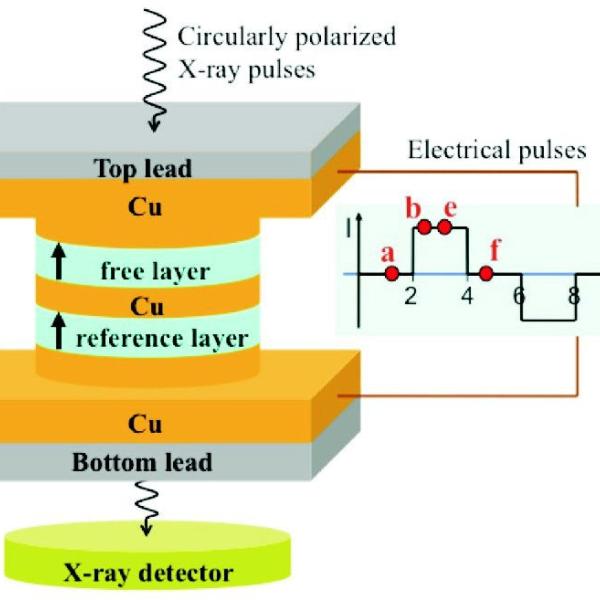
“Smaller, faster, cheaper" is Silicon Valley's mantra for progress. But as critical components shrink to near atomic dimensions, it’s becoming much more difficult for their developers to understand exactly how they operate before committing to product design and manufacturing.
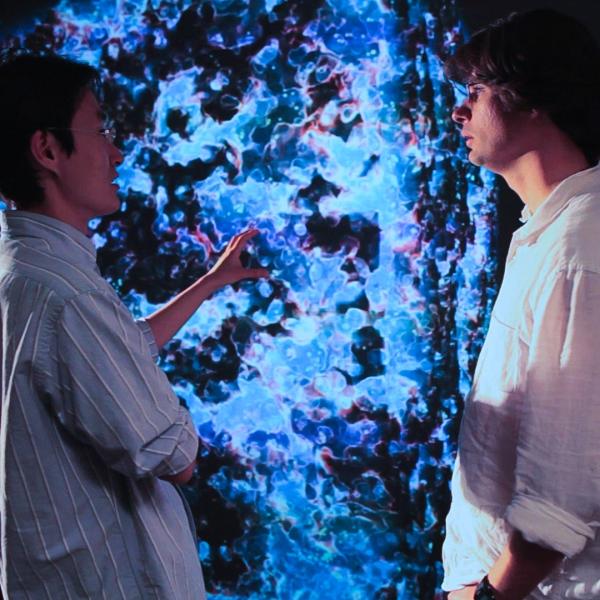
From their seats in the Morrison Planetarium at the California Academy of Sciences in San Francisco, visitors swoop through a redwood forest, into a single redwood leaf and finally into an individual cell to watch photosynthesis take place.
Stanford physicist Matt Bellis deals in the infinitesimal. As a member of the BaBar collaboration based at SLAC, he studies what happens when an electron and a positron collide at certain energies.
Menlo Park, Calif. — Researchers working at the U.S. Department of Energy’s (DOE) SLAC National Accelerator Laboratory have used the world’s most powerful X-ray laser to create and probe a 2-million-degree piece of matter in a controlled way for the...
Fifteen years ago, SLAC National Accelerator Laboratory (SLAC) scientist Apurva Mehta volunteered to help a friend build beamline parts at the Stanford Synchrotron Radiation Lightsource (SSRL). Today, he's "still mucking around with beamlines."
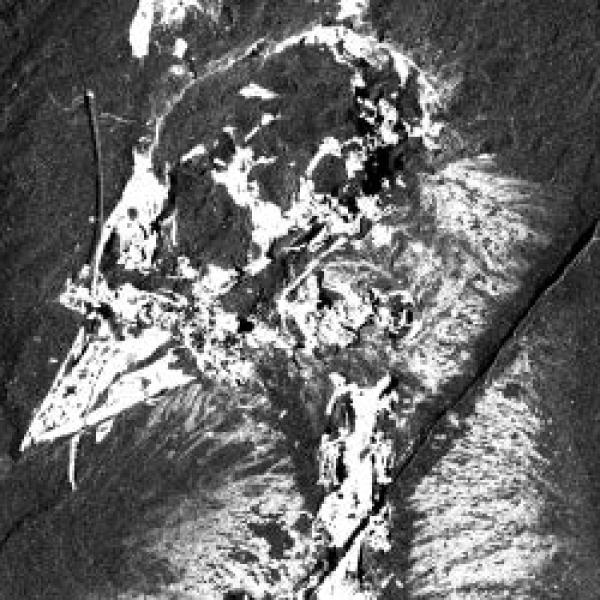
Menlo Park, Calif.--Scientists report today that they have taken a big step in determining what the first birds looked like more than 100 million years ago, when their relatives, the dinosaurs, still ruled the Earth.
Steven Kivelson, a member of SLAC’s Stanford Institute for Materials and Energy Sciences, has been named a winner of the 2012 John Bardeen Prize, in recognition of his theoretical research that has provided significant insights into the nature of “unconventional”...