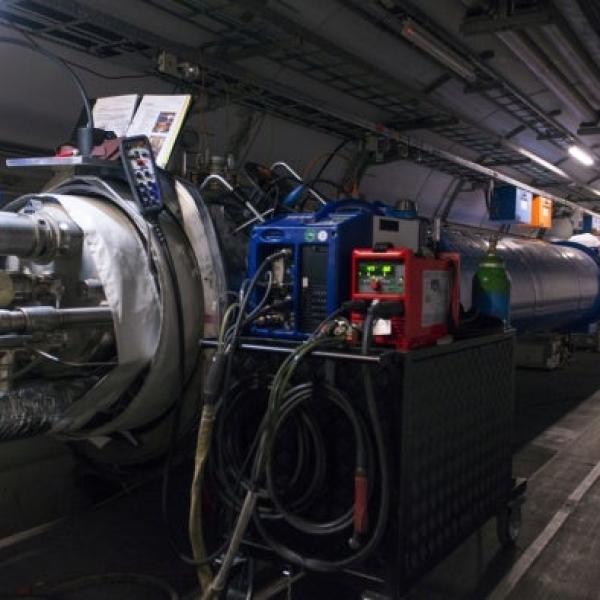
A new study shows that crystals could become a valuable tool to control and manipulate electron beams in next-generation X-ray light sources and particle colliders.
Honored for early theoretical predictions that helped elucidate the nature of the strong force and the structure of the proton, he is still shaking things up today.
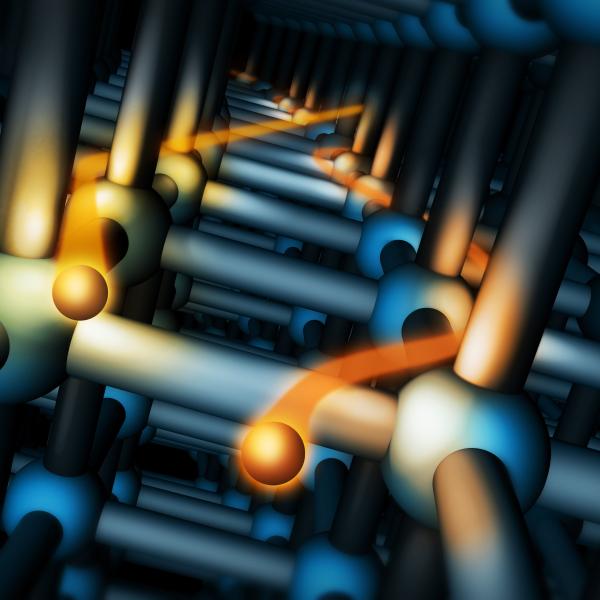
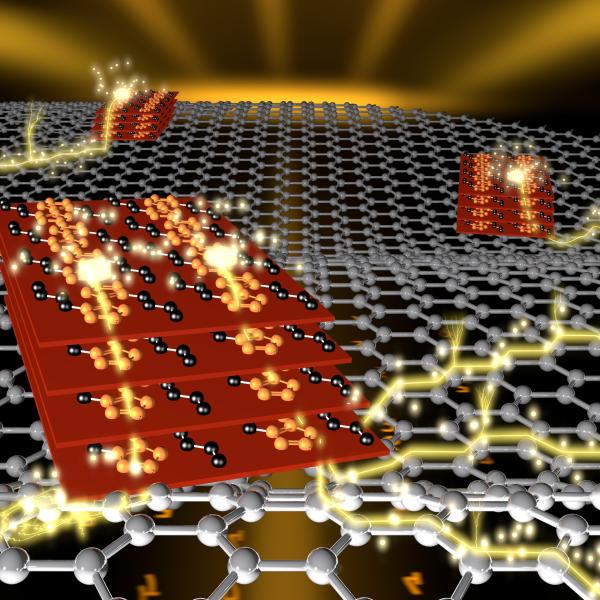
Recent experiments at SLAC's SSRL reveal that an organic semiconductor transports electrical charge more efficiently when combined with the wonder material graphene.
Two new research projects support the Stanford Institute for Materials and Energy Sciences in the study of exotic new materials that could enable future innovative electronic and photonic applications.
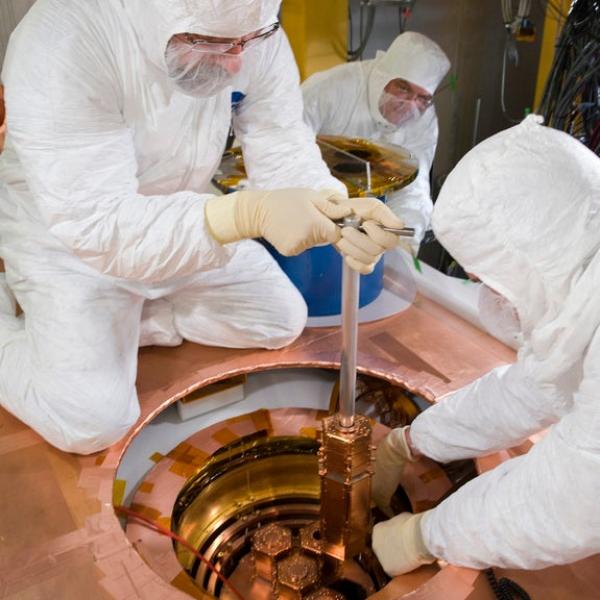
When SuperCDMS SNOLAB turns on in 2018 at the underground science laboratory in Canada, it will be able to see dark matter particles 10 times lighter than previous searches.
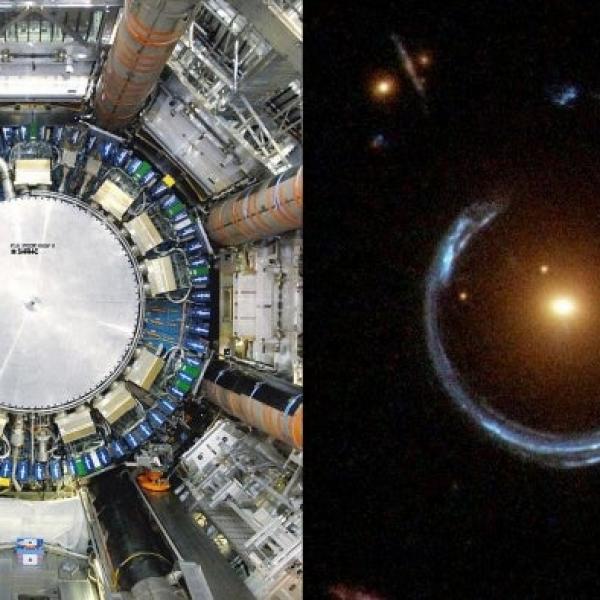
Reports by groups including Dark Energy Survey and Large Area Telescope scientists may provide new clues about the properties of mysterious dark matter.