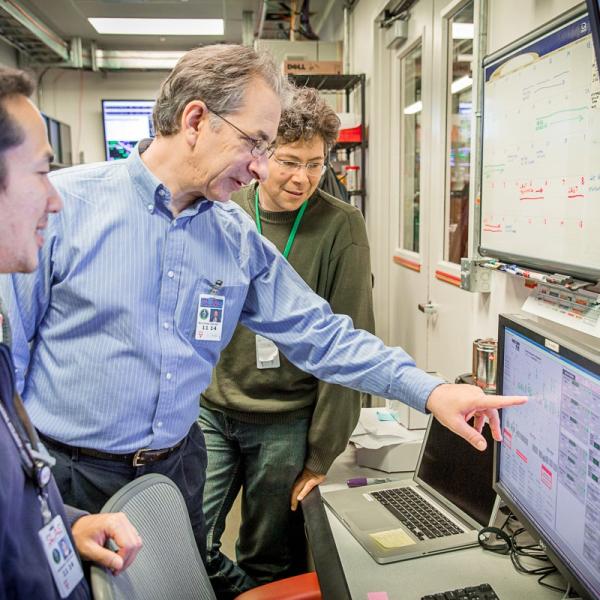
Particle Fever is a documentary that follows scientists involved in research at the Large Hadron Collider, including the ATLAS Experiment in which SLAC participates. The film opens this week in select theaters across the United States.
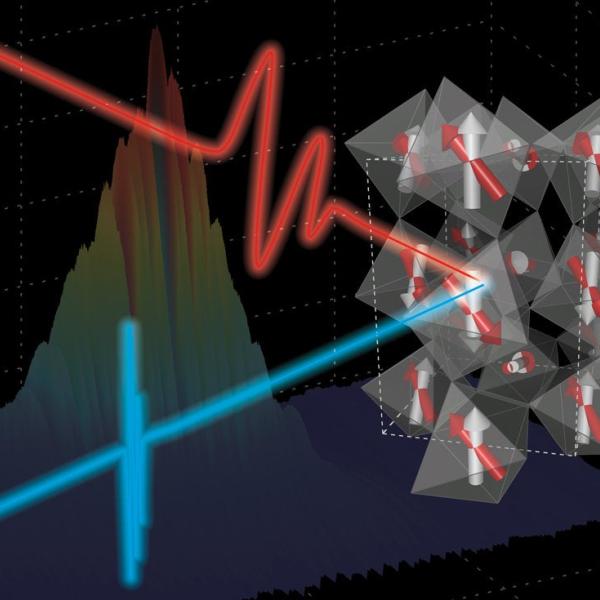
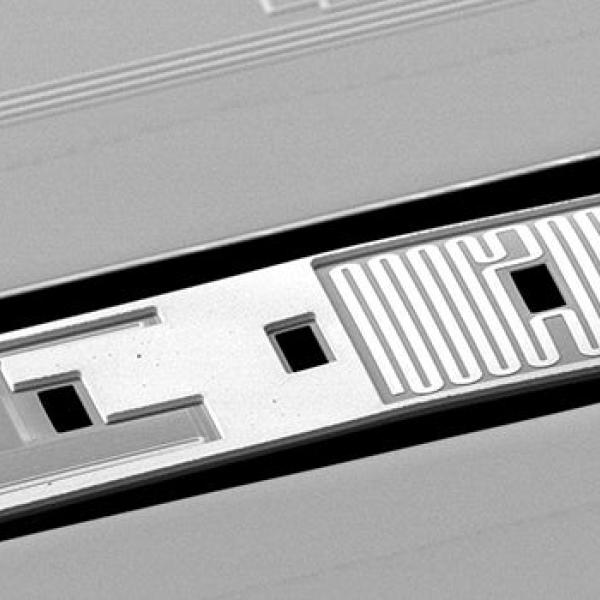
An experiment at SLAC’s X-ray laser has revealed the first atomic-scale details of a new technique that could point the way to faster data storage in smartphones, laptops and other devices.
A cooperative agreement with Palo-Alto based CPI opens the door to routine commercial manufacturing of these powerful vacuum tube devices, which convert electron beams into microwaves that are used to accelerate subatomic particles.
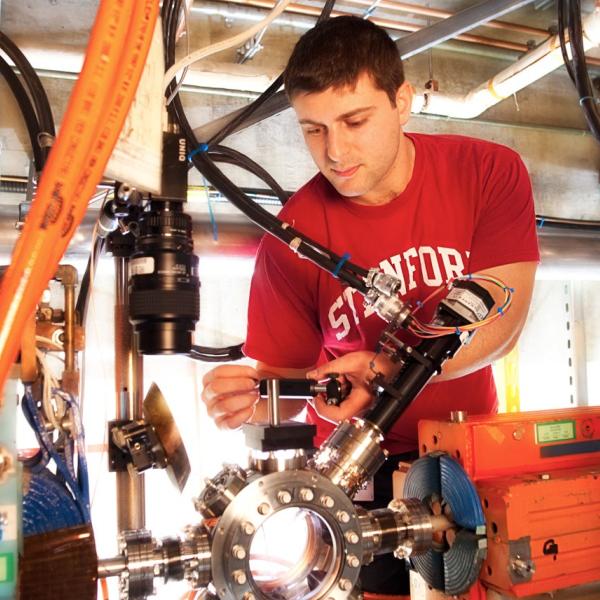
SLAC accelerator physicists have been instrumental in creating a vital part of a future Higgs boson-producing linear accelerator, from developing the initial design nearly 15 years ago to its successful demonstration in 2013.
A new system at SLAC National Accelerator Laboratory's X-ray laser narrows a rainbow spectrum of X-ray colors to a more intense band of light, creating a much more powerful way to view fine details in samples at the scale of...
Stanford graduate student Spencer Gessner has received a Siemann fellowship to help him continue his research into cutting-edge accelerator physics at SLAC's Facility for Advanced Accelerator Experimental Tests.
A new tool for analyzing mountains of data from SLAC’s Linac Coherent Lightsource (LCLS) X-ray laser can produce high-quality images of important proteins using fewer samples. Scientists hope to use it to reveal the structures and functions of proteins that...
More than 150 US universities and laboratories are engaged in particle physics research and technology innovation, playing important roles in the Higgs boson and cosmic inflation discoveries—and the many more revelations still to come.
Two scientists at Stanford University and SLAC National Accelerator Laboratory made key contributions to the discovery of the first direct evidence for cosmic inflation – the rapid expansion of the infant universe in the first trillionth of a trillionth of...
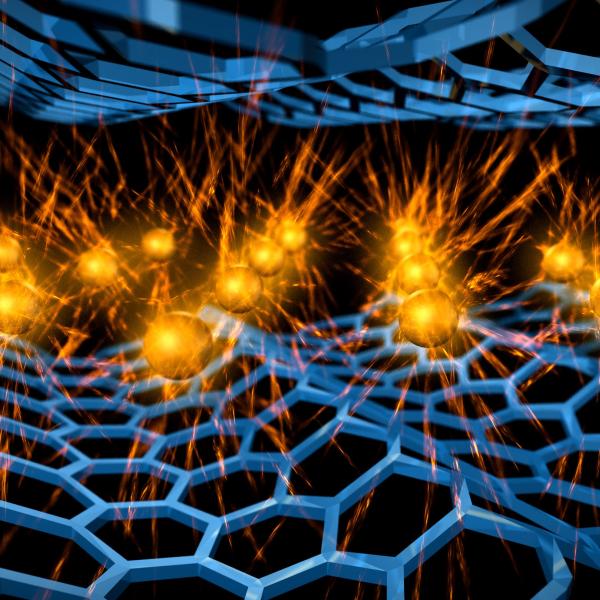
Scientists have discovered a potential way to make graphene – a single layer of carbon atoms with great promise for future electronics – superconducting, a state in which it would carry electricity with 100 percent efficiency.
SLAC researchers have found a new way to transform graphite into diamond. The approach may have implications for industrial applications ranging from cutting tools to electronic devices.