Jolting complex materials with bursts of energy from rapid-fire lasers can help scientists learn why some of these materials exhibit useful properties such as high-temperature superconductivity.
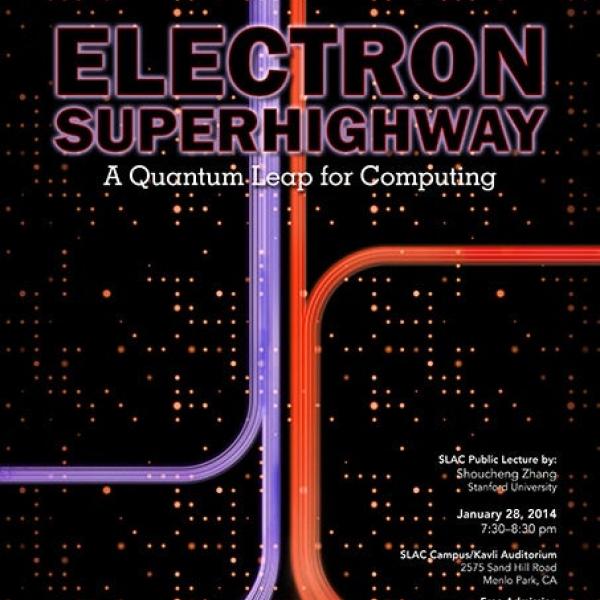
The recent discovery of a new state of matter -- the topological insulator -- may lead to a new paradigm of information processing, in which electrons moving in opposing directions are separated into well-ordered lanes, like automobiles on a highway...
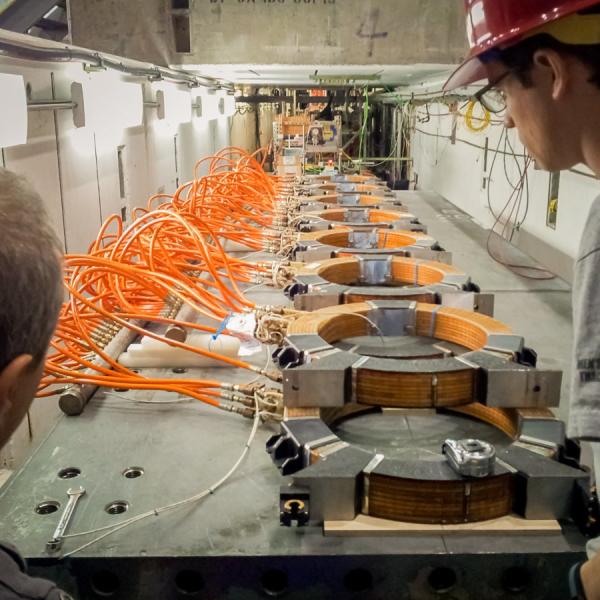
In a SLAC test facility, scientists have set the stage for an experiment that mimics what happens when incredibly energetic cosmic ray particles hit our atmosphere. While the experiment is part of ANITA, which sends balloon-borne instruments into the upper...
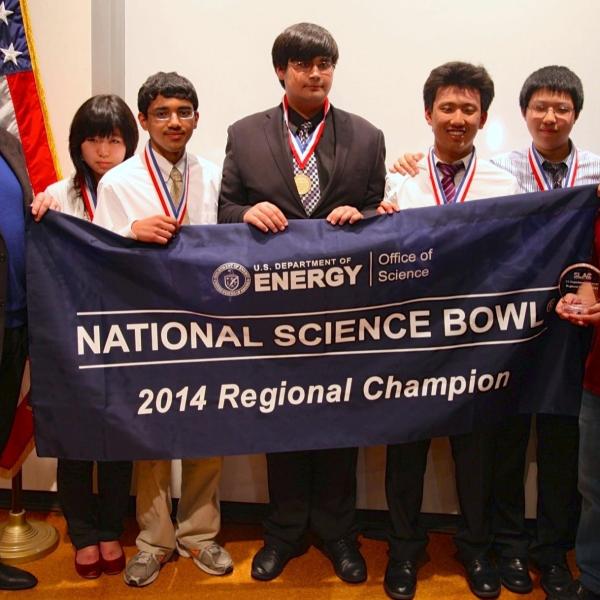
SLAC hosted 21 teams at the Department of Energy Regional Bay Area Science Bowl on Feb. 8. The winners from Homestead High School will head to Washington, D.C., for the national competition in April.
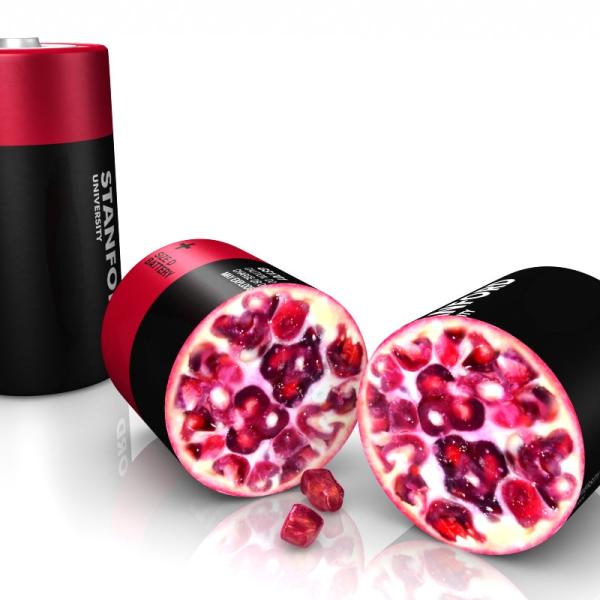
An electrode designed like a pomegranate – with silicon nanoparticles clustered like seeds in a tough carbon rind – overcomes several remaining obstacles to using silicon for a new generation of lithium-ion batteries, say its inventors at Stanford University and...
Twenty years after a cutting-edge particle physics experiment at SLAC adopted a royal elephant from a series of children's books as its mascot, BaBar (the experiment, not the elephant) is still looking ahead to future discoveries.
Growing up in China shortly after the Cultural Revolution, Zhirong Huang may have been the only middle-school child in Beijing who knew anything about SLAC. Today he’s a notable innovator in the design of particle accelerators and free-electron lasers.
Black widow spiders and their Australian cousins, known as redbacks, are notorious for their tainted love, expressed as an unsettling tendency to kill and devour their male partners. Astronomers have noted similar behavior among two rare breeds of binary system...
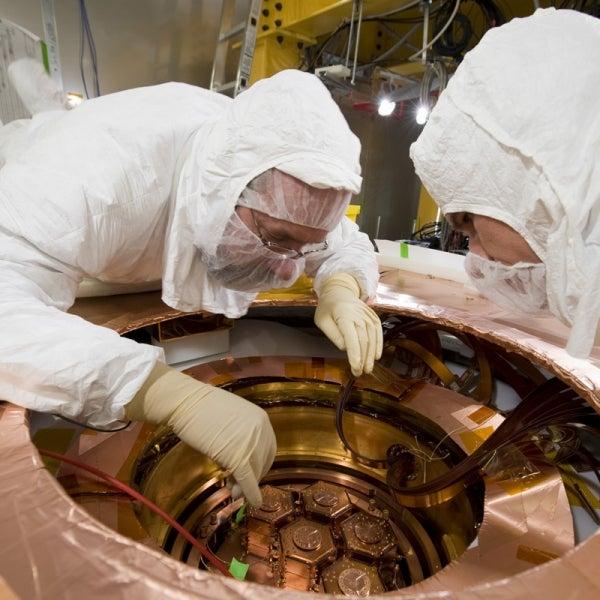
In a newly announced result from the Cryogenic Dark Matter Search experiment, scientists have placed a more stringent limit on "light," or low-mass, dark matter. SLAC and Stanford members of CDMS created the detectors used in the search, and SLAC...
Created by scientists from Stanford, SLAC and Denmark, the new nickel-gallium catalyst converts carbon dioxide emissions into an important industrial chemical and potential fuel