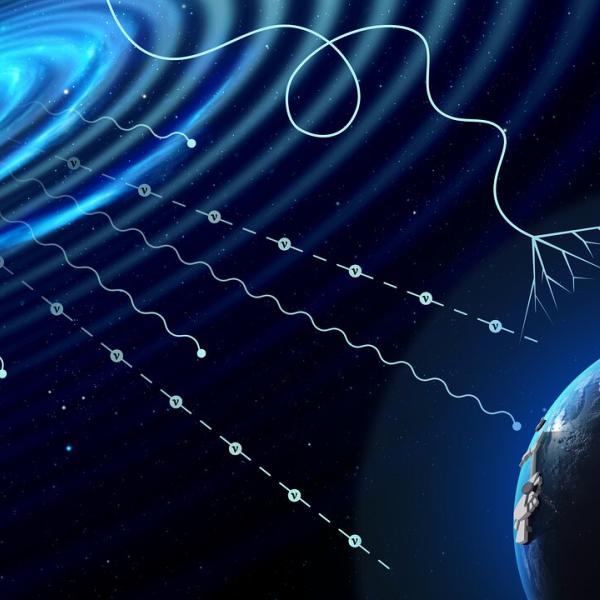
As the SLAC-Stanford institute celebrates its 20th anniversary, three Kavli Institute for Particle Astrophysics and Cosmology researchers share what they’re most excited for in years to come.
An international team has uncovered details about the formation of DNA's building blocks, paving the way for potential medical and therapeutic applications.
A swap of metals and a mutation ramp up the electric field strength at the active site of an enzyme, making it works an astonishing 50 times faster than its unmodified analog.
The American Physical Society recognized the SLAC and Stanford physicist for decades of groundbreaking work studying the strange behavior of electrons at the interfaces between materials.
The future of experimental particle physics is exciting – and energy intensive. SLAC physicists are thinking about how to make one proposal, the Cool Copper Collider, more sustainable.