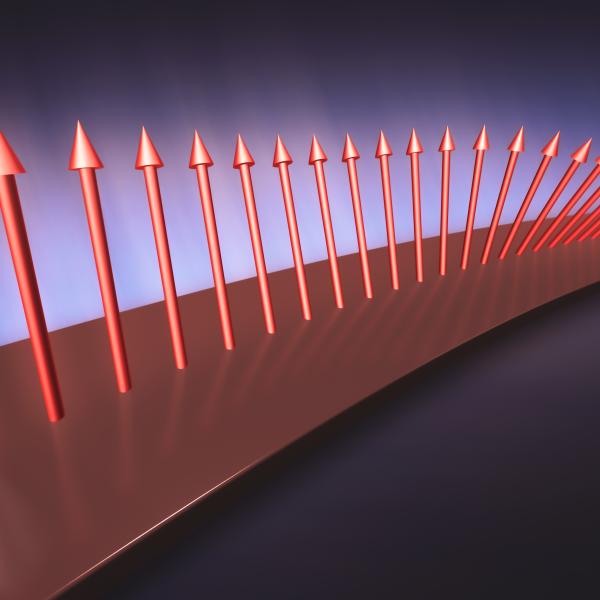
Their method provides a new tool to study electron-electron interactions, which are fundamental to many technologies, including semiconductors and solar cells.
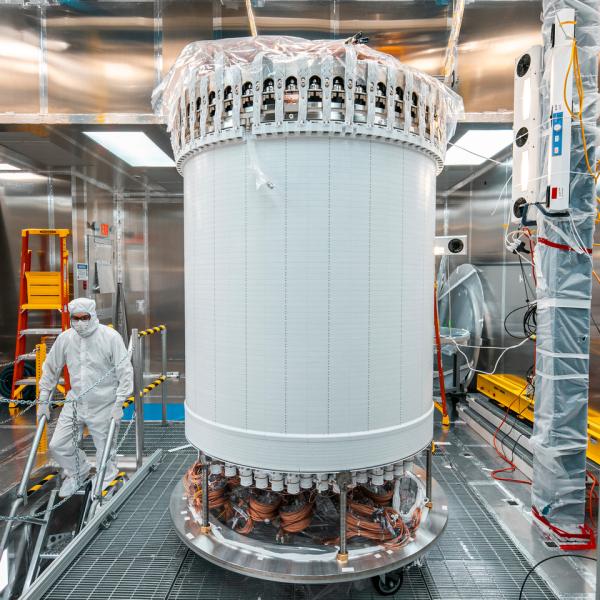
New results from the world’s most sensitive dark matter detector put the best-ever limits on particles called WIMPs, a leading candidate for what makes up our universe’s invisible mass.
Charging lithium-ion batteries at high currents just before they leave the factory is 30 times faster and increases battery lifespans by 50%, according to a study at the SLAC-Stanford Battery Center.
David Cesar, Julia Gonski and W.L. Kimmy Wu will each receive $2.75 million issued over five years for their research in X-ray and ultrafast science, new physics and primordial gravitational waves.
Alimohamadi is being recognized for her novel integration of theoretical and experimental results to connect diverse health outcomes with cell membrane behavior.