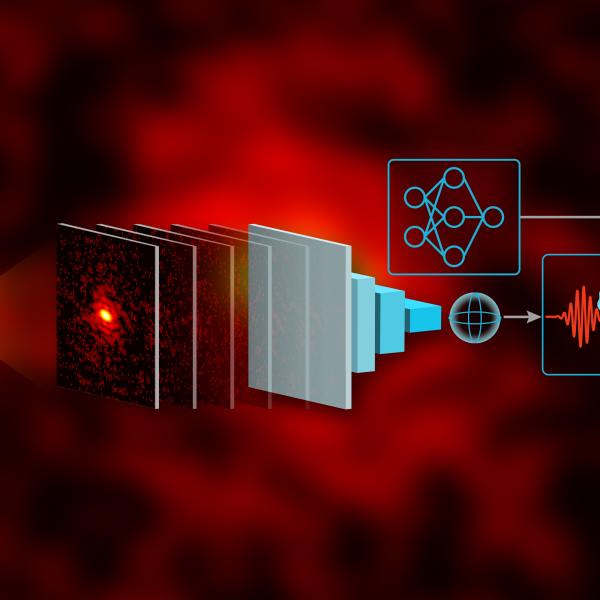
Experiments running at these higher pulse rates will allow scientists to capture ultrafast processes with greater precision, collect data more efficiently and explore phenomena that were previously out of reach.
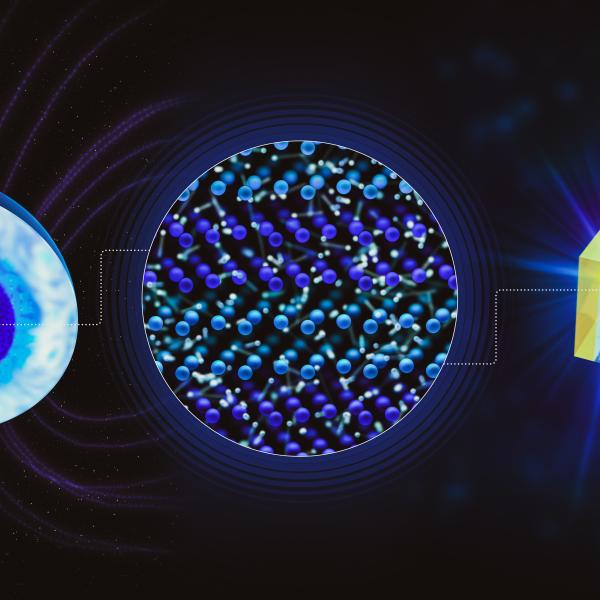
Researchers taking the first-ever direct measurement of atom temperature in extremely hot materials inadvertently disproved a decades-old theory and upended our understanding of superheating.
With a new method that could be extended to study Earth’s core and nuclear fusion, they identify and explain jumps in the electrical conductivity of aluminum under extreme conditions.
Imaging at SLAC's synchrotron demonstrates the twisted structures’ exotic properties that could benefit the development of superconductors and quantum materials.