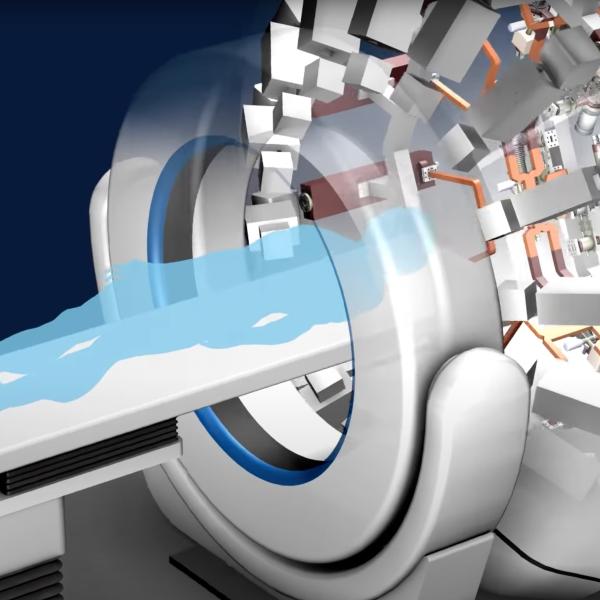
This animation shows the proposed design of a future device for X-ray therapy, which researchers hope will be able to deliver radiation powerful enough to blast cancer cells in under a second instead of minutes.
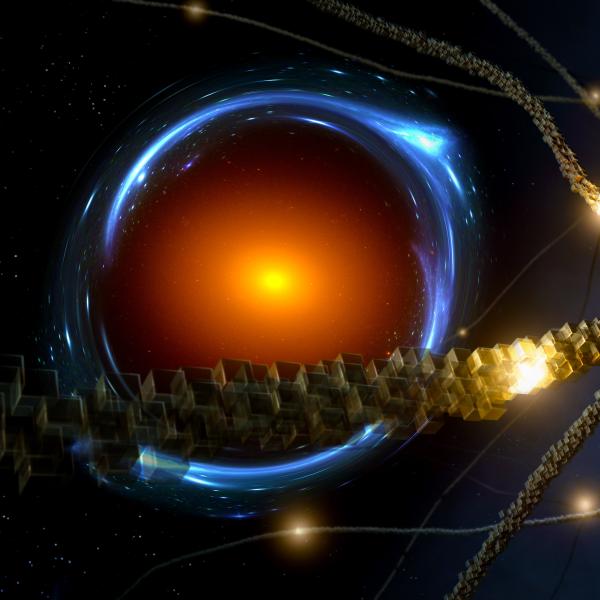
KIPAC scientists have for the first time used artificial neural networks to analyze complex distortions in spacetime, called gravitational lenses, demonstrating that the method is 10 million times faster than traditional analyses.
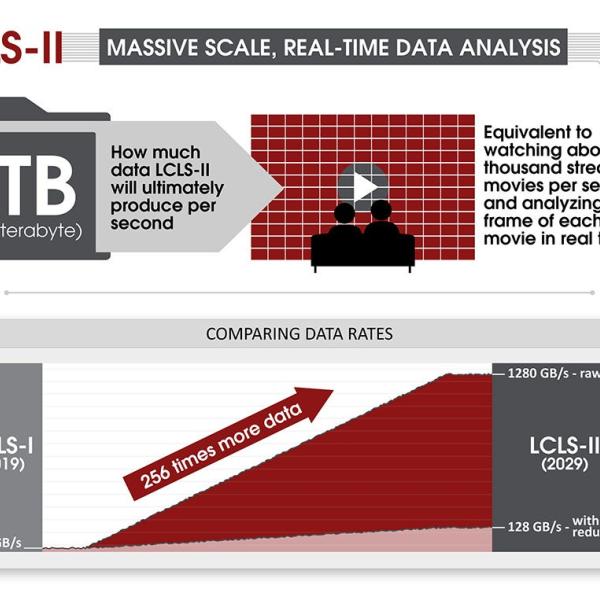
When upgrades to the X-ray laser at the Department of Energy’s SLAC National Accelerator Laboratory are complete, the powerful new machine will capture up to 1 terabyte of data per second; that’s a data rate equivalent to streaming about one...