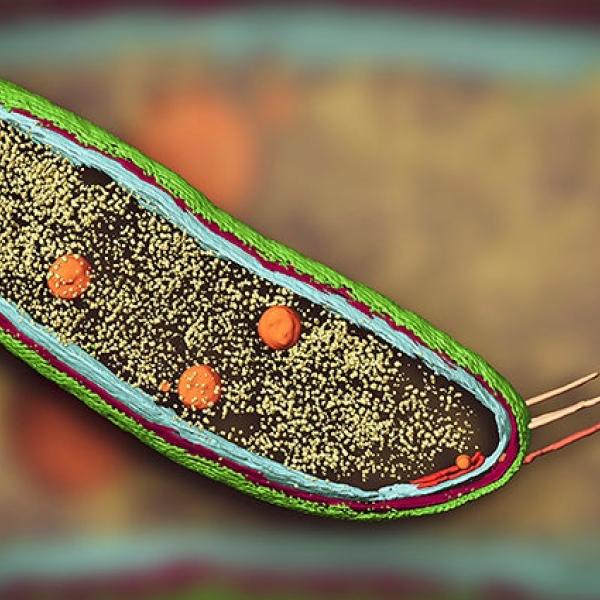
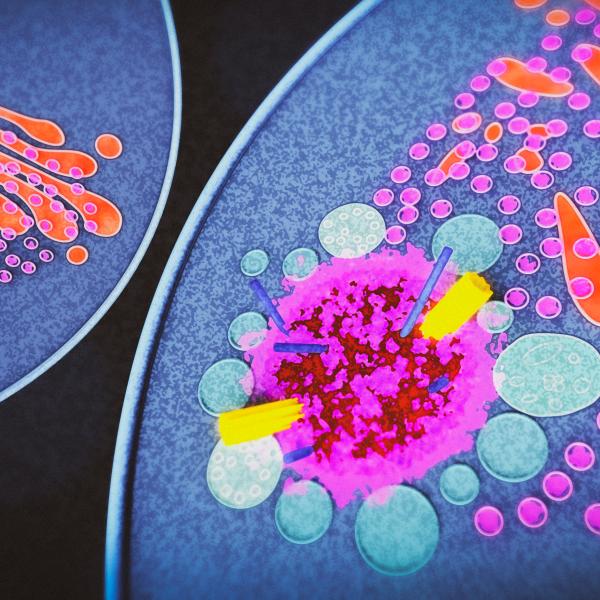
Tiny microbes and molecular machines have an outsized impact on human health, and they play key roles in the vast global cycles that shape climate and make carbon and nitrogen available to all living things. SLAC biology advances our understanding...
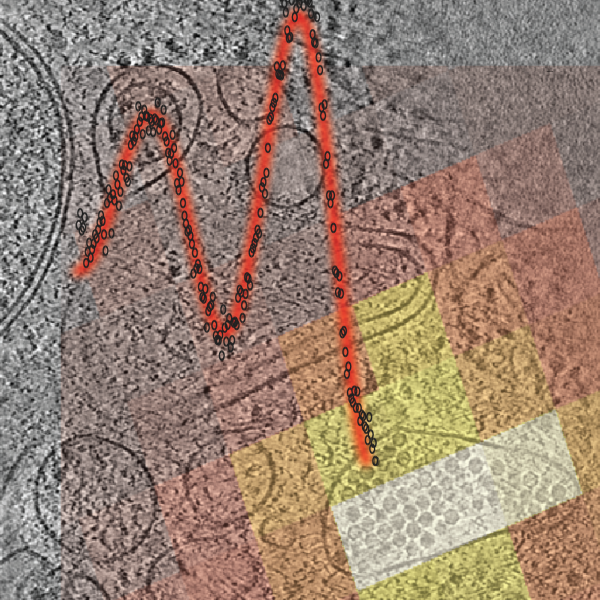
The CryoEM (cryogenic electron microscopy) facility at SLAC, built and operated in partnership with Stanford University, is equipped with multiple state-of-the-art instruments for cryoEM.
With a new method that could be extended to study Earth’s core and nuclear fusion, they identify and explain jumps in the electrical conductivity of aluminum under extreme conditions.
Director, SLAC-Stanford Battery Center; Director, Precourt Institute for Energy; Professor of materials science and engineering and of energy science and engineering; Faculty Scientist, Stanford Institute for Materials and Energy Sciences (SIMES)
Areas of research: energy science; materials for energy; clean energy; sustainability; batteries; energy storage and conversion electrochemistry; redox chemistry; engineering; materials science; X-ray science; A.I. and machine learning