Batteries power everything from medical devices to electronic devices, yet the core technology hasn't fundamentally changed in decades. At the SLAC-Stanford Battery Center, scientists are working with industry to change that.
SLAC and Stanford researchers found that compressing solid-state battery material reduced the formation of lithium-filled cracks called dendrites, leading to faster charging and longer battery life.
Explore how SLAC advances energy research, partnering with Stanford University, the U.S. Department of Energy and industry, to help create a more reliable, affordable and sustainable energy future.
From studying chemical reactions that happen in the femtosecond timescale to advancing society’s energy technology, the Energy Sciences Directorate’s research addresses an enormous range of critical scientific challenges.
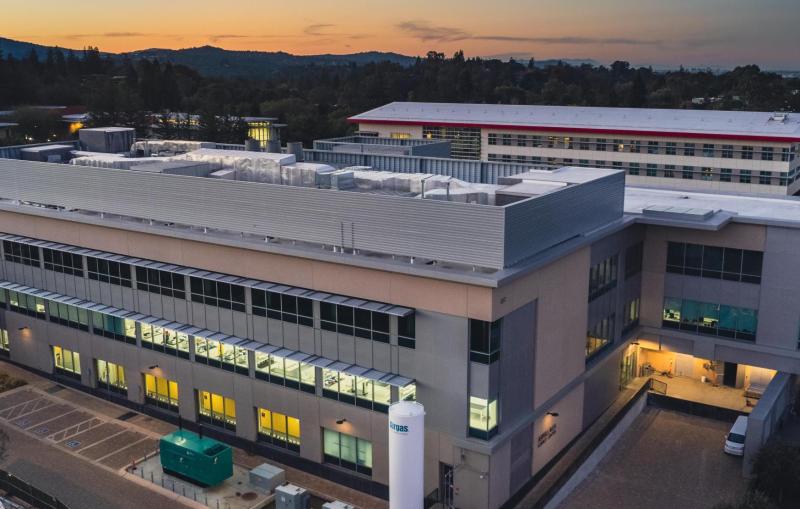
The SLAC-Stanford Battery Center enables translational research in electrochemical science and technology bridging across fundamental science to deployment.
SLAC’s advanced facilities, expertise in energy science and technology, and strong partnerships are breaking new ground in securing abundant, reliable energy. Visit our energy research page to learn more.
A SLAC-Stanford team developed a new way to precisely measure just how much energy has dissipated into heat in an electrical system – and how to optimize it.
Register here to join us in-person, or watch online. Realizing usable electrical power from nuclear fusion has been a grand challenge for physicists and engineers for more than 70 years. Recently the National Ignition Facility (NIF) at Lawrence Livermore National...