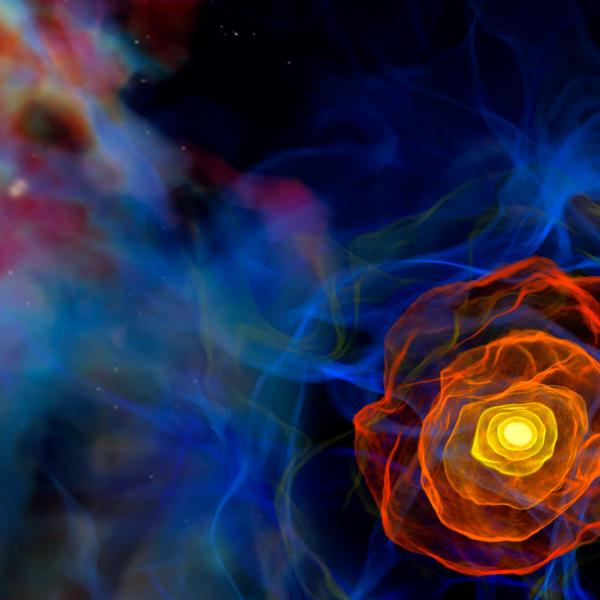
What was the first thing in the Universe? A black hole or a star? How did it form? Even our biggest and best telescopes cannot tell us. Direct calculation with supercomputers, however, can. The first luminous objects in the Universe...
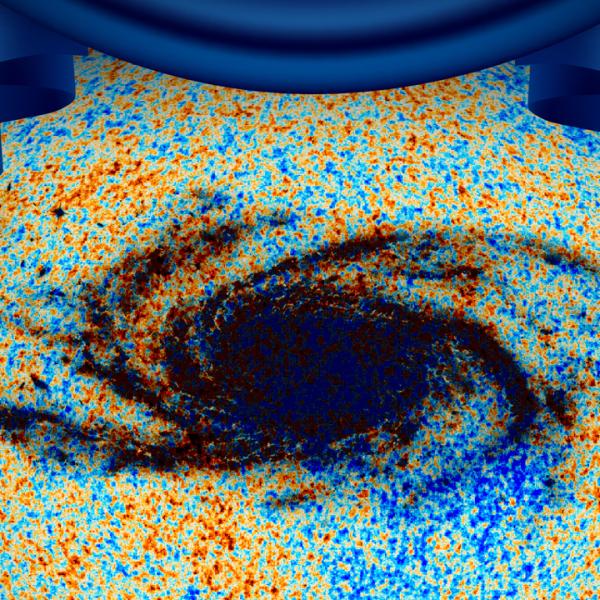
Presented by Marusa Bradac. One of the greatest accomplishments in recent astrophysics is the creation of a model for the complete inventory of the Universe. All the observational data tells us with extremely high certainty that ordinary matter (every particle...
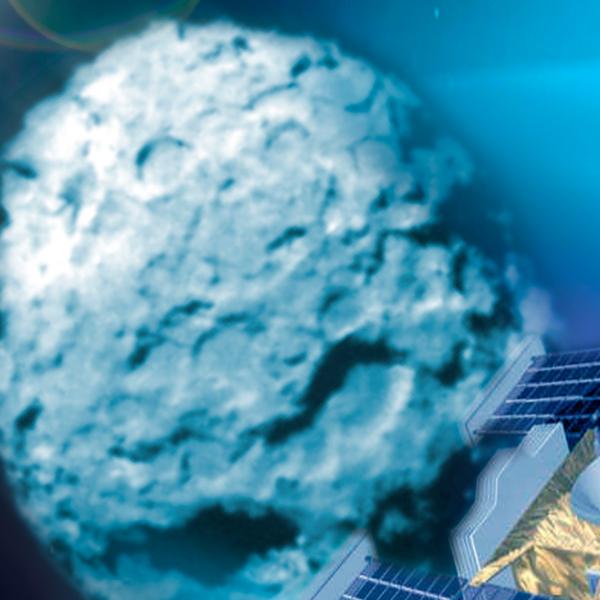
Presented by Sean Brennan. The Stardust mission returned from a 6-year voyage in January of 2006. During the mission it swept through the tail of comet Wild 2 (pronounced Vilt), collecting the microscopic particles streaming from it.
Presented by JoAnne Hewett. Extra dimensions of space may be present in our universe. Their discovery would dramatically change our view of the cosmos and would prompt many questions. How do they hide? What is their shape? How many are...
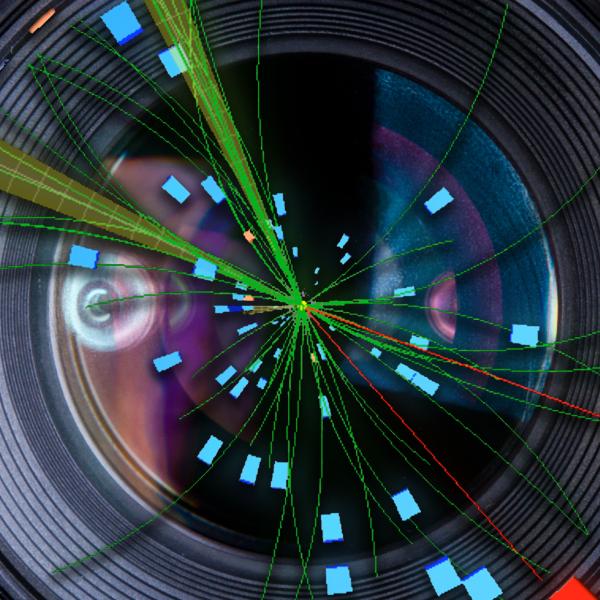
Presented by Caterina Vernieri. The Higgs boson was discovered in 2012 at the world’s most powerful particle collider, the Large Hadron Collider (LHC) in Geneva, Switzerland.
Presented by Eric Charles. A single gamma ray carries millions of times the energy of a single photon of visible light. This means that gamma rays are produced only in the most convulsive environments in the universe – pulsars spinning...
In this lecture, Dr. Rebecca Leane will review a range of dark matter searches using celestial objects, including exoplanets, solar-system planets, the Sun, and the Earth.
Spacetime and quantum mechanics are the pillars of our modern understanding of fundamental physics. But there are storm clouds on the horizon indicating that these principles are approximate, and must be replaced with something deeper. The union of quantum mechanics...