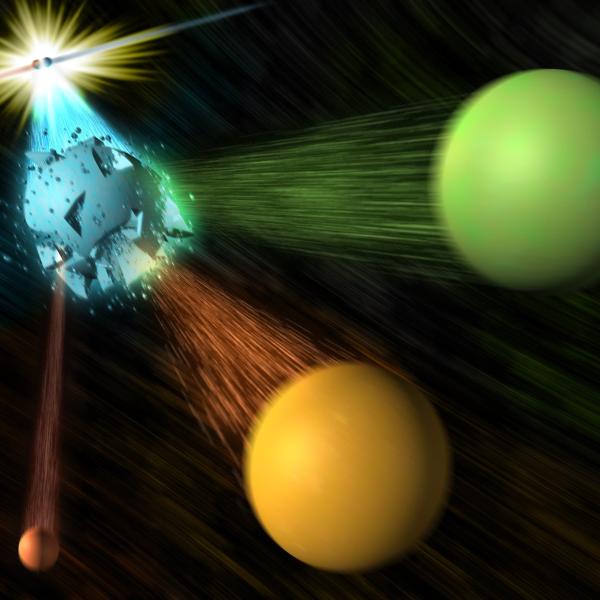
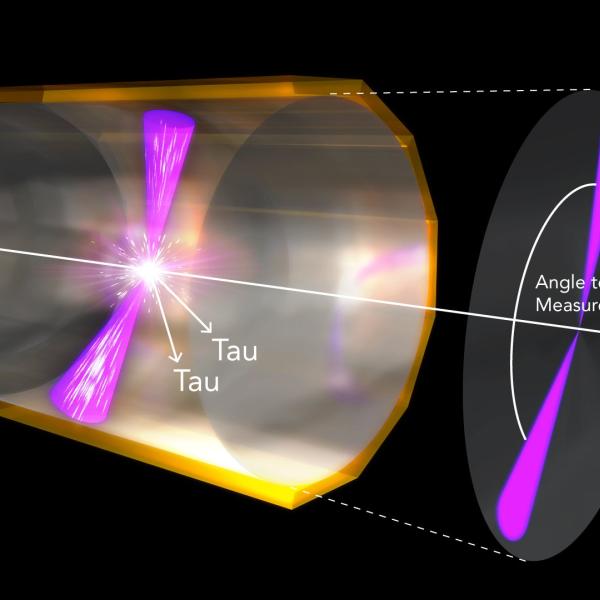
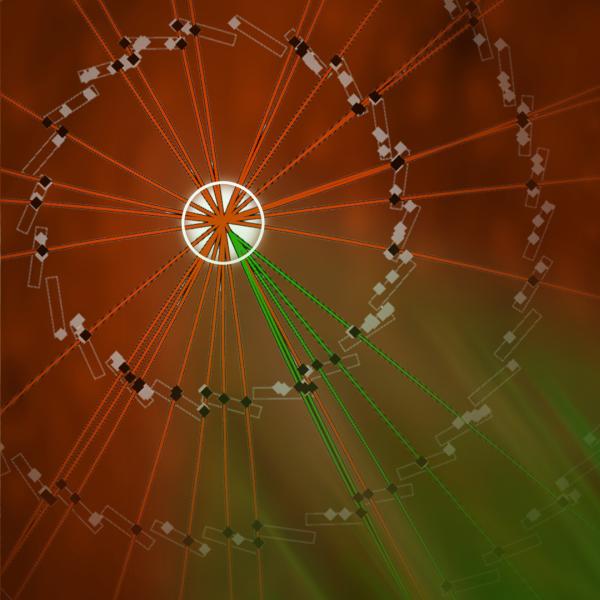
In this conceptual art, an electron and positron collide, resulting in a B meson (not shown) and an antimatter B-bar meson, which then decays into a D meson and a tau lepton as well as a smaller antineutrino.
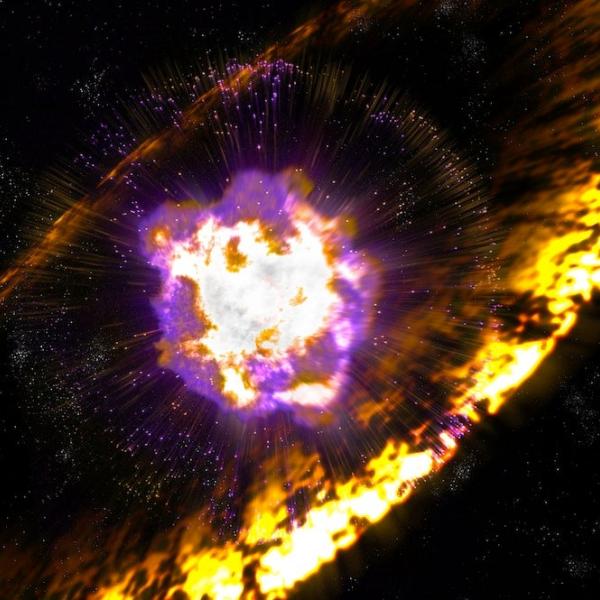
When stars explode, the supernovas send off shock waves like the one shown in this artist's rendition, which accelerate protons to cosmic-ray energies through a process known as Fermi acceleration.
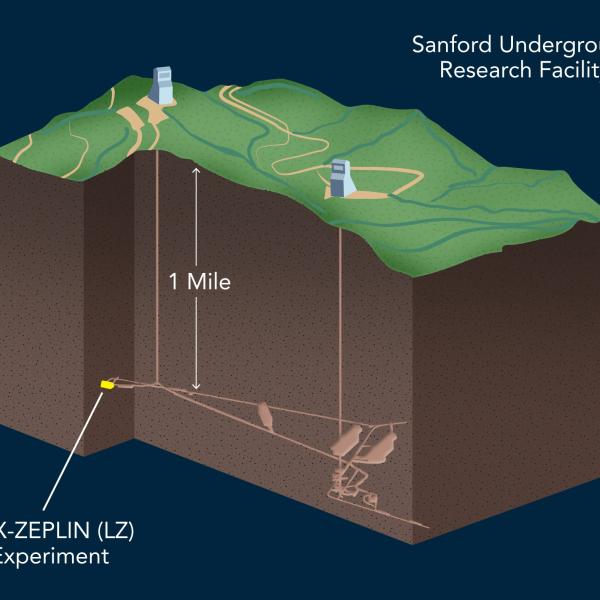
In 2019, researchers plan to replace the current dark matter experiment LUX with the more sensitive LUX-ZEPLIN (LZ). It will be located one mile underground at the Sanford Underground Research Facility in South Dakota, in a cavern within the former...