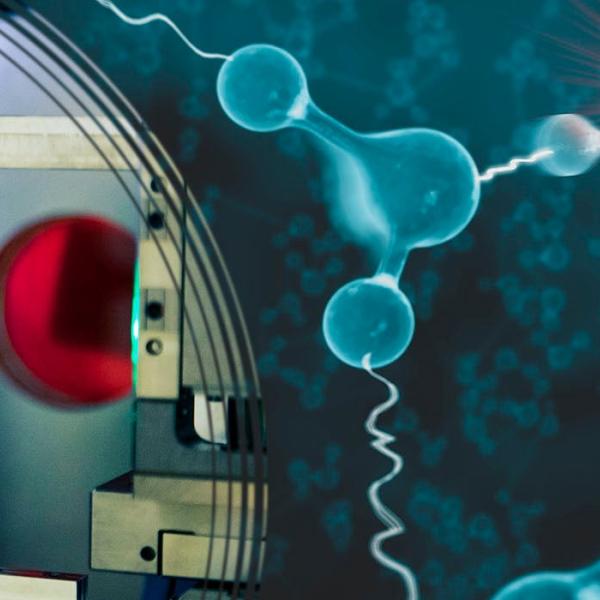
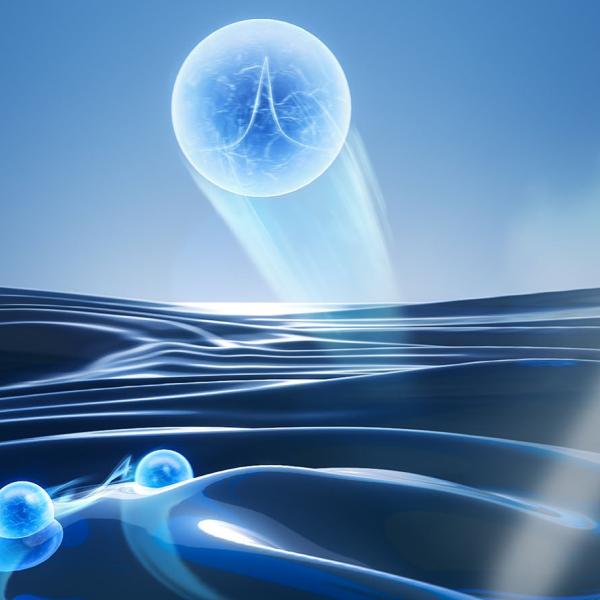
The work sheds light on the web of hydrogen bonds that gives water its strange properties, which play a vital role in many chemical and biological processes.
Presented by Justin Myles. As the universe expanded from the Big Bang, regions where the density of matter was higher than average grew into galaxies and clusters of galaxies.
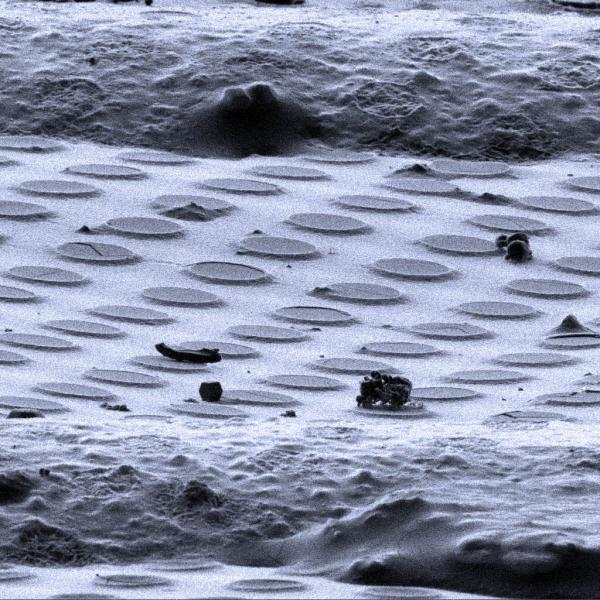
Cryo-EM snapshots of the solid-electrolyte interphase, or SEI, reveal its natural swollen state and offer a new approach to lithium-metal battery design.
The results cap 15 years of detective work aimed at understanding how these materials transition into a superconducting state where they can conduct electricity with no loss.
Bernhard Mistlberger will receive the APS's 2023 Henry Primakoff Award for Early-Career Particle Physics for his work on precision Standard Model calculations.
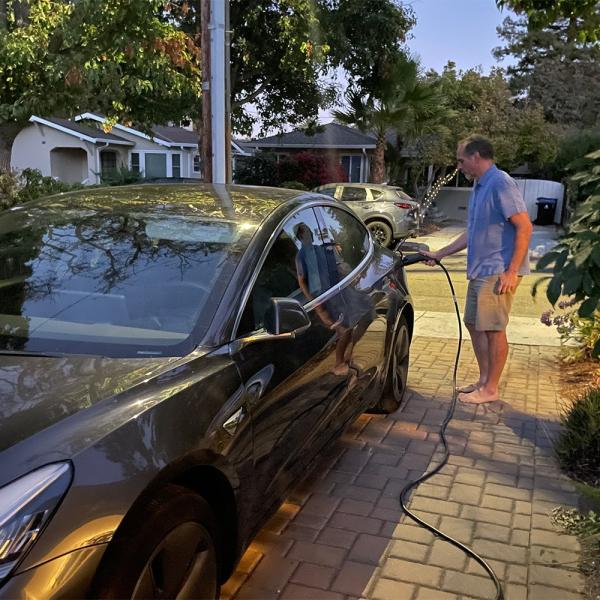
A research team including SLAC staff engineer Gustavo Cezar shows that charging electric vehicles in the daytime would spread the load on the electric grid, save money and reduce greenhouse gas emissions.
NSF–DOE Vera C. Rubin Observatory is about to embark on its quest to capture the cosmos, marking the culmination of decades of work by thousands of people across the globe.
With survey operations set to begin this fall, the Rubin control room at SLAC will serve as a key hub for training and remote observing support for the NSF–DOE Vera C. Rubin Observatory.
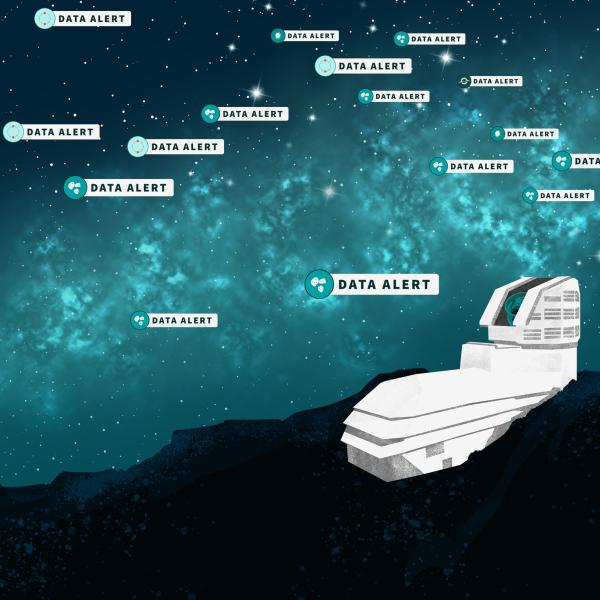
NSF-DOE Rubin Observatory has issued its first scientific alerts, marking a historic milestone in astrophysics and kicking off a new era of dynamic, real-time observation of the night sky.