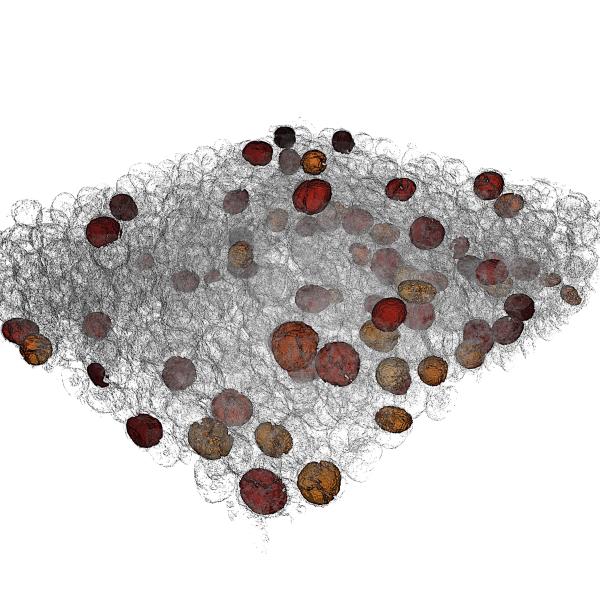
How quickly a battery electrode decays depends on properties of individual particles in the battery – at first. Later on, the network of particles matters more.
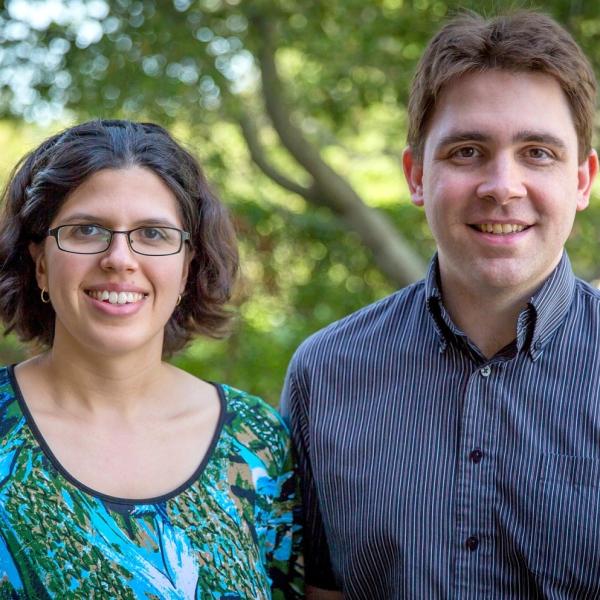
Toro and Schuster are being recognized for their contributions to the design of experiments that use particle accelerators to search for dark matter particles.
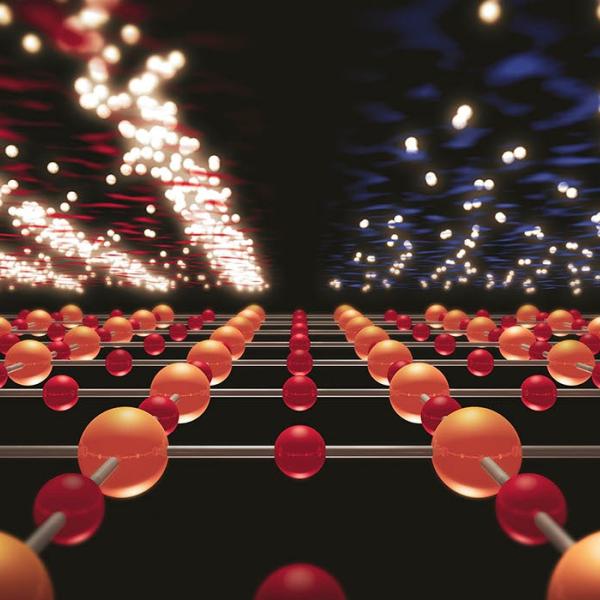
Researchers discover they contain a phase of quantum matter, known as charge density waves, that’s common in other unconventional superconductors. In other ways, though, they’re surprisingly unique.
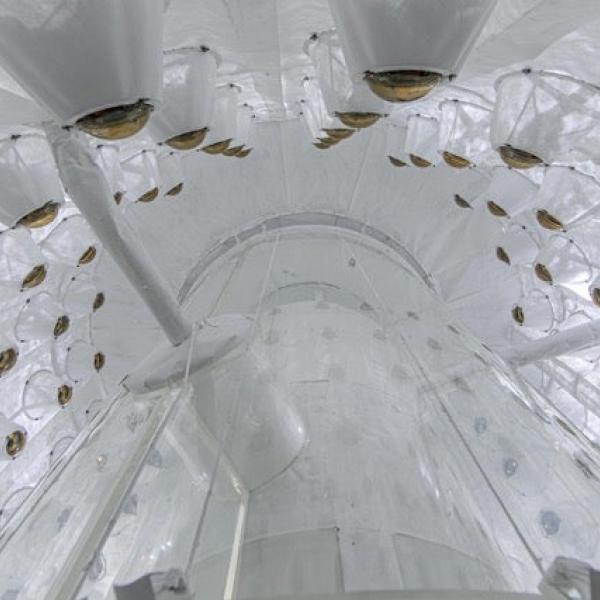
SLAC researchers contributed to the design, construction, testing and analysis of the experiment, which has already put the tightest bounds yet on a popular theory of dark matter.
They’ll work on experiments that search for dark matter particles and exotic neutrino decays that could help explain why there’s more matter than antimatter in the universe.
To capture as much information as possible about clouds of atoms at the heart of the MAGIS-100 experiment, SLAC scientists devised a dome of mirrors that gathers more light from more angles.
A cosmologist, cultural historian, and neurosurgeon discuss how outer space and otherworldly phenomena can inspire discovery across disciplines and bring people together.